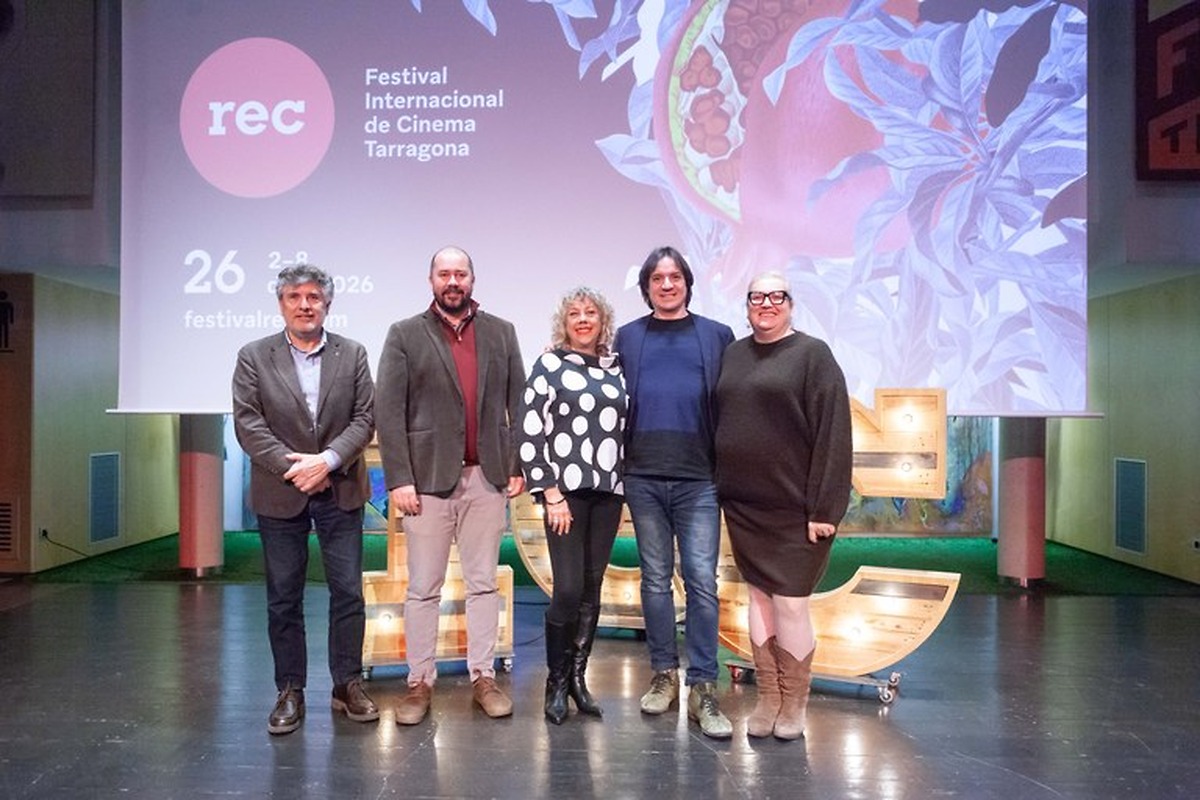
The REC – International Film Festival of Tarragona has unveiled the programme for its 26th edition, set to take place from 2 to 8 December. Over the course of seven days, Tarragona will become a hub for film enthusiasts, creators, and industry professionals, with a focus on celebrating diverse viewpoints, discovering new talent, and fostering dialogue through cinema.
Staying true to its mission of highlighting emerging voices, the REC will present debut films from filmmakers worldwide alongside the latest works from established directors. The programme includes premieres in Spain and Catalonia, commercial previews, and films recognised at prestigious international festivals such as Cannes, Venice, Sundance, Locarno, Toronto, San Sebastián, and Málaga.
Xavi G. Puerto, the director of the REC, emphasised the festival's role in anticipating cinematic trends and showcasing contemporary cinema's fresh perspectives. “From today’s works, we invite the audience to discover the cinema of the future, to know what will be popular tomorrow,” he stated.
In a similar vein, Sandra Ramos, the councillor for Culture at the Tarragona City Council, praised the festival's ability to identify works that remain unknown to the general public but are poised to become significant discoveries of the season.
A programme marked by premieres
The festival will kick off on Wednesday, 2 December, at the Teatre Tarragona with the screening of Club Kid, the feature debut of Jordan Firstman, which has already received a strong response in advance ticket sales. The closing film will be Sucederá esta noche, by renowned Italian filmmaker Nanni Moretti, on Monday, 7 December.
The competitive section, Opera Prima, will showcase eleven debut feature films, many of which will be screened for the first time in Catalonia, with some also being Spanish premieres. Notable entries include Salen las lobas by Claudia Estrada Tarascó, La Gradiva by Marine Atlan, which won the Grand Prize at Cannes' Critics' Week, and Ben’Imana by Marie-Clémentine Dusabejambo, awarded the Golden Camera at Cannes.
These eleven films will compete for various awards, including the International Jury Prize, the Film Club Jury Prize, the Audience Award, and the Young Jury Prize.
Highlighting local and international talent
The RECSelection section will feature some of the season's standout titles, such as Josephine by Beth de Araújo, a double award-winner at Sundance; Fjörd by Cristian Mungiu, a Cannes Palme d'Or winner; and The Debut by Jesse Eisenberg. Additionally, the section will include The End of It, a science-fiction film with an international cast led by Rebecca Hall, Noomi Rapace, Beanie Feldstein, and Gael García Bernal.
The Vermut Sessions at the Teatret del Serrallo will bring audiences some of the most notable recent works from Catalan and Spanish cinema, including El Mal Hijo by Jaime Lorente, Yo no Moriré de Amor by Marta Matute, Viva by Aina Clotet, and Jaleos by Isaki Lacuesta.
Transforming Tarragona into a cinematic hub
In a city lacking central cinemas, the REC will once again transform various locations in Tarragona into screening venues. This year, the Antiga Audiència will debut a new screen, while Pantalla Tarraco will turn Casa Canals, the Sala de Hipòlit del Pretori, and for the first time, the church of Sant Miquel del Pla into unique cinematic settings. “Sometimes cinema is one of the few things that brings us together,” Puerto remarked, highlighting the shared emotions cinema can create to strengthen community bonds.
From 4 to 6 December, Pantalla Tarraco will present seven films across eight sessions, along with a special programme titled ‘Identidades mutantes’ that will blend film and live music.
Xavi Puig, the Deputy for Municipal Cooperation at the Tarragona Provincial Council, underscored the REC's value as a generator of culture, new creations, and opportunities for emerging talent, as well as its contribution to quality cultural tourism and the region's identity.
The festival will also promote local cinema through Talent Local, showcasing six short films by filmmakers connected to the Tarragona region, and will offer a family-friendly space with RECXics, combining an animation screening with a workshop at the Museu d’Art Modern de Tarragona.
Fostering industry and engaging new audiences
Beyond screenings, the REC reinforces its commitment to emerging talent and the audiovisual industry through RECLab, a platform for supporting film projects and facilitating professional networking. With GenREC and MIRA’M, the festival aims to engage younger audiences and encourage their active participation. This year, participants in the Young Programmers programme have selected the Talent Local line-up and will also take part in presenting various films at the festival.
“We are interested in not only having them attend the festival but also in having them be part of it and expand it wherever they go,” explained Eva Vallès, co-director of the REC, who emphasised the role of youth as programmers, cultural managers, audiences, and future creators.
Simultaneously, REC... and Acción! will strengthen the connection between cinema and the community, showcasing its potential as a tool for awareness and social transformation, with the involvement of nine local organisations. Ricard Ibarra Ollé, the director of the Territorial Services of Culture of the Generalitat of Catalonia, highlighted the REC as an opportunity to blend the discovery of new talents with making culture accessible to the wider community.