The Arab World Institute in Paris has launched an immersive exhibition titled 'The Secrets of the Alhambra', which opened on 23 November. This exhibition allows visitors to experience the Alhambra through the poetry hidden within the intricate plasterwork of the Nasrid palaces, explore the secrets of the Fountain of the Lions, and enjoy the moving paintings of the Hall of the Kings and the Partal Painting House, alongside the sounds and scents of the Alhambra's gardens.
Co-organised by the Alhambra and Generalife Patronage, which is part of the Culture, Historical Heritage and Sport Department of the Andalusian Government, the exhibition aims to present the history, art, and architecture of one of the world's most unique monuments to an international audience. Curated by Bárbara Boloix Gallardo, a professor at the University of Granada, and Agnès Carayon, the collections and exhibitions manager at the Arab World Institute, the exhibition features around 120 artworks, digital recreations, and audiovisual resources that highlight details of the monument often overlooked by visitors.
Patricia del Pozo, the Andalusian Minister of Culture, Historical Heritage and Sport, stated, "The Alhambra has been inspiring admiration for centuries, and this exhibition provides an opportunity to present to an international audience aspects of its history, architecture, and artistic richness that often go unnoticed." She emphasised the importance of collaborating with prestigious cultural institutions like the Arab World Institute, noting, "We have a responsibility to conserve and protect this exceptional heritage, but also to promote it beyond our borders. Having the Alhambra featured in such an exhibition in Paris is a magnificent opportunity to continue showcasing the immense cultural and heritage wealth of Granada and Andalusia to the world."
The exhibition invites visitors to journey back to Nasrid Granada, particularly to the 14th century, when Sultan Muhammad V commissioned some of the most significant constructions, including the Palace of the Lions. This palatial city was not only known for its stunning spaces but also served as a hub for the political, intellectual, and cultural life of the last kingdom of al-Andalus.
The Alhambra Museum is collaborating by lending 33 pieces, alongside other renowned institutions such as the Louvre, the Metropolitan Museum of Art in New York, the Victoria and Albert Museum in London, the National Archaeological Museum, and the National Library of France. A highlight of the exhibition is the iconic Fountain of the Lions, where immersive resources and historical photographs allow visitors to appreciate the unique features of each of its twelve marble lions, discover the meaning of the poem that adorns its basin, and learn about the transformations this space has undergone over the centuries.
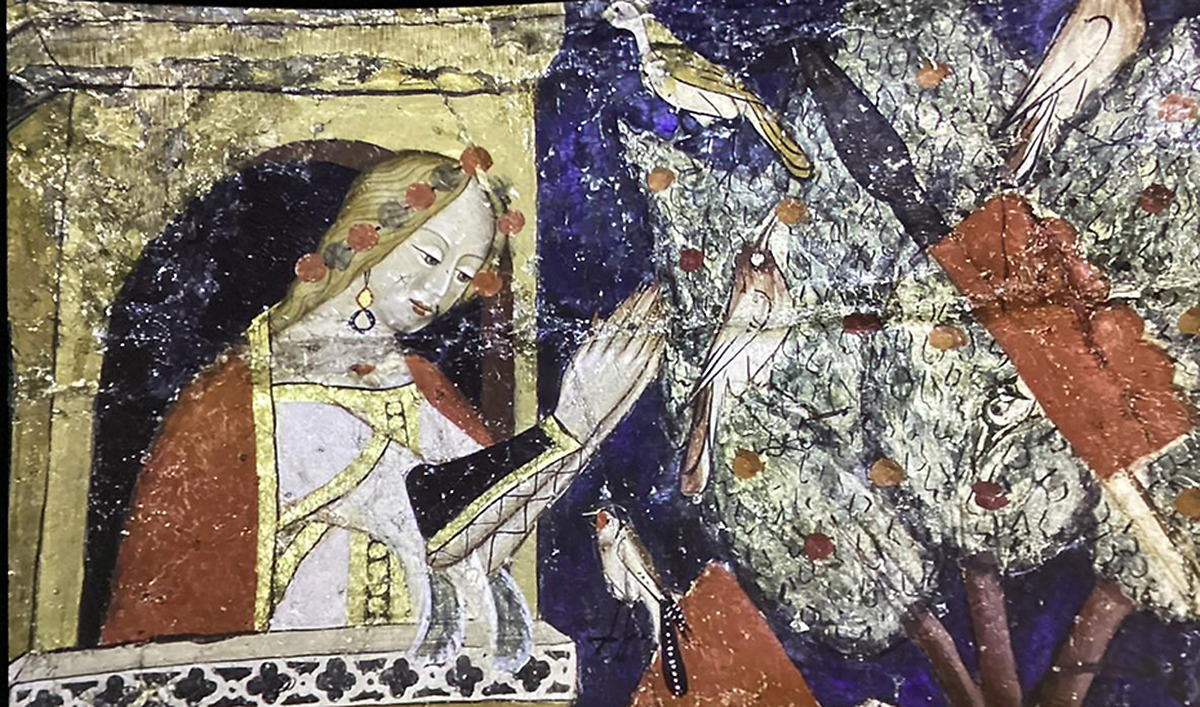
Technology also enables exploration of lesser-known areas of the monument, such as the mural paintings in the Partal House, which are not accessible to the public, and a close look at the leather paintings on the ceilings of the Hall of the Kings, showcasing the influence of Gothic art and courtly love in the Nasrid court. The intricate geometry of the tile work, the complexity of the muqarnas vaults, and the richness of the inscriptions covering the palace walls guide visitors through a universe where mathematics, poetry, architecture, and sensitivity converge to create the Alhambra's complex aesthetic programme.
In Paris, the verses of Ibn al-Yayyab, Ibn al-Jatib, and Ibn Zamrak resonate once more through the sound recreation of the poems inscribed on the walls of the Alhambra. Water, essential for the construction and development of the palatial city, is another key theme of the exhibition, highlighting the ingenuity of Nasrid hydraulic systems and the role of the Acequia Real, which supplied water to the palaces, fountains, orchards, and gardens.
Sound artist Cheb Runner, who spent a night in the monumental complex to capture its atmosphere, has created an installation that evokes the sensations these spaces inspire in silence, while perfumer Alexandre Helwani is responsible for the aromatic ambience. The exhibition also offers insights into life at the Nasrid court, including celebrations, diplomatic relations, and artistic and commercial exchanges within a prosperous Alhambra. Ceramics, jewellery, textiles, and luxury items testify to the refinement of a society whose creations were highly valued in European courts of the time.
In the coming months, the Arab World Institute will also dedicate part of its cultural programming to the Alhambra and the legacy of al-Andalus, featuring concerts, film cycles, lectures, specialist meetings, guided tours, and workshops on calligraphy and geometry. Centuries later, the Alhambra continues to spark curiosity and admiration among those who approach it, now from the heart of Paris, with an exhibition that invites visitors to discover not only the beauty of its palaces but also the knowledge, ingenuity, and sensitivity of those who made them possible.