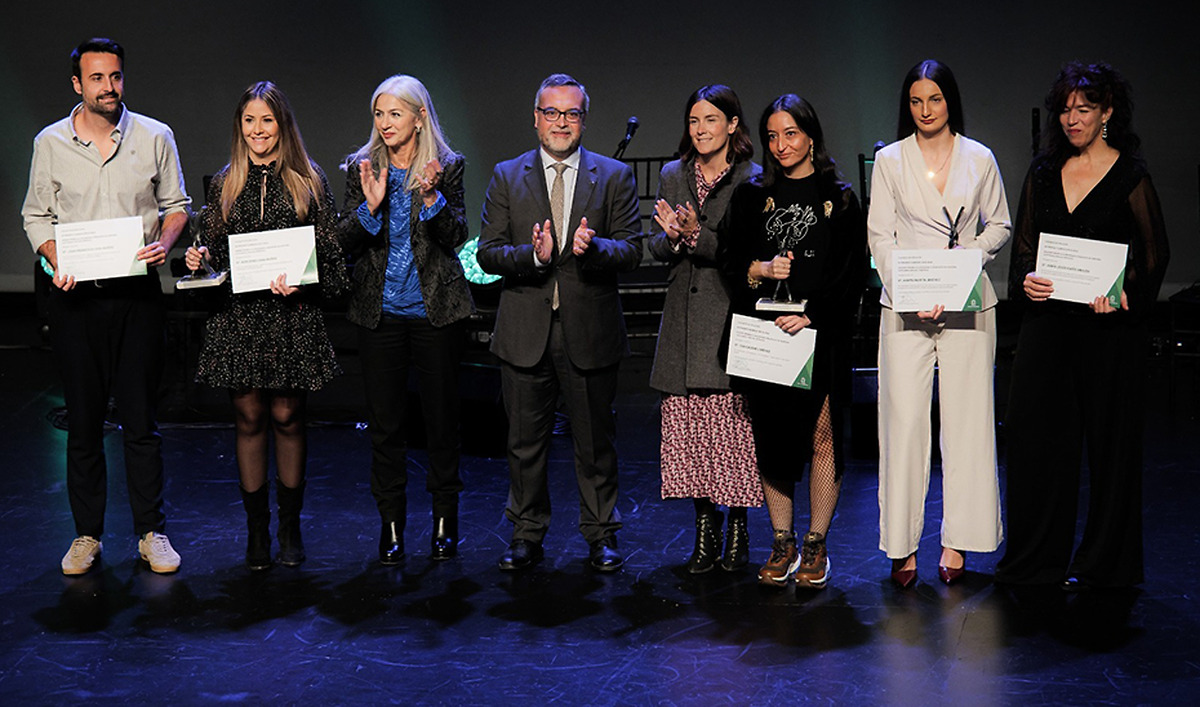
The Junta de Andalucía, through its ministries of Education and Culture, Historical Heritage and Sport, has presented the Flamenco in the Classroom Awards for the academic year 2025-2026 at the Teatro Central in Seville. The awards recognise seven projects from educational centres and teachers for their innovative practices aimed at promoting flamenco, known as art jondo, among students in Andalusia.
The ceremony was presided over by the Minister of Culture, Historical Heritage and Sport, Patricia del Pozo, alongside the Deputy Minister of Education, Pablo Quesada, and the Government Delegate of the Junta de Andalucía in Seville, Ricardo Sánchez. This year's event coincided with the Andalusian Day of Flamenco, celebrated on 16 November, marking the UNESCO declaration of this art form as an Intangible Cultural Heritage of Humanity in 2010.
The awards highlight projects that aim to integrate flamenco into the educational system, enhance students' understanding of the art form, and promote the development of curricular materials and teaching resources. In the category for curricular materials and teaching resources, three projects from centres in Seville, Córdoba, and Granada were awarded. Meanwhile, four initiatives from schools in Cádiz, Huelva, Granada, and Málaga were recognised for their teaching experiences and best practices.
Honourary awards
The Flamenco in the Classroom Awards also honour institutions, groups, or individuals who have significantly supported educational centres in incorporating flamenco. This year, the honourary awards were given to Manuel Martín González for his contributions to integrating flamenco into the educational system, the Peña El Pozo de las Penas in Los Palacios y Villafranca (Seville) for its 75th anniversary and commitment to promoting flamenco within the educational community, and the Ballet Flamenco de Andalucía for its efforts to engage younger generations through projects like 'Ballet as an Open Space' and training young talents.
Del Pozo praised the award recipients for their innovative initiatives that help disseminate flamenco among young people, stating, "The best way to celebrate the Day of Flamenco is by recognising your talent, originality, and efforts to promote and share our most universal art form." She emphasised the importance of these awards in fostering connections between flamenco and young people, aligning with the commitment made to UNESCO 16 years ago when flamenco was declared an Intangible Cultural Heritage of Humanity.
Quesada highlighted the dedication of teachers in promoting flamenco in Andalusian classrooms, describing the art form as a "transversal, motivating, and inclusive innovation tool" that reaches students naturally through the creativity and sensitivity of educators, showcasing the immense talent of teaching professionals in the region.
Growing interest
This year's awards received a total of 58 applications from across the eight provinces of Andalusia, reflecting the growing interest and creativity among educators regarding the importance of including flamenco in students' comprehensive education. The integration of flamenco as an educational tool is mandated by the Andalusian Flamenco Law, which requires the school curriculum to include content and activities related to this cultural heritage.
Award-winning projects
In the category for curricular materials and teaching resources, the first prize went to the project 'Once Upon a Time... Bulería: A Journey to the Heart of Flamenco,' created by Juan Francisco Carea Muñoz and María de las Mercedes Cara Muñoz at the IES Marismas in Los Palacios and Villafranca (Seville) and the CEIP Maestro José Fuentes in Seville. This initiative integrates flamenco through reading and storytelling, using accessible materials, audiovisual resources, and interdisciplinary proposals adapted to various educational stages.
The second prize was awarded to 'Taconeando Emociones,' developed by teacher María Jesús Riaño Arazuzo and student Marta Martín Jiménez at the IES Jiménez de Quesada in Santa Fe (Granada). This project designs playful and sensory resources to introduce flamenco to early childhood education, particularly for children aged two to three years.
The third prize recognised Eva Calero Jiménez, currently affiliated with the Rafael Orozco Conservatory of Music in Córdoba, for her project 'Café Estudiante Los Hincacodos: Singing, Playing, and Dancing Allowed.' This initiative presents a series of didactic units and learning situations aimed at third-year secondary students, culminating in a school flamenco café.
In the category for teaching experiences and best practices, the first prize was awarded to 'Flamenco School Documentary: Origin' from the IES Cornelio Balbo in Cádiz, coordinated by teacher David Sánchez Sandoval and students Julio Díez Vázquez, Pablo Fernández Monroy, and Mario del Río Cortina. This project investigates the flamenco heritage of Cádiz through audiovisual means.
The second prize was awarded ex aequo to two projects focused on integrating students with special educational needs. The first, 'When Flamenco is Felt Without Hearing It: Working from Inclusion,' led by Rebeca Martín Sánchez at the IES del Andévalo in Puebla de Guzmán (Huelva), has facilitated access to this art form for students with hearing disabilities, collaborating with artists from Huelva such as Arcángel and Antonio Ramón Macías Marín. The second project, 'Inclusive Flamenco: Art as a Driver for Social Transformation,' by Carmen María Artacho Sánchez for the IES Pedro Jiménez Montoya in Baza (Granada), focuses on learning and inclusion for students in specific classrooms.
Finally, the third prize went to 'Algorithm with Duende: Even Robots Dance Flamenco!' by María Jesús García Sánchez and José Luis Romero Perales for the IES Concha Méndez Cuesta in Torremolinos (Málaga). This project successfully integrated flamenco into the learning of mathematics, robotics, and artistic expression for fourth-year secondary students.