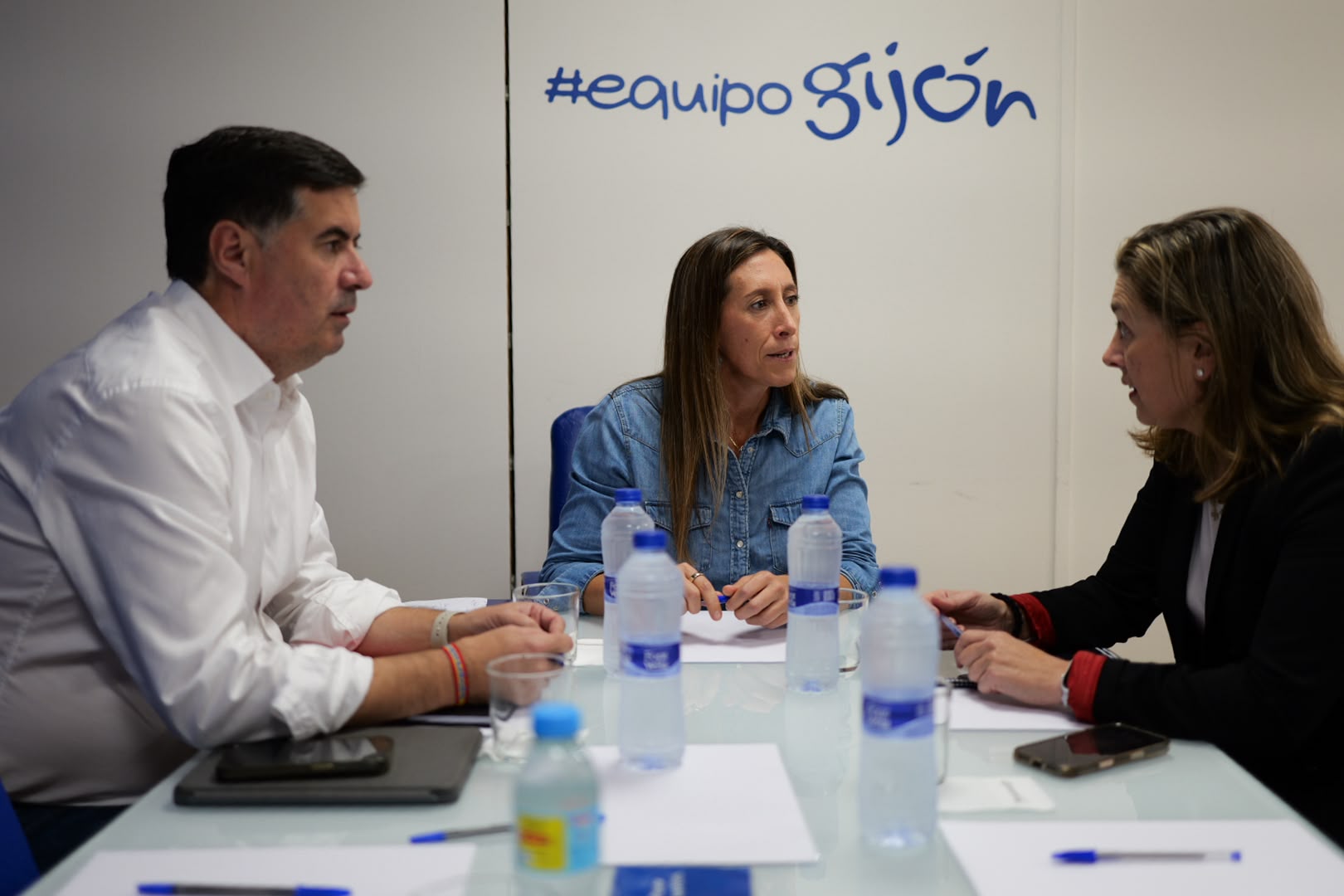
Ángela Pumariega, the head of the Popular Party (PP) list for Congress in Asturias, and Silverio Argüelles, the party's Senate candidate, recently met with María Calvo, president of the Asturian Federation of Entrepreneurs (FADE), as part of a series of discussions with candidates ahead of the general elections scheduled for 29 November.
During the meeting, they addressed the key challenges facing the Asturian economy and outlined the PP's proposals to enhance business activity, investment, and job creation. Pumariega and Argüelles emphasised the need for a shift in national economic policy to improve the competitiveness of businesses and restore growth potential in Asturias.
“Businesses are the ones that create wealth, generate jobs, and sustain much of our well-being. What they need from administrations are not more obstacles, but conditions to invest, grow, and compete. This is the economic policy proposed by Alberto Núñez Feijóo,”
Pumariega stated.
A key priority for the PP is to reduce the tax burden. Pumariega explained that the electoral programme includes a reduction in personal income tax (IRPF) for middle and low-income earners and families, as well as updates to tax rates to prevent inflation from leading to higher payments to the tax authorities.
For businesses, the party plans to introduce new incentives in the corporate tax to encourage productive investments, allowing full deductions in the same fiscal year for investments in machinery, equipment, digitalisation, artificial intelligence, and other technologies.
“We want companies that invest to grow and create jobs to pay less tax, because that investment is what allows for improved productivity and wages,”
Pumariega added.
She particularly highlighted proposals aimed at self-employed workers, including a zero social security contribution during the first year of activity, extendable to the second year if income does not reach the minimum wage, and exemptions from VAT collection and declaration for those earning less than €85,000 annually. Additionally, the administrative burden will be reduced from four quarterly declarations to two semi-annual ones, and a 100% exemption of employer contributions for hiring the first employee for one year, and 50% for the second employee.
“Self-employed individuals cannot continue to dedicate so much time and resources to fulfilling administrative obligations instead of focusing on growing their businesses,”
Pumariega remarked.
Pumariega also identified administrative simplification and legal certainty as fundamental conditions for restoring Asturias's attractiveness as an investment destination. She explained that the PP will review regulations that hinder the growth of small and medium-sized enterprises (SMEs), assess the impact of new economic regulations on productivity, and expedite authorisations for large industrial projects.
“We cannot afford to lose an investment because a company has to wait months or years to obtain authorisation. The administration must be an ally for those who want to create activity and jobs, not a barrier,”
she asserted.
The meeting also focused on two particularly relevant issues for the Asturian industry: the availability of competitively priced energy and infrastructure improvements. Pumariega noted that Feijóo's programme aims to unblock access to the electricity grid through planning that anticipates the needs of industrial and business projects, as well as a national investment plan for infrastructure.
She argued that Asturias must have the necessary rail, road, and port connections to compete on equal terms, with special attention to access to the port of Gijón and improvements to commuter services.
Housing was another topic discussed, given its social implications and its impact on the labour market and businesses' ability to attract and retain workers. Pumariega reiterated the PP's commitment to promoting the construction of one million homes in Spain through a new Land Law, streamlining licensing processes, and fostering public-private collaboration.
“If we want our young people to develop their life projects in Asturias and for our companies to attract talent, we must facilitate access to housing. It is not just a social issue; it is also a decisive factor for our economic future,”
she stated.
Finally, Pumariega expressed gratitude to FADE representatives for their willingness to engage in dialogue and reiterated her commitment to maintaining ongoing communication with the Asturian business community.
“Asturias has industry, businesses, talent, and the capacity to seize future opportunities. What we need is an economic policy that supports that potential, offers confidence and stability, and allows those who want to invest and work to do so under the best conditions. That is the commitment we make to Asturias and that we will defend from the Government of Spain,”
she concluded.