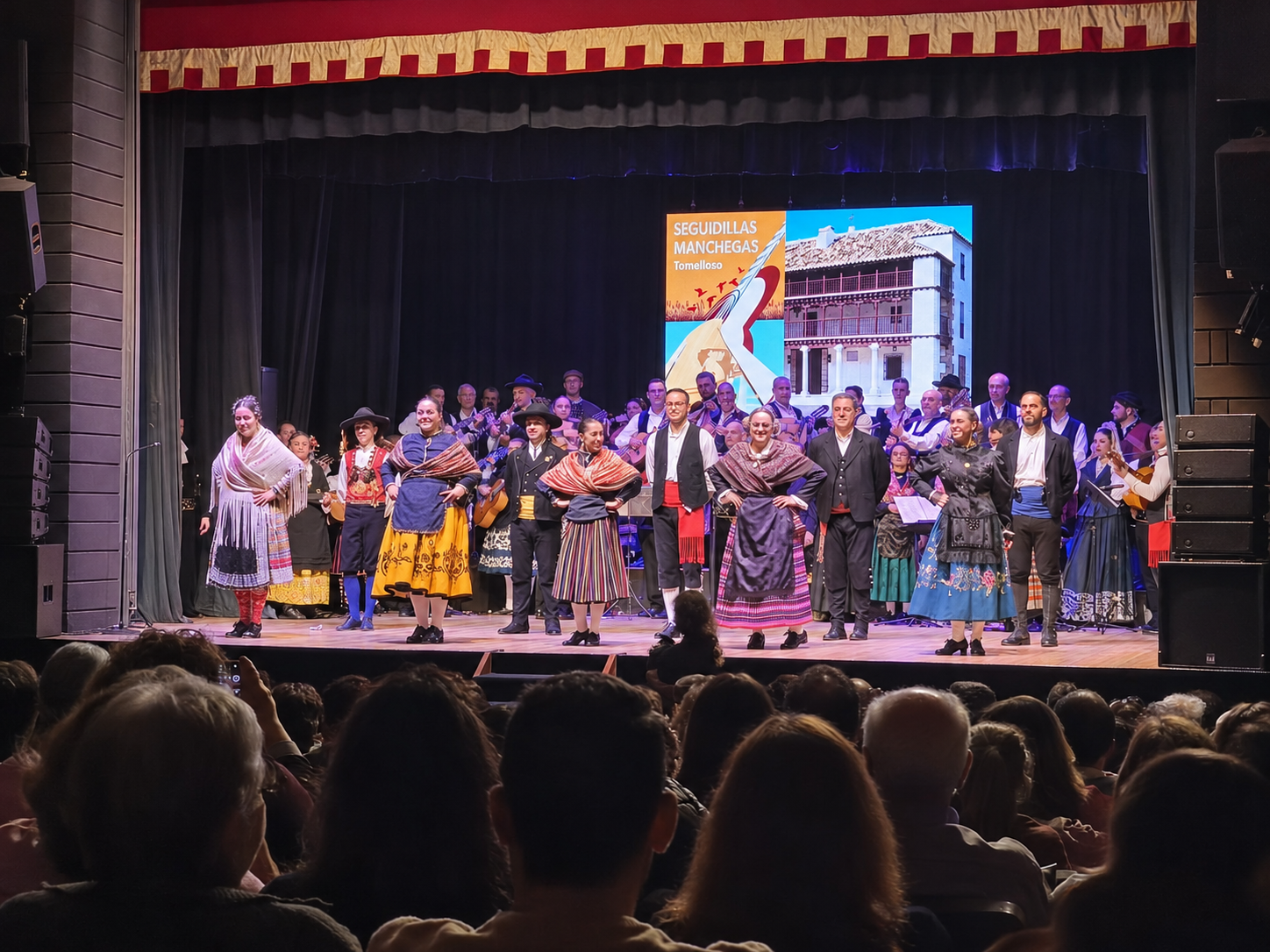
The government of Castilla-La Mancha has asserted that popular culture is a fundamental pillar of its cultural policies, emphasising its role in preserving traditions and the identity of local communities. To this end, the regional executive is promoting initiatives aimed at protecting, disseminating, and transmitting this heritage to future generations.
This statement was made by Carmen Teresa Olmedo, the Deputy Minister of Culture and Sports, during her participation in the Folklore Days in Daimiel, held at the Ayala Theatre in this Ciudad Real locality. Olmedo highlighted that folklore is a crucial part of the cultural identity of Castilla-La Mancha and represents a legacy that must be passed on to new generations.
She acknowledged the efforts of cultural associations and folklore groups in the region to keep traditions alive, particularly in rural areas, stating, "Preserving folklore does not mean merely looking to the past, but rather building a future from our roots."
The Folklore Days in Daimiel bring together researchers, scholars, cultural associations, and enthusiasts of popular traditions, aiming to enhance knowledge, conservation, and dissemination of cultural heritage. This event serves as a platform for sharing experiences, learning, and reflecting on the importance of keeping folkloric expressions alive and ensuring their continuity across generations.
Additionally, Olmedo announced that the regional government will add 12 new videos to the Audiovisual Encyclopedia of Folklore of Castilla-La Mancha, which will be included in the fourth volume of this collection. Furthermore, she reaffirmed the government's support for the candidacy of the jota, a traditional Spanish dance, for recognition as Intangible Cultural Heritage of Humanity by UNESCO, with a decision expected next month.