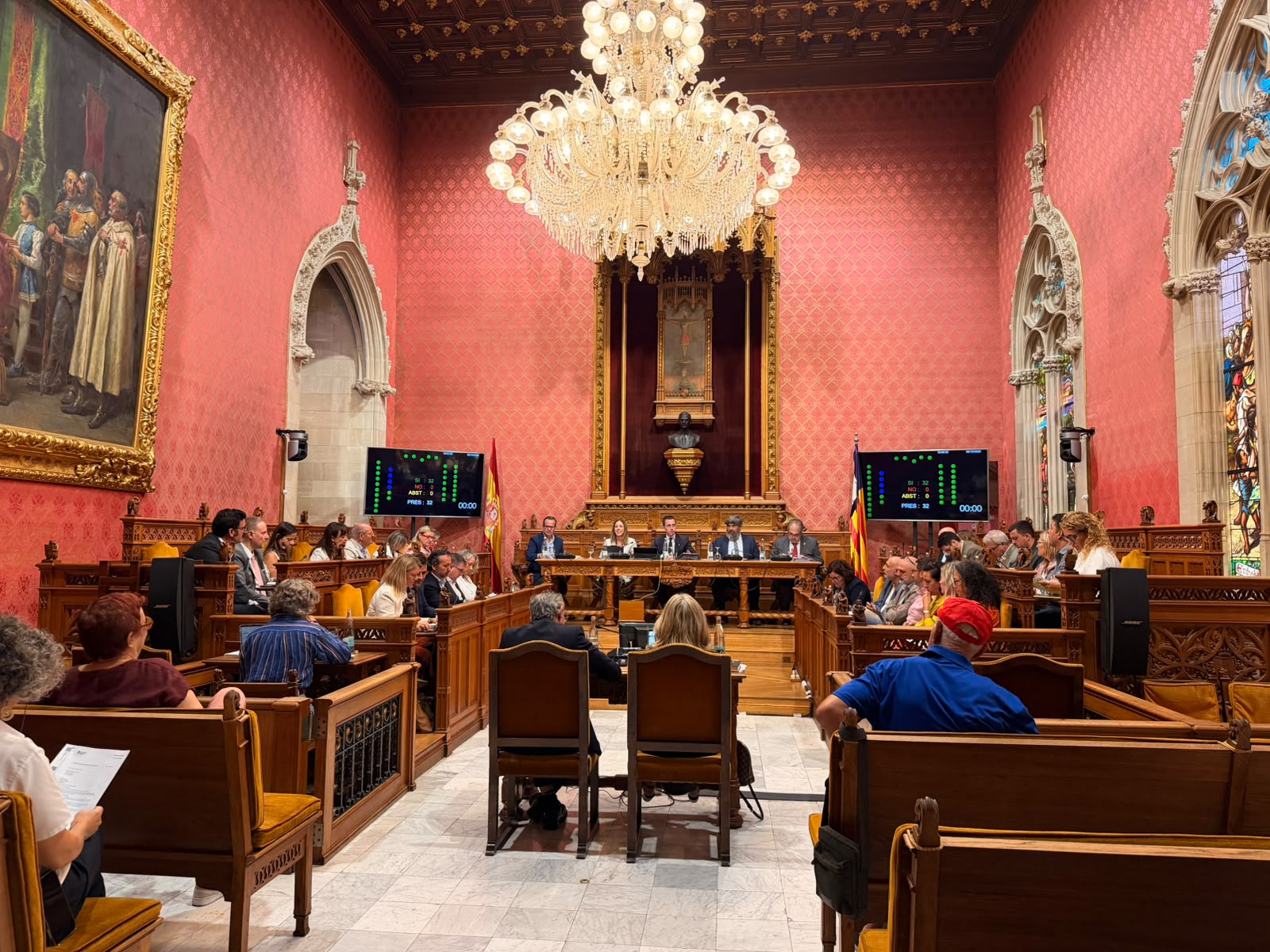
On October 8, 2026, the Plenary of the Consell de Mallorca unanimously approved the creation of a commission to coordinate the transfer of the Costitx bull heads from the National Archaeological Museum (MAN) to the Museum of Mallorca. Additionally, the Plenary declared the Beata festival in Palma, Valldemossa, and Santa Margalida as Intangible Cultural Heritage (BICIM).
Commission for the Costitx bull heads
The agreement continues the motion passed by the Plenary on November 13, 2025, which urged the Ministry of Culture, the Government of the Balearic Islands, the Consell de Mallorca, and the Town Hall of Costitx to establish this body. Both the National Archaeological Museum (MAN) and the Museum of Mallorca are state-owned, meaning the transfer will not alter the ownership of the pieces.
The commission aims to facilitate the potential transfer of the bull heads from the MAN to the Museum of Mallorca through inter-administrative collaboration. This initiative follows the Ministry of Culture's denial of a temporary transfer requested by the Consell, aiming to foster dialogue and cooperation among all parties involved.
The commission will be chaired by the head of the Culture and Heritage Department of the Consell de Mallorca, with the vice-presidency held by the head of the Insular Directorate responsible for Culture. Representatives from the Ministry of Culture, the Government of the Balearic Islands, and the Town Hall of Costitx will serve as members. The directors of the MAN and the Museum of Mallorca will participate in the commission with a voice but no vote. The secretary will be the official responsible for these duties in the Insular Commission of Historical Heritage.
The commission's role will include establishing inter-administrative cooperation methods to facilitate the return of the bull heads to Mallorca and their public exhibition at the Museum of Mallorca. It will also promote joint initiatives to study the conservation status of the pieces and request a conservation plan from the MAN for the transfer. Once housed in the Museum of Mallorca, the commission will ensure their proper conservation and promote any other initiatives that facilitate their permanent exhibition on the island. The commission will meet at least twice a year, with any representative able to request an extraordinary meeting, which must be convened within a maximum of fifteen calendar days.
Beata festival recognized as Intangible Cultural Heritage
The Plenary also definitively approved the declaration of the Beata festival in Palma, Valldemossa, and Santa Margalida as BICIM, completing the process initiated in October to protect one of the island's most emblematic and deeply rooted cultural traditions. This declaration coincides with the week of the triumphal cart procession of Santa Catalina Tomás in Palma.
This marks the third declaration promoted by the Advisory Council for Intangible Cultural Heritage, established in 2025 and composed of historian Juan José Soler Martínez, writer and researcher Caterina Valriu Llinàs, Palma chronicler Bartomeu Bestard Cladera, musicologist Eugènia Gallego Cañellas, and artisan and researcher Joana Maria Borràs Riera. Previously, the Plenary had declared the traditional technique of caladas neulas (December 2025) and the Mallorcan rondallas as BICIM. The Beneïdes de Sant Antoni de Muro, the traditional technique for producing llengües fabric, and the work of palm are still under consideration.
The declaration was processed through a single file, as the three celebrations share a common historical and devotional origin, although they retain unique elements that make them distinct. It is based on a technical study by historian Gabriel Carrió, who specializes in the figure of the saint and highlights its historical continuity, symbolic value, festive, artistic, and musical richness, as well as its deep social roots in the three municipalities.
The Palma triumphal cart has its origins in the celebrations of the beatification of 1792, taking place on the third Saturday of October, this year on October 17, culminating before the saint's relics at the Santa Magdalena canonry. Key features include the triumphal cart from 1868, owned by the Consell de Mallorca, the Beata's godfather, decorated carts, music bands, xeremiers (traditional musicians), and the song “Sor Tomaseta.”
In Valldemossa, the festival's origins date back to the late 19th century at the sa Coma estate. Since 1978, it has been a municipal celebration held every July 28, featuring a Beata chosen by the people, a godfather, decorated carts, groups of farmers, xeremiers, and music bands.
In Santa Margalida, the Beata procession, documented since the 19th century, occurs on the first Sunday of September, involving demons, farmers with jugs, xeremiers, and decorated floats. Notable moments include the breaking of jugs before the Beata and the final grand break.
All three celebrations share a symbolism linked to the glorification of the saint and the victory of good over evil, featuring angels, farmers, demons, and other characters from the Tomás tradition.