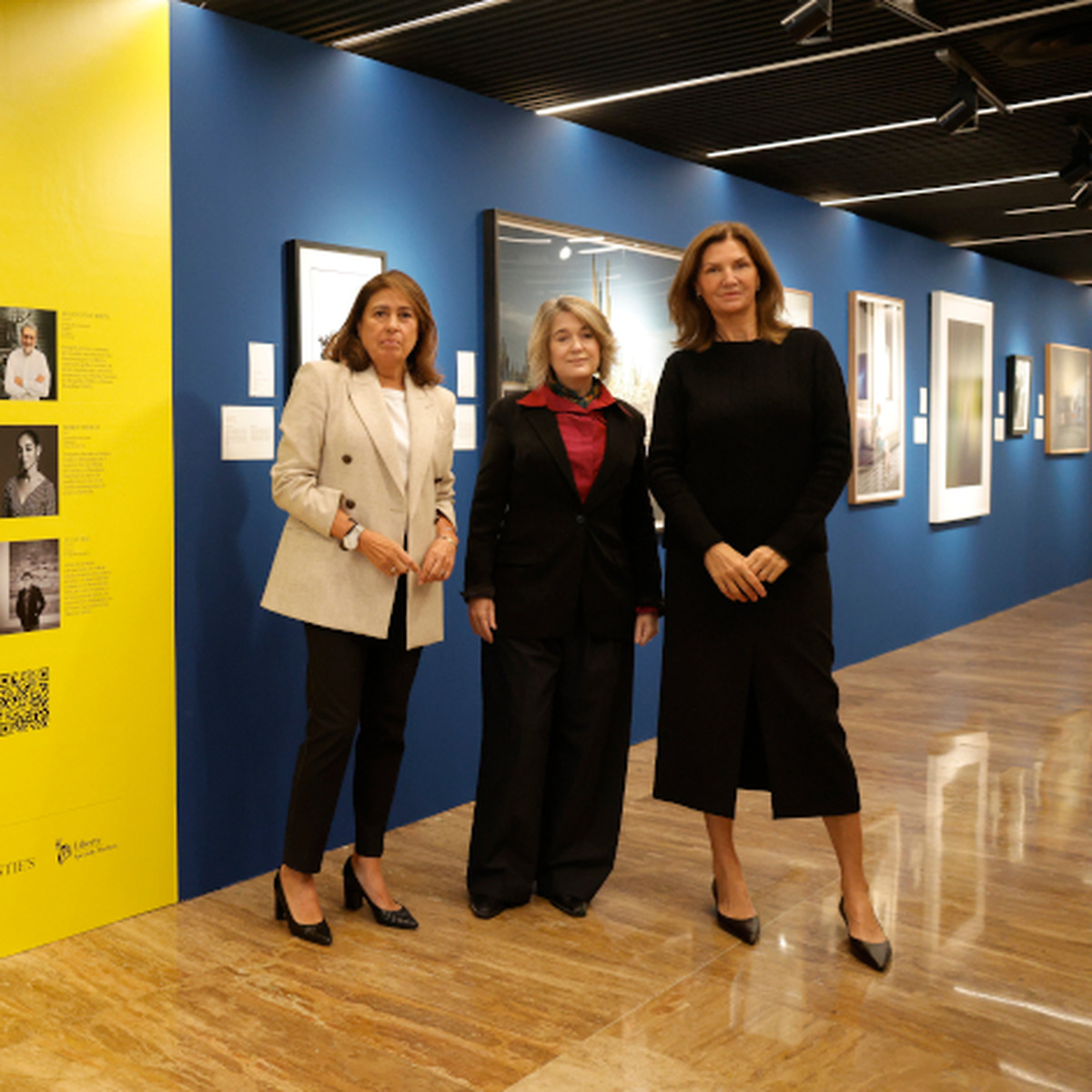
Carmen Teresa Olmedo, the Deputy Minister of Culture and Sports for Castilla-La Mancha, has inaugurated the exhibition 'Maestras en nuestra historia del arte: el estudio de la cerámica española' at the former Convent of La Merced in Ciudad Real. This exhibition pays tribute to female art historians and researchers who have played a crucial role in documenting, studying, and promoting a vital part of Spanish cultural heritage.
Olmedo emphasised that the exhibition, which will be open until 17 January, recognises the contributions of numerous women who have dedicated decades to essential research aimed at recovering and valuing various artistic expressions. According to the deputy minister, their work has significantly enhanced understanding of Spanish ceramics, positioning it where it rightfully belongs within the art historical narrative.
She asserted that ceramics and pottery should not be viewed as minor artistic expressions but rather as 'major arts', as evidenced by the quality, richness, and historical significance of the pieces preserved in museums. While the craftsmanship behind ceramic creations is often acknowledged, Olmedo noted that the extensive processes of research, restoration, and documentation that have allowed these works to survive are frequently overlooked.
The exhibition shines a light on the efforts of women who investigated the origins, antiquity, and historical context of these pieces, helping to preserve their memory and impart their value to future generations. 'Many women worked tirelessly to ensure these pieces reached us in the best possible condition, while also understanding a part of their history,' Olmedo remarked.
Particular attention is given to the ceramics of Talavera de la Reina, a significant reference point in Spanish ceramic craftsmanship and a key expression of the cultural identity of Castilla-La Mancha. However, Olmedo reminded attendees that the tradition of ceramics and pottery extends throughout the region, with notable significance in the Talavera area.
Olmedo expressed gratitude to the University of Castilla-La Mancha, represented by Vice-Rector for Students and Employability Amaya, for their collaboration in bringing this exhibition to the Museo de La Merced. She also highlighted the regional government's commitment to promoting museum collections and recovering female role models in the cultural sphere.
This initiative is part of a broader effort to highlight women's contributions to culture, both in research and artistic creation, as well as in the management of cultural institutions. As an example, Olmedo referenced the work documented in a catalogue from an exhibition at the Museo de Santa Cruz, which dedicates a section to the women who led this institution from 1939 to the 1980s.
Furthermore, the regional government is working to increase the representation of female artists in the collections and holdings of Castilla-La Mancha, aiming to acknowledge trajectories that have long remained invisible. 'We want to value women artists and make visible those who have been overlooked throughout history,' Olmedo stated.
She also thanked the art history professors and curators of the exhibition, Fernando González Moreno and Sonia Morales Cano, as well as Noelia Esparcia, a doctor in Art History from the University of Castilla-La Mancha, who were present at the inauguration alongside José Caro, the provincial delegate for Education, Culture and Sports, Ignacio de la Torre, the director of the Museo de La Merced, and Pedro Lozano, the councillor for Culture in Ciudad Real.
In conclusion, Olmedo encouraged the public to visit the exhibition, which offers an opportunity to discover the richness and value of Spanish ceramics while recognising the significant contributions of researchers who have decisively advanced their knowledge, conservation, and recognition.