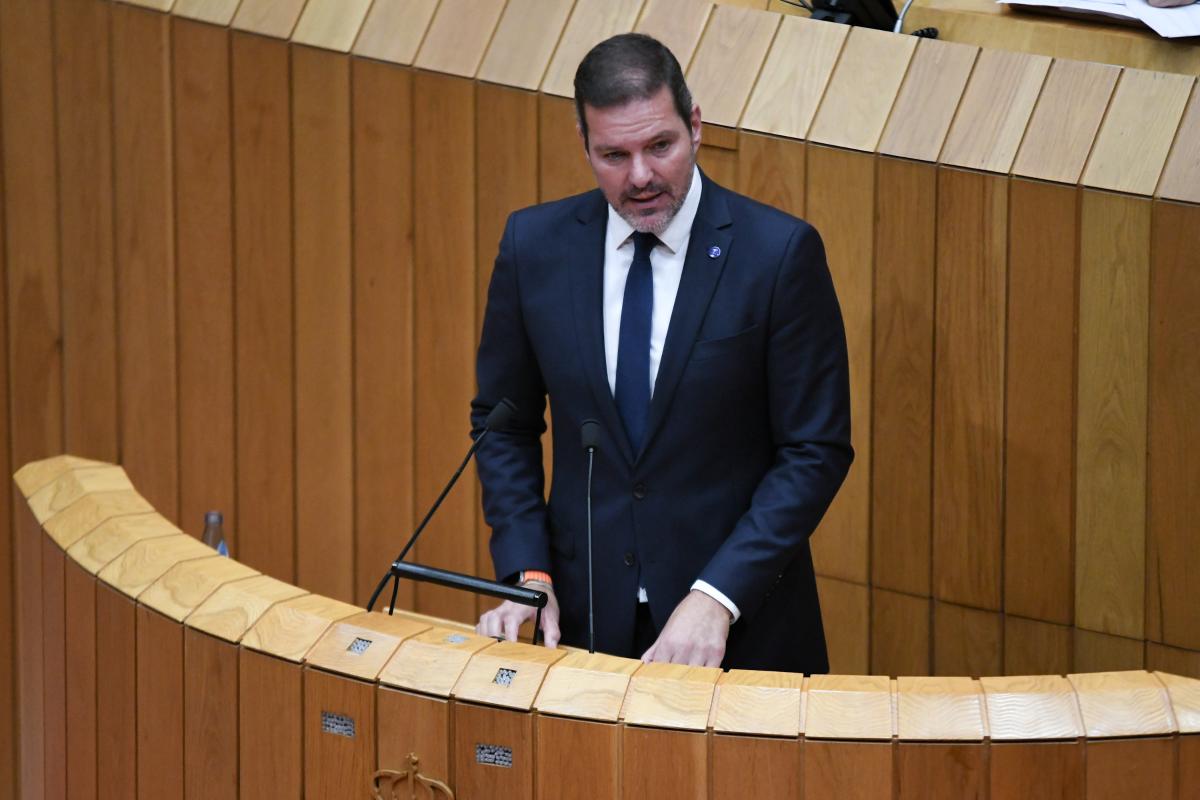
On October 6, 2026, José López Campos, the regional minister for Culture, Language, and Youth, addressed the Galician Parliament at his own request to discuss the nearly 700 measures included in the new General Plan for the Normalization of the Galician Language. His presentation followed an agreement reached by most political parties represented in the Galician Chamber to enhance the text, which is the result of nearly two years of work by experts, with contributions from entities, institutions, and individuals.
López Campos expressed gratitude for the collaboration and involvement of all professionals who participated in the document's preparation, coordinated by academic Manuel González. He emphasized that the proposal stems from a participatory process that was “open to all of society,” initiated with the establishment of 11 commissions involving over 130 experts. This was supplemented by contributions from individuals, institutions, and entities through more than 400 contacts and over 1,400 proposals received.
“The result is a comprehensive and ambitious document that will guide linguistic policies in the coming years,” López Campos noted, adding that the aim is to “adapt the previous document to the new social and demographic reality, considering the profound transformation Galicia has undergone in the last twenty years.” He pointed out that changes in work and socialization methods, social concerns, and communication styles necessitated this new approach.
Main Objectives of the Plan
The new document is designed to promote the use of Galician across society, particularly among foreign residents, in digital contexts, and on social media, under six main objectives. The first focuses on linguistic training for the entire population, while the second aims to ensure that anyone wishing to live in Galician can do so. The third and fourth objectives seek to enhance social integration and ensure effective intergenerational transmission, raising awareness that the best way to preserve Galician is through its use and transmission.
The fifth objective aims for greater external recognition of the language, while the final goal is to equip the Galician language with the linguistic and technical resources necessary to meet contemporary societal needs.
Key Lines of Action
According to the minister, the main lines of action outlined in the document focus on welcoming and integrating newcomers to Galicia, addressing generational transmission issues, and strengthening the presence of Galician on digital platforms and applications. In the educational sector, measures include allowing scientific subjects to be taught in Galician through regulatory adjustments and promoting activities that encourage the use of the language, such as radio programs, school theater, childcare alternatives, and libraries.
For professional sectors, proposals include creating a certification for establishments that demonstrate the use of Galician in the socio-economic fabric, offering new specialized courses for staff across various departments, and establishing new language services to facilitate communication in the native language. The document also contains measures to implement Galician in the new procedural justice system and to promote the creation of a Language Law to complement the Linguistic Normalization Law passed in 1983.
Other notable measures aim to enhance the availability of audiovisual products in Galician, promote Galician music, strengthen ties with the Portuguese-speaking world, ensure the availability of applications and video games in Galician for children and youth, and establish a new Advisory Council for the Galician Language, composed of representatives from the Xunta de Galicia, parliamentary groups, and entities related to the Galician language.
The document discussed today is set to be voted on in Parliament tomorrow after evaluation by the political parties represented in the Galician Parliament.