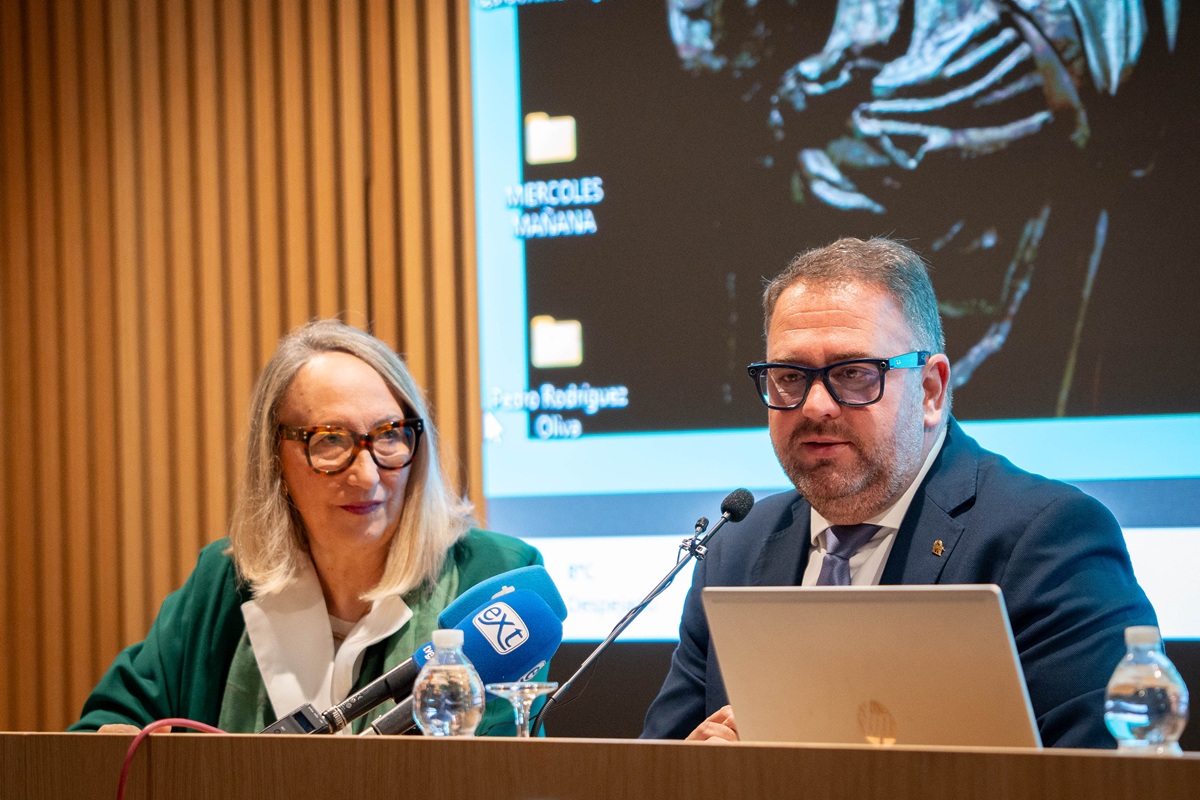
The mayor of Mérida, Antonio Rodríguez Osuna, opened the XXIII International Congress on Ancient Bronzes this morning at the National Museum of Roman Art (MNAR), welcoming over a hundred specialists, researchers, and experts from 16 countries participating in this significant international scientific gathering.
During his address, Rodríguez Osuna expressed pride in Mérida, known as Augusta Emerita and a UNESCO World Heritage site, for hosting such an important congress. He stated, “It is an honour for Mérida to welcome an international meeting of this relevance, where specialists from around the world will share their research findings and the latest advancements in the study, conservation, and dissemination of ancient bronzes.”
The congress will feature more than a hundred specialists from 16 countries, presenting their recent work through 69 lectures and scientific communications, along with 34 academic posters. The mayor also highlighted the significance of this event coinciding with the 40th anniversary of the current MNAR location and the opening of its new temporary exhibition hall, designed by architect Rafael Moneo.
In this context, he praised the exhibition “In the Shadow of Vulcan,” which showcases exceptional pieces from some of the leading museums in Spain and Portugal, providing participants with the chance to view some of the finest collections of bronzes from the Iberian Peninsula.
The scientific programme will include specialists affiliated with prominent international museums and academic institutions, such as the Louvre, the J. Paul Getty Museum, the Hermitage Museum, the German Archaeological Institute, and the University of Southern California. More than half of the participants are from outside Spain, representing countries including Portugal, Italy, France, the United Kingdom, Germany, Poland, Switzerland, Greece, Albania, Turkey, and the United States.
Rodríguez Osuna emphasised that hosting this congress “represents a new opportunity to strengthen Mérida's international profile and consolidate its position as a reference point in the knowledge, research, and conservation of Roman heritage.”
Finally, the mayor expressed gratitude to the organising entities, including the National Museum of Roman Art, the Friends of MNAR Association, and the Foundation for Roman Studies, as well as the support and collaboration of the Mérida City Council in making this important international event possible. He concluded, “Mérida is a city that lives its heritage, protects it, and shares it with the world. Welcoming researchers and specialists from so many countries is also a way to continue disseminating our history and demonstrating that our Roman legacy continues to generate interest and knowledge at an international level.”