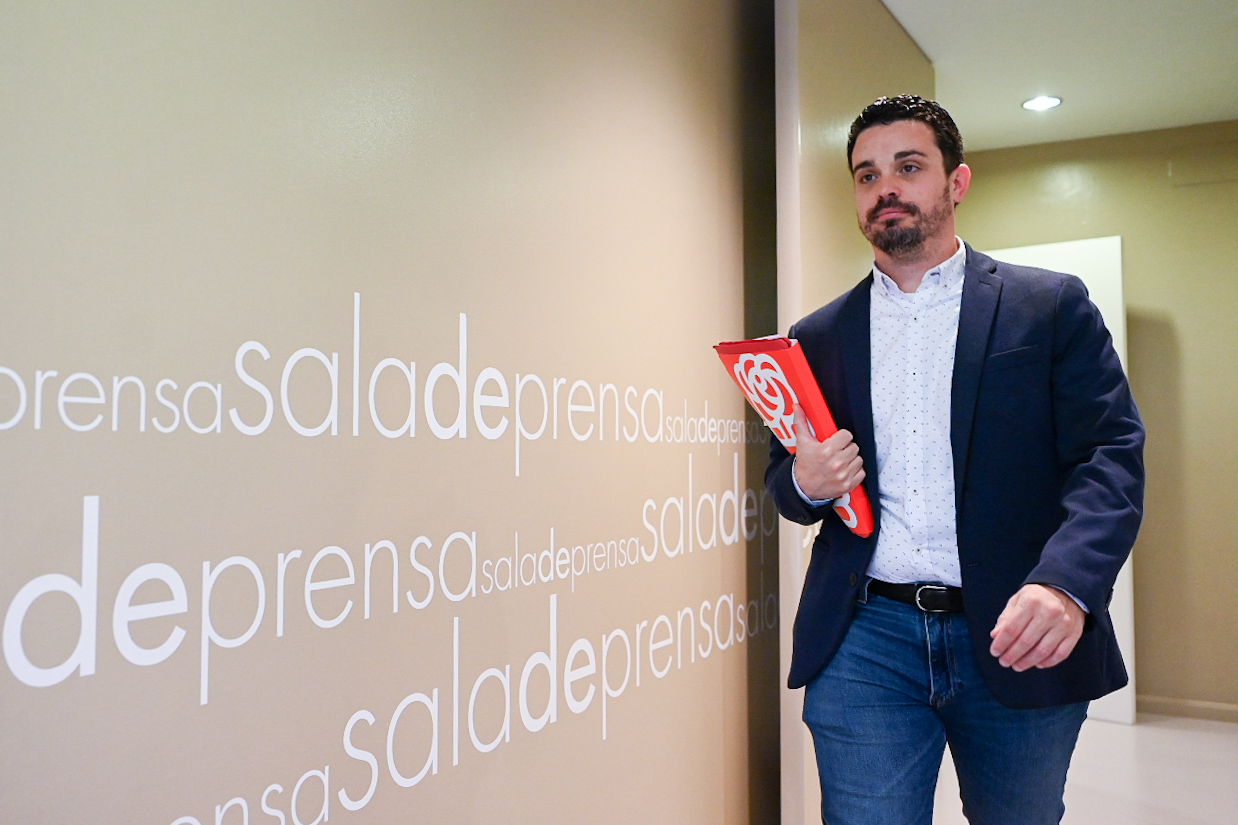
Darío Villagrasa, the socialist spokesperson for culture in the Cortes de Aragón, has publicly condemned the management of the regional government led by Jorge Azcón, which has had to return €740,000 allocated by the Ministry of Culture in 2025 due to the failure to process the necessary grant applications. He also warned that another €636,000 earmarked for similar cultural programmes in 2026 is at risk of being lost for the same reason.
During a press conference held at the Cortes de Aragón, Villagrasa explained that this issue came to light following information requests made by the association Procura, which represents professionals in the Aragonese cultural sector. The socialist deputy accused the regional government of “terrible management” and “lack of planning,” which has deprived the sector of resources intended to support projects in rural areas, promote the arts among children, and improve cinema facilities.
Villagrasa detailed that the €740,000 returned corresponds to three programmes funded by the Spanish government: €283,000 for cultural projects in municipalities with fewer than 5,000 inhabitants, €116,000 for arts and education initiatives aimed at children, and €340,000 for audience development and cinema improvements. He noted that the funds were transferred on 7 May 2025, but the Government of Aragón failed to prepare and publish the public calls for applications in the Official Bulletin of Aragón, preventing the aid from reaching its intended recipients.
The spokesperson questioned how a government that constantly claims to be well-managed could return funds that were already available to them. He highlighted that while Azcón's administration asserted everything was going well, the Aragonese cultural sector was losing hundreds of thousands of euros due to the lack of planning by the General Directorate of Culture.
Furthermore, he warned that this situation could repeat itself this year, as the Ministry of Culture announced an additional €636,000 in April for the same three programmes, yet the regional government has yet to prepare the regulatory bases or corresponding calls for applications. Thus, the total amount returned or at risk of being lost now approaches €1.4 million, a significant sum for a sector that has been advocating for increased resources and more effective planning of public aid.
Villagrasa also criticised the contradiction between the government's constant demands for funding from the national government and its inability to utilise the resources it receives. He reproached Azcón for demanding more funds from Madrid while failing to manage the allocations already transferred to Aragón.
The socialist spokesperson rejected any justification from the Aragonese government regarding the timing of the ministerial calls. He pointed out that Azcón's administration has, on occasions, set application periods of just two months between the final resolution of cultural grants and the obligation to justify them.
Moreover, he noted that the PSOE has proposed various initiatives over the past few years to improve grant planning, develop a cultural infrastructure plan, and facilitate cultural programming for local councils, all of which have been rejected by the People's Party.
In light of this situation, Villagrasa announced that the socialist parliamentary group has registered several parliamentary initiatives, including non-legislative proposals, requests for appearances, interpellations, and oral questions, to demand explanations from the regional government. He specifically called for the vice president and head of the culture department, Mar Vaquero, to take responsibility for the returned funds and to outline measures to prevent a recurrence.
Additionally, he urged the Government of Aragón to incorporate, through amendments to the 2027 budget proposal, an amount equivalent to the funds already returned and those at risk of being lost, close to €1.4 million, to compensate the Aragonese cultural sector. “That is the least they can do,” he stated, insisting that the regional government must take responsibility and stop seeking excuses from the Ministry of Culture or administrative timelines.
Villagrasa framed this situation within a budgetary policy that, in his view, demonstrates the Azcón government's lack of commitment to culture. He denounced that the budgets for 2025 and 2026, as well as the 2027 proposal, do not include allocations for cultural infrastructure, while the needs of theatres, cinemas, libraries, and exhibition spaces remain unaddressed.
He also contrasted the resources allocated for cultural activities in rural areas with other priorities of the government. Villagrasa pointed out that between 2025 and 2026, nearly €440,000 in state aid for projects in municipalities with fewer than 5,000 inhabitants has been relinquished, while the 2027 budget proposal only allocates €140,000 for cultural associations operating in rural areas. Similarly, he criticised the Government of Aragón for planning a €370,000 aid package for the Foundation for Bullfighting while not increasing resources for cinemas, audience development, or cultural projects in Aragonese municipalities.
For Villagrasa, these decisions highlight the gap between the announcements made by the regional government and its actual budgetary priorities, especially when Azcón boasts of presenting the highest budgets in the history of Aragón.