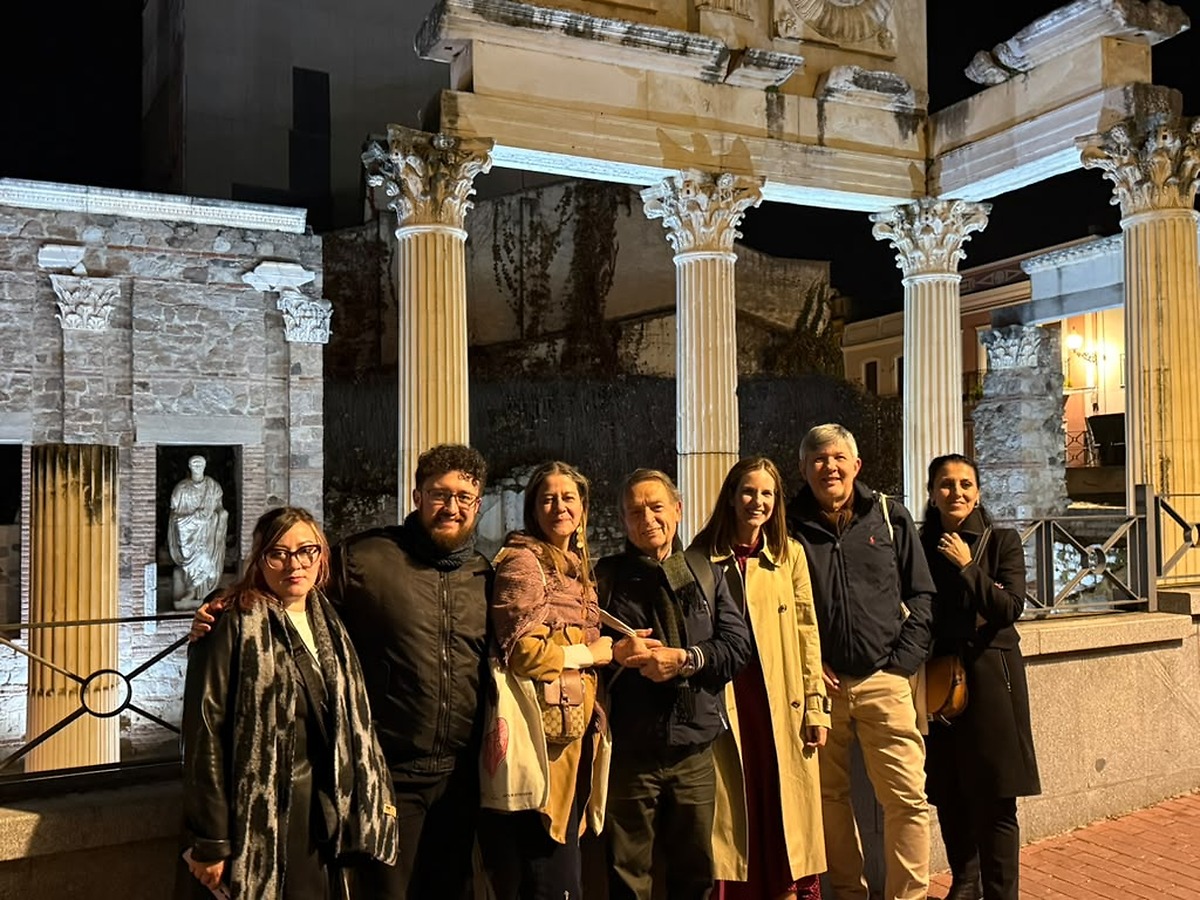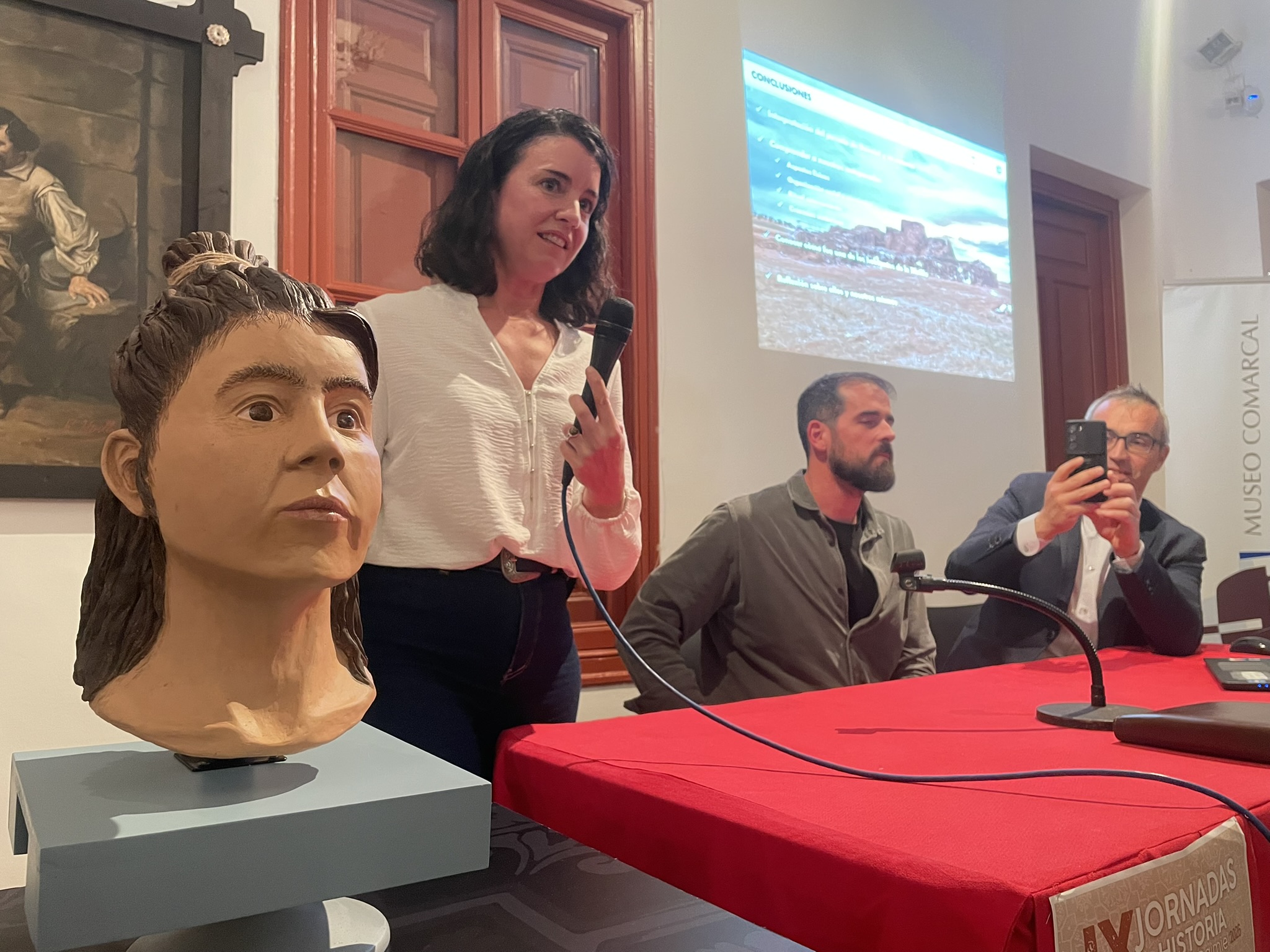
The Comarcal Museum in Daimiel was the venue for the closing session of the IX History Conference on 20 November. This final event showcased four research presentations, including investigations into the inquisitorial process of laundress Isabel Maeso, the wetlands of Daimiel as royal hunting grounds, the origins of colonisation group number 1, and the facial reconstruction of Lazuer, a Bronze Age woman whose remains were discovered at the Motilla del Azuer.
The session commenced with Eva Jiménez de los Galanes Loro discussing the case of Isabel Maeso, a laundress from Daimiel who was prosecuted by the Inquisition in 1670. Her presentation examined how the image of the accused was constructed from testimonies regarding wax figures pierced with pins, shedding light on the beliefs surrounding love witchcraft in 17th-century Daimiel.
Concepción Moya García and Carlos Fernández-Pacheco Sánchez-Gil reviewed the rise of the Daimiel wetlands as a site for waterfowl hunting from the late 19th to early 20th centuries, noting visits from monarchs Alfonso XII and Alfonso XIII. The presentation detailed various hunting methods and the use of concealed positions near the water, explaining that “there were few hides, but they were very well located and hidden.”
Juan Vidal Gago traced the origins of colonisation group number 1 to the post-war period, when several farmers with land in Gil Pérez, La Borreguera, and La Espinosa banded together to irrigate approximately 900 hectares. Vidal outlined the strategies for water capture and storage, which involved excavating a well seven metres in diameter and thirty metres deep, along with the construction of a large reservoir. He also highlighted how the financing of these works was secured: “The farmers mortgaged their properties.”
The final presentation focused on the facial reconstruction of Lazuer, based on the skeletal remains of a woman buried at the Motilla del Azuer. Archaeologist Miguel Torres Mas described the project as “a scientific endeavour grounded in data and evidence,” emphasising its educational aspect in bringing archaeological research results to the public. Restoration expert María Isabel Angulo Bujanda explained that the reconstructed face is “an approximation based on the morphology of the skull.” However, details such as scars that do not leave marks on the bone are beyond the scope of this reconstruction. Angulo noted that a potential DNA analysis, if feasible, could provide further insights into traits like eye and hair colour.