Televisión Canaria will broadcast the film ‘La hojarasca’, directed by Macu Machín, on 19 November at 23:55. This screening coincides with the sixteenth edition of the Lanzarote Film Festival, which takes place from 19 to 29 November. Under the theme ‘Pueblos’ (Villages), the festival aims to explore the stories shared among neighbours, the bonds that sustain communal life, and the reasons for staying, leaving, or returning.
‘La hojarasca’ is also available on Canarias Play, the on-demand content platform of Televisión Canaria. Produced by Viaje Films and Macu Machín herself, with the involvement of Televisión Canaria, this documentary film, released in 2024, delves into the lives of three sisters in La Palma who reunite to divide a family inheritance during the volcanic eruption.
According to the synopsis, Elsa and her younger sister Maura return to their childhood home after more than 20 years. Their other sister, Carmen, lives there alone, maintaining the family's precarious properties. Maura's degenerative illness progresses, while Elsa seeks to resolve the inheritance distribution with Carmen. Amidst almond harvests and unresolved disputes, old conflicts resurface, echoing the rumblings of the volcano.
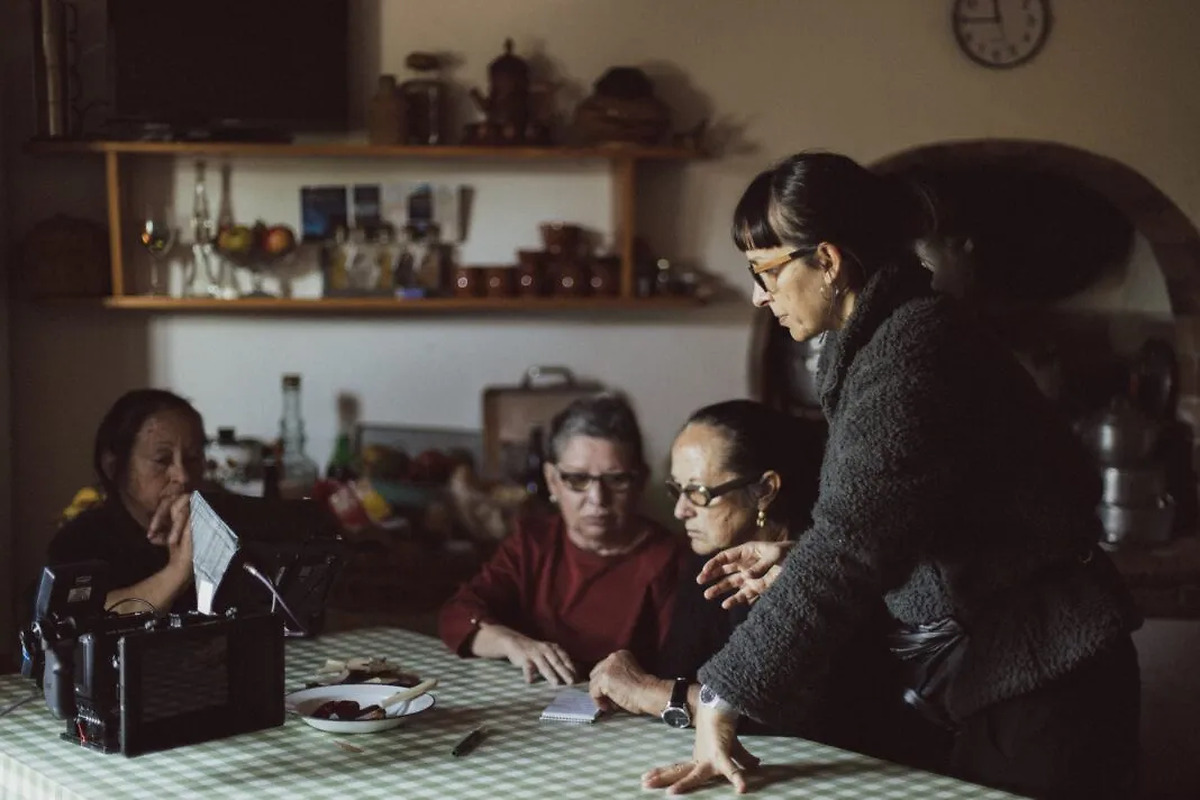
Described as a hybrid between documentary and fiction, the film features Machín's real family members: her mother and two aunts, Carmen Machín, Elsa Machín, and Maura Pérez. Machín explains that ‘La hojarasca’ is a film about ghosts, unexpected encounters, and family reconciliations. She elaborates, “It addresses two perspectives on understanding the world from the outskirts of the metropolis: my own uprooted viewpoint, through which I tell my family's story to understand my roots; and that of the women in my family, who are less interested in trivial facts like their city's history or even their family's origins, but rather connect better with the supernatural.”
“The women in my family find it difficult to express their innermost feelings and relate to the world around them. The harsh life in the countryside has hardened them like the bark of trees, and their children had to learn from their silences. Origin, memory, roots. Our heritage lies in their hands, and it is my task to construct my story with what remains of my ancestors and those of others who were pursued after the Spanish Civil War, resting in the mountains surrounding our home,” she adds.
Machín continues, “My intention is not to seek answers but to accept their absence, to delve into the legitimate realm of stories where the memory of our ancestors flows. I have woven my memory with threads of fiction and reality to create a seamless tapestry where dreams and reality coexist naturally.”
The collaboration between the Lanzarote Film Festival and Televisión Canaria has become a unique way to extend the festival's programming across the archipelago. Each edition features a film from the ‘Trasfoco’ section, which includes feature films and short films from various eras and countries, reflecting on memory, migration, work, affections, and the conflicts that shape communal life. This year, ‘La hojarasca’ has been selected.
Javier Fuentes, director of the Lanzarote Film Festival, explains, “Since 2020, we have collaborated with Televisión Canaria to bring a film from the festival into the homes of all the islands each year. This edition, dedicated to villages, has chosen ‘La hojarasca’ because it invites us to reflect on what we have inherited from our communities and how to pass it on to those who come after us.”
This shared commitment to cinema that encourages understanding and reflection has garnered significant viewership, challenging the notion that demanding cultural proposals cannot engage broad and diverse audiences. The public broadcaster thus expands the opportunities for connection that cinema offers, while the festival discovers new ways to engage with its territory.
In 2026, when ‘Trasfoco’ focuses on villages, this collaboration takes on special significance, highlighting the goal of making stories rooted in rural communities resonate with many others and prompting contemplation on what it means to live together.
With ‘La hojarasca’, Macu Machín, known for her short films such as ‘Geometría de invierno’, ‘El mar inmóvil’, and ‘Quemar las naves’, makes her feature film debut with considerable success, as evidenced by the awards it has received. The film was selected for the Forum section of the Berlinale, won two Biznagas de plata for Best Spanish Film and Best Direction at the Málaga Film Festival, and received the Best Direction award in the Ibero-American documentary section at the Guadalajara Film Festival in Mexico. Additionally, it was honoured with the Richard Leacock Award for Best Canary Island Feature Film by the International Film Festival of Las Palmas de Gran Canaria.