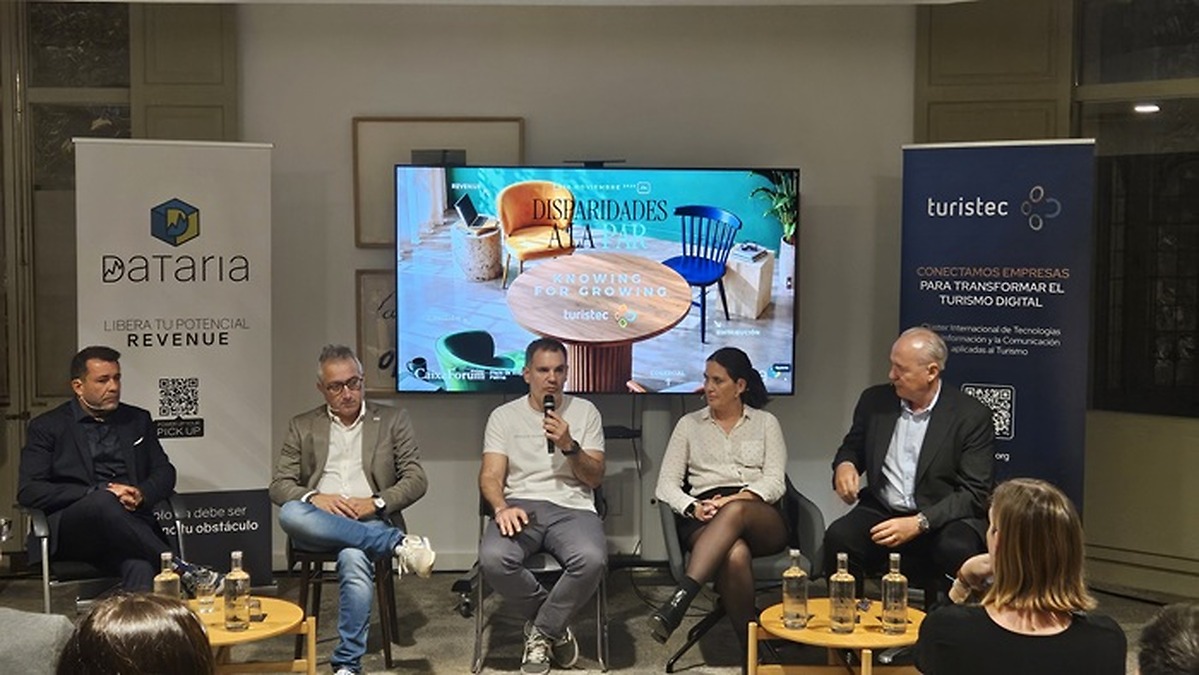
The knowing for growing event, hosted by Turistec in collaboration with Dataria, attracted a full house as industry professionals gathered to address the complexities of hotel revenue and distribution. Key participants included representatives from Summum Hotel Group, Zafiro Hotels, Puro Group, and PortBlue Hotels Group.
Central to the discussions were critical questions such as the impact of promotions on profitability, the rationale behind renouncing guaranteed contracts with tour operators, and the effectiveness of selling the last available room. The session, titled 'Disparities at par', was moderated by Pau Rivera, CEO of Dataria, and took place at the CaixaForum in Palma.
The event began with a welcome coffee, allowing attendees and speakers to exchange views before diving into a debate that underscored the absence of universal solutions in hotel revenue and distribution. Through practical case studies, participants shared diverse approaches and experiences, illustrating how a single decision could yield different outcomes depending on the context.
One of the first topics discussed was the role of promotions, with attendees agreeing that it is not enough to measure how many bookings an offer generates; it is also essential to assess its impact on average pricing, new customer acquisition, visibility, and long-term strategy.
Similar discussions arose regarding relationships with tour operators and distributors, where varied experiences led to a common conclusion: each establishment must find the balance that best aligns with its product, market, direct sales capacity, and business objectives.
Throughout the afternoon, the significance of data was a recurring theme. Speakers emphasised that the effectiveness of any strategy diminishes when the underlying data is incomplete or inaccurate. They highlighted the need for an organisation-wide commitment to data culture, involving all departments from reception to commercial and revenue teams.
The debate also provided an opportunity to challenge deeply held beliefs within the industry. One such belief is the automatic association of success with maximum occupancy. Several cases demonstrated that achieving 100% occupancy does not always equate to optimal profitability, and in certain situations, selling fewer rooms at a higher price may be more advantageous.
Technology and artificial intelligence were inevitably part of the conversation. While acknowledging their potential to streamline processes, automate tasks, and enhance analytical capabilities, participants maintained that these tools still require oversight, context, and professional judgement to lead to sound decisions. This interplay between technology and human talent was a key takeaway from the session.
Jaume Monserrat, president of Turistec, closed the event by reiterating the importance of integrating technological innovation into tourism business strategies while recognising that it is ultimately people who interpret information, make decisions, and guide organisations.
With a full house and high audience engagement, 'Disparities at par' reaffirmed the appeal of the knowing for growing format, designed to share practical knowledge, contrast perspectives, and foster discussions that encourage better questions rather than providing definitive answers.