asa ja alicante has voiced strong opposition to trade agreements with countries that do not adhere to the same production standards. The organisation claims these agreements introduce pests, depress prices, and fail to provide necessary active substances to combat these issues. This was highlighted during the fifth Citrus Day, organised by asa ja alicante and the Orihuela City Council, which saw significant participation from over a hundred attendees, including lemon, orange, mandarin, and grapefruit farmers, agro-food industry representatives, universities, water management communities, financial entities, political authorities, and experts.
The event, held at the Miguel Hernández University in Orihuela, focused on the theme “Produce, protect, and compete under the same rules,” addressing the critical challenges and opportunities facing the citrus sector. According to asa ja alicante, the future of citrus farming relies on increased control at entry ports to prevent imports that violate phytosanitary safety, fair pricing that reflects production costs, and improvements in professionalism and water security.
Notably, the lemon situation in Alicante is alarming. While the national average yield is 20,007 kilos per hectare, local farmers only achieve about 13,540 kilos. The prevalence of pests such as Pulvinaria and yellow leaf curl, which has forced some citrus growers to uproot their plants to prevent disease spread, alongside the challenging water resource situation in the Vega Baja, is severely impacting profitability.
José Vicente Andreu, president of asa ja alicante, presented a technical report on the current campaign, emphasising the commercial threat posed by the massive influx of South African lemons into the European market. In 2026, imports from South Africa reached 440,000 tonnes, creating an oversupply that has left around 100,000 tonnes of Spanish lemons without a market. This situation is deemed unacceptable, as Spanish farmers comply with the strictest phytosanitary, environmental, and labour regulations globally, while European markets accept products from third countries that do not meet the same standards.
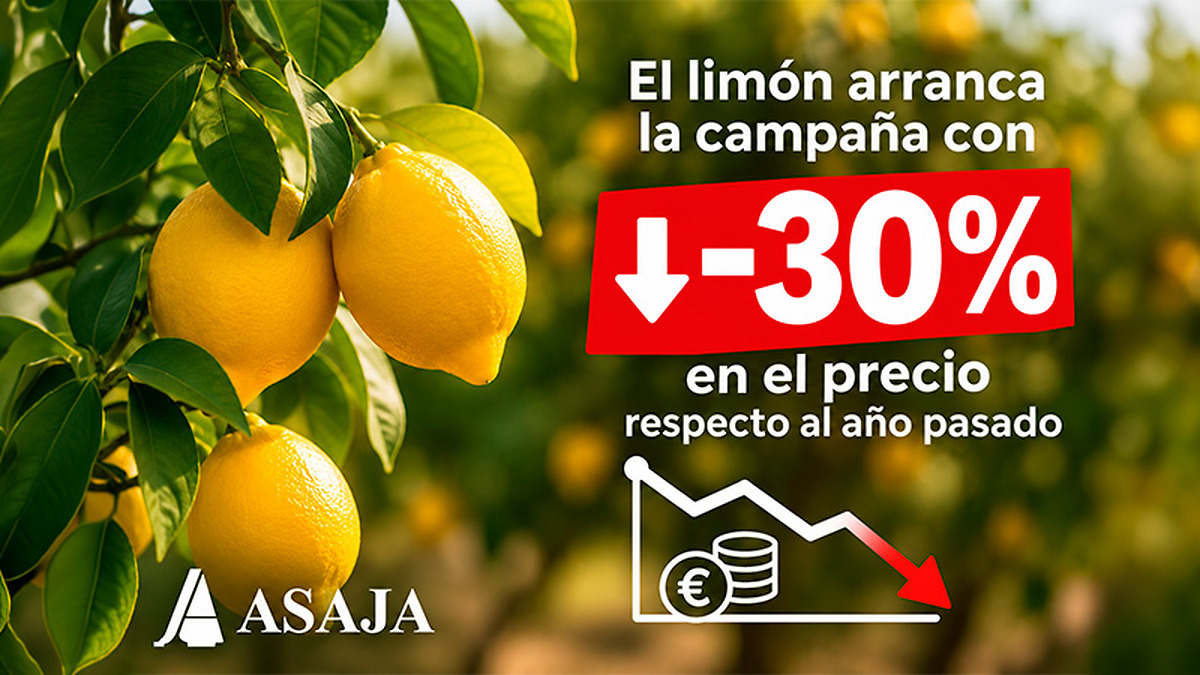
The unequal competition not only drives down prices but also raises concerns about the quality and preservation treatments of imported products. Andreu stated, “Europe cannot impose such strict requirements on its farmers while simultaneously allowing imports that operate under different rules.” The pressure has resulted in Alicante lemons losing approximately 40 days of marketability at the start of the campaign, with prices starting 30% lower than the previous year.
Despite these challenges, there is hope as the market for Verna lemons appears stable for spring, indicating demand for local products when external pressures are alleviated. Asa ja alicante is calling for urgent measures to protect producers' profitability, ensure reciprocity in import conditions, and strengthen phytosanitary and residue controls at borders.
Andreu further lamented the detrimental effects of agricultural policies that penalise production, climate change, reduced access to pesticides, and rising costs of fertilizers and energy. He warned that the current agreements foster inequality, stating, “We Europeans penalise our own while rewarding those who harm the environment, our health, and human rights.”
Alberto Urbaneja, a researcher at IVIA, raised alarms about Huanglongbing (HLB), a devastating and incurable disease affecting citrus crops worldwide. He cited examples from Florida and Brazil, warning that the disease and its vectors are advancing dangerously through Eastern Mediterranean regions, with recent confirmations of the vector Diaphorina citri in Israel, Cyprus, and nearby Rhodes in Greece.
Urbaneja advocated for the success of classical biological control strategies developed by IVIA in collaboration with international institutions, emphasising the need for rigorous phytosanitary control at EU borders. Ramón Espinosa, technical secretary of asa ja alicante, highlighted the structural profitability crisis facing the citrus sector, where farmers are squeezed between rising costs and low prices imposed by large retailers, leading to excessive fiscal pressure and abandonment of farms.
In the political and commercial realm, the sector demands a robust response and urgent change in direction in light of the inaction from Brussels and the central government. It is intolerable that a restrictive Green Pact and stifling bureaucracy are imposed on European producers while allowing massive unfair competition from third countries, such as Turkey and Egypt, which account for 90% of health alerts related to prohibited substances in the EU.
Water scarcity is also a pressing issue, with Pablo Melgarejo, coordinator of CEHAS-UA, and Roque Bru, president of the General Community of Irrigators of Levante Margen Izquierda, highlighting that the Vega Baja del Segura region faces a structural water deficit of 52 hm3/year. Available resources total 248.3 hm3/year against total demands of 300.5 hm3/year, with 85% allocated to agricultural irrigation.
Experts at the roundtable discussed the future roadmap for citrus farming, addressing competitiveness against third countries, plant health threats, profitability, and water sustainability. A key moment in the debate arose when the lack of reciprocity in imports was highlighted, questioning the acceptability of European supermarkets allowing the entry of foreign lemons containing up to 11 chemical substances—some banned in the EU—while imposing strict limits of only two active substances on European producers. This situation has been described as a comparative grievance and a direct fraud against consumers.