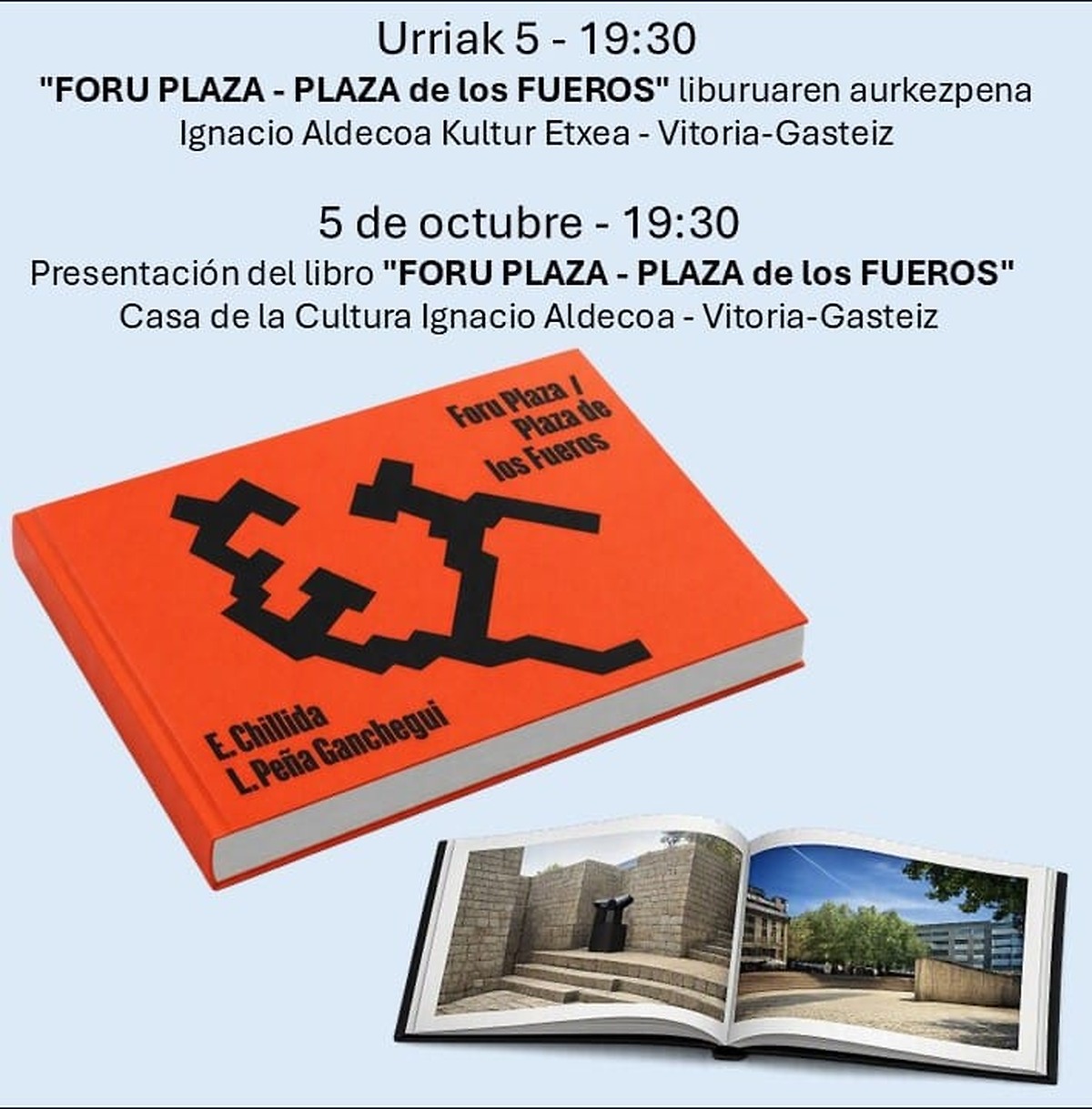
The Casa de Cultura Ignacio Aldecoa will present the book ‘Foru Plaza / Plaza de los Fueros’ on October 5, marking the first comprehensive publication on the history, artistic and architectural significance, and community relationship with one of Vitoria-Gasteiz's most distinctive urban spaces.
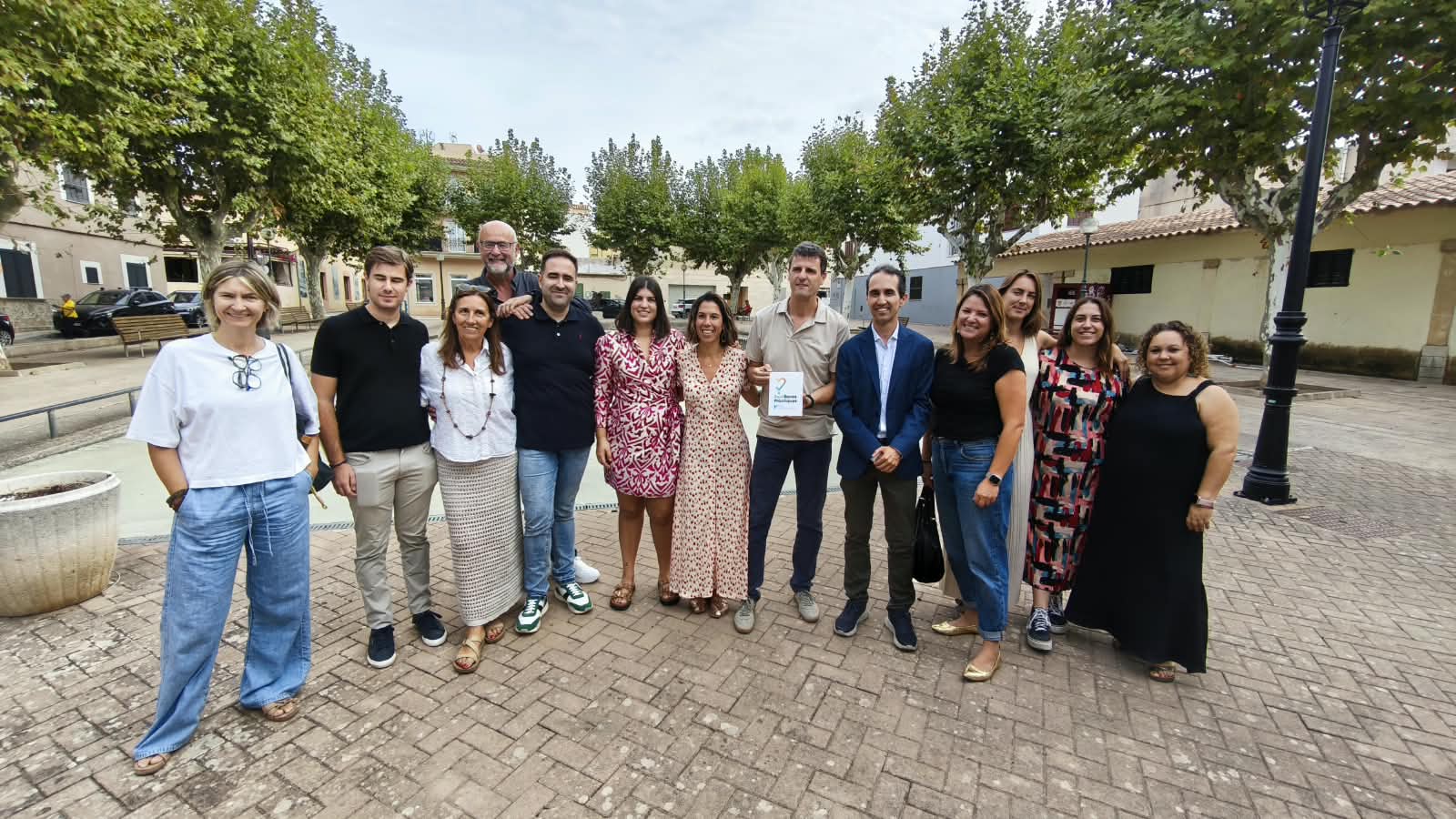
This initiative was spearheaded by Patricia Álvarez de Arkaia, Ángel Cordero, and Montx Alkorta, who aim to deepen understanding of Plaza de los Fueros and its role in the daily life and landscape of Vitoria-Gasteiz. The book features contributions from various specialists in art, architecture, and heritage, including Pedro Txillida, Kosme de Barañano, Jon Wood, Mario Sangalli, Gilen Txintxurreta, Peter Murray, Miren Vadillo, Daniel Castillejo, and José Antonio Abásolo.
The publication delves into the historical and social context of the plaza's inception, the creative process led by Eduardo Chillida and Luis Peña Ganchegui, its significance as an artistic and architectural intervention, and its integration into the city's daily life.
Exhibition highlights the plaza's origins and significance
The book launch is part of an ongoing exhibition at the Casa de Cultura Ignacio Aldecoa, which has been open to the public since September 10, celebrating the 50th anniversary of Plaza de los Fueros. The exhibition offers a journey through the plaza's origins, meaning, and evolution, conceived in 1976 as a civic gathering place where art, architecture, and public space converge.
It emphasizes the work of Chillida and Peña Ganchegui as a benchmark of contemporary public art and a shared cultural heritage. One of the exhibition's main attractions is the first-time gathering of various pieces and materials related to the plaza's creation, including the alabaster sculpture ‘Gasteiz’ by Eduardo Chillida, six sketches, and a model of the plaza from Chillida Leku, as well as the engraving ‘Gasteiz’ from Artium Museoa. These materials provide insights into the plaza's creative process from different angles and illustrate the close relationship between Chillida's sculptural proposal and Peña Ganchegui's architectural vision.
Collaboration from various institutions has been crucial for both the exhibition and the publication. The exhibition has involved Artium Museoa, Museo de Bellas Artes de Bilbao, Fundación Peña Ganchegui, Fundación Chillida Belzunce – Chillida Leku, COAVN/A, Arkabia, and Casa de Cultura Ignacio Aldecoa / Diputación Foral de Álava. The book has received support from Fundación Peña Ganchegui, Fundación Chillida Belzunce – Chillida Leku, the General Deputy's Cabinet of the Diputación Foral de Álava, and the Mayor's Office of Vitoria-Gasteiz, along with contributions from numerous authors and collaborators.
Activities to explore Plaza de los Fueros
The project is complemented by a series of parallel activities that will explore the plaza from various perspectives over the coming weeks. On October 5 at 7:30 PM, the Casa de Cultura Ignacio Aldecoa will host the public presentation of the book, featuring José Antonio Abásolo, Mikel Chillida, and Rocío Peña, alongside Patricia Álvarez de Arkaia and Montx Alkorta, moderated by Jabo H. Pizarroso. The book will be available for purchase that day.
On October 13 at 7:00 PM, Arkabia will screen three documentaries about Plaza de los Fueros as part of its ‘Álava en Movimiento’ series, with participation from Patricia Álvarez de Arkaia, Ángel Cordero, and Montx Alkorta, moderated by Enrique Uriarte and presented by Garbiñe Ortega.
On October 22, the Colegio Oficial de Arquitectos Vasco-Navarro will host a conference on the architectural and urban aspects of the plaza titled ‘La Plaza de los Fueros: arte y ESPACIO. Un diálogo sobre arquitectura y urbanismo,’ featuring Mario Sangalli, Rocío Peña, and Gilen Txintxurreta, moderated by Javier Bárcena.
Finally, on November 2 at 7:00 PM, the Casa de Cultura Ignacio Aldecoa will host a conference on the artistic aspects of the plaza, ‘La Plaza de los Fueros: ARTE y espacio. Un diálogo sobre arte,’ with Mikel Chillida, Miren Vadillo, and Daniel Castillejo participating.
The exhibition will remain open at the Casa de Cultura Ignacio Aldecoa until November 7.