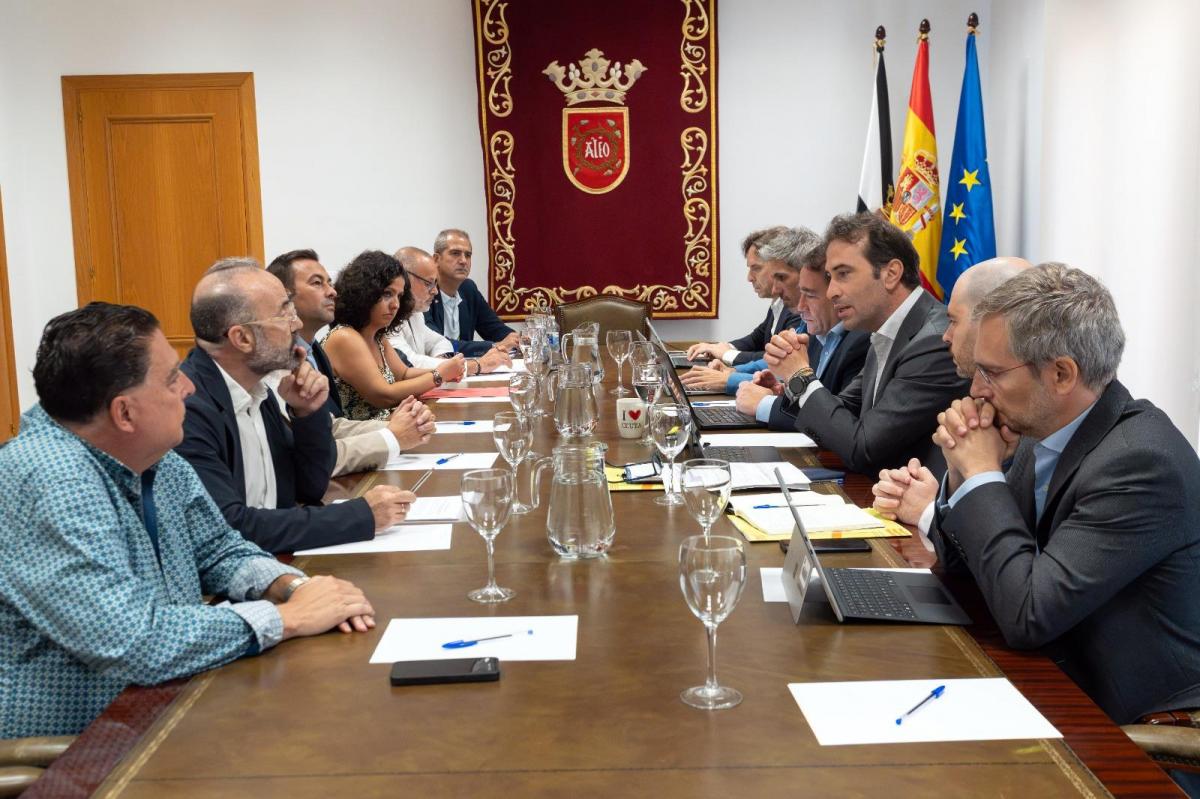
Representatives from Comisiones Obreras (CCOO) of Ceuta attended a meeting with Carlos Cuerpo, the first vice president of the Spanish government and minister of economy, to address the pressing economic and social challenges facing the city. The meeting took place at the Delegation of the Government, where CCOO presented its key demands.
CCOO's secretary general, Ángel Lara, expressed dissatisfaction with comments made by the minister of health, which suggested that local citizens' concerns about potential infectious disease transmission were xenophobic. Lara also highlighted that the situation experienced in Ceuta at the end of July represented an attack on Spanish territorial sovereignty.
During the meeting, CCOO urged the central government to implement urgent and concrete measures to mitigate the impact of the current situation on public services, employment, businesses, and the citizens of Ceuta. Among the demands was a formal complaint to the European Union and the United Nations regarding the challenges posed by the mass entry of individuals, along with calls for economic and diplomatic sanctions against Morocco and compensation for the damages incurred by Ceuta and the Spanish economy.
CCOO also advocated for the consideration of Ceuta's status as an autonomous community. The union warned that without prompt resolution of the current situation, Ceuta risks becoming a permanent temporary residence for migrants. They called for adequate human and material resources to expedite the processing of expulsion and asylum applications.
Another central issue discussed was the economic and social costs of migration. CCOO requested information on the financial impact of the mass entry and prolonged stay of thousands of individuals in the city. The union demanded additional resources to enhance services and improve working conditions at the Temporary Immigrant Stay Centre (CETI), as well as in facilities for unaccompanied minors and newly established spaces.
CCOO also highlighted the need to extend the Comprehensive Socioeconomic Development Plan for Ceuta, which is set to expire on 31 December, or to establish a new plan that would maintain, among other measures, the social security contribution bonuses for businesses and their impact on private sector workers through existing agreements in Ceuta.
The union called for a diagnosis of affected sectors using official data and the establishment of adequate support linked to employment retention. They also proposed the inclusion of a residency bonus in the Workers' Statute.
To legally facilitate the arrival of aid for businesses, self-employed individuals, and workers in Ceuta, CCOO suggested the approval of a Royal Decree-Law with urgent and extraordinary measures to address the economic and social impact of the situation.
In relation to public employees, CCOO demanded an immediate increase in staffing across all affected sectors, including health, security, justice, and education. They also stressed the need to make jobs in Ceuta more attractive, advocating for the implementation of measures to improve working conditions as outlined in the Framework Agreement for the Improvement of Public Employment and Service to Citizens.
CCOO requested an immediate review of compensation amounts for public employees, effective retroactively from 1 August 2026, along with guarantees for health and safety for public workers. The upcoming 2026-2027 school year was also a topic of concern, with CCOO calling for measures to ensure the school year begins as scheduled, highlighting the challenges in enrolling unaccompanied minors without adequate resources.
Finally, CCOO proposed a series of structural measures for the future of the city, including joining the Customs Union while respecting the current tax system, inclusion in the Schengen Area, state-funded campaigns to promote Ceuta's image, incentives for business establishment, improvements in maritime communication with the mainland, and measures to mitigate the economic and employment impact of the Operation Passage of the Strait crisis.
CCOO of Ceuta believes that the demands presented to the first vice president of the government must translate into concrete measures and sufficient resources to guarantee public services, protect employment and economic activity, and address the specific needs of the city.