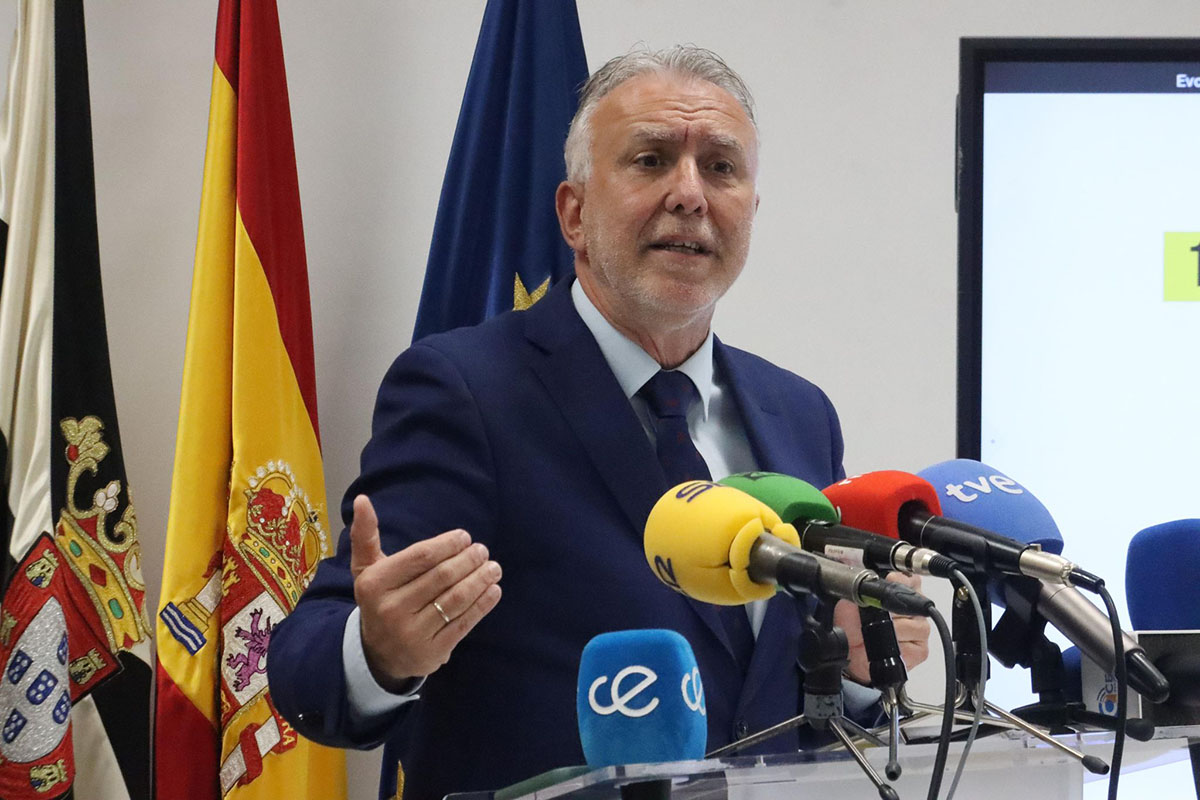
The Functional Authority in Ceuta has dismissed a prior request from the autonomous city and detailed actions taken regarding security, designated spaces, evacuations, triage, and the streamlining of procedures for the return of most migrants. The Ministry of Territorial Policy and Democratic Memory responded to a request made in September by Ceuta's president, Juan Jesús Vivas, concerning the actions of the General State Administration (AGE) following events on 30 and 31 July.
Although the lack of response from the Spanish government could be considered a dismissal in itself, a resolution has been sent to the autonomous city. This resolution states that there is no inactivity, as the actions requested "are already underway and in progress." It further explains that these measures "have drastically reduced initial pressure and maintained public order in the city." Additionally, the declaration of a Situation of National Security Interest in Ceuta, approved by the government, established a reinforced coordination structure to address the crisis and articulate a comprehensive response from the AGE, which "is clear evidence of the activity of the services dependent on the Spanish government."
Consequently, the Ministry has dismissed the request while informing the city government of the measures adopted by various ministerial departments and state agencies. Actions taken by the Spanish government have allowed for the return of over 12,700 people to Morocco from 10 August to 20 October, with most adult migrants remaining in the city now accommodated in resources provided by the AGE. Furthermore, large settlements along the coast, including Trampolín, Benítez, and Guano, have been completely evacuated, while efforts continue to clear dispersed spaces in urban areas.
A section of the resolution from the Functional Authority explains that since early August, the AGE sought to establish designated spaces agreed upon with the autonomous city. Some of these agreed spaces included areas of the port, which faced delays due to challenges posed by the Port Authority. The Spanish government's document emphasises that having these spaces, currently accommodating over 7,400 individuals, and dismantling large migrant settlements have been "swift, effective, and necessary" measures that have increased the volume of adult returns.
The document outlines additional security reinforcement measures, the establishment of designated spaces, and enhanced resources focused on identification and triage, as well as expedited processing of cases. The government reminds that legal guarantees must be respected during this migration crisis.
In response to the request to resolve all expulsion, return, or international protection cases within one month, the Ministry reiterated that processing must adhere to the timelines, procedures, and guarantees established by Spanish and European law. The resolution notes that these procedures "require individual assessment" and that "it is not appropriate to impose a general deadline that overrides the applicable legal framework."
The response clarifies that the individuals returned to Morocco thus far are adults, under the jurisdiction of the AGE, while the ordinary responsibility for unaccompanied minors lies with the autonomous city, noting that "none have been able to be reunited in Morocco to date." The Ministry's document also reviews the actions of the relevant ministerial departments in caring for unaccompanied migrant children and supporting the autonomous city in this regard. Ongoing collaboration with Ceuta's services has been maintained, alongside additional support amounting to €88 million for the care of minors.
On 27 August, during the plenary session of the Sectoral Conference on Childhood, an agreement was reached to allocate €25 million to fund the accommodation of unaccompanied migrant children in Ceuta in 2026. Additionally, the Royal Decree-Law on Urgent Social and Economic Measures, approved on 1 September, included €63 million in direct support for the autonomous city for the care of minors. This decree also allocated €2 million for the hiring of representatives for minors, a crucial figure under the new European regulations for procedures related to minors.