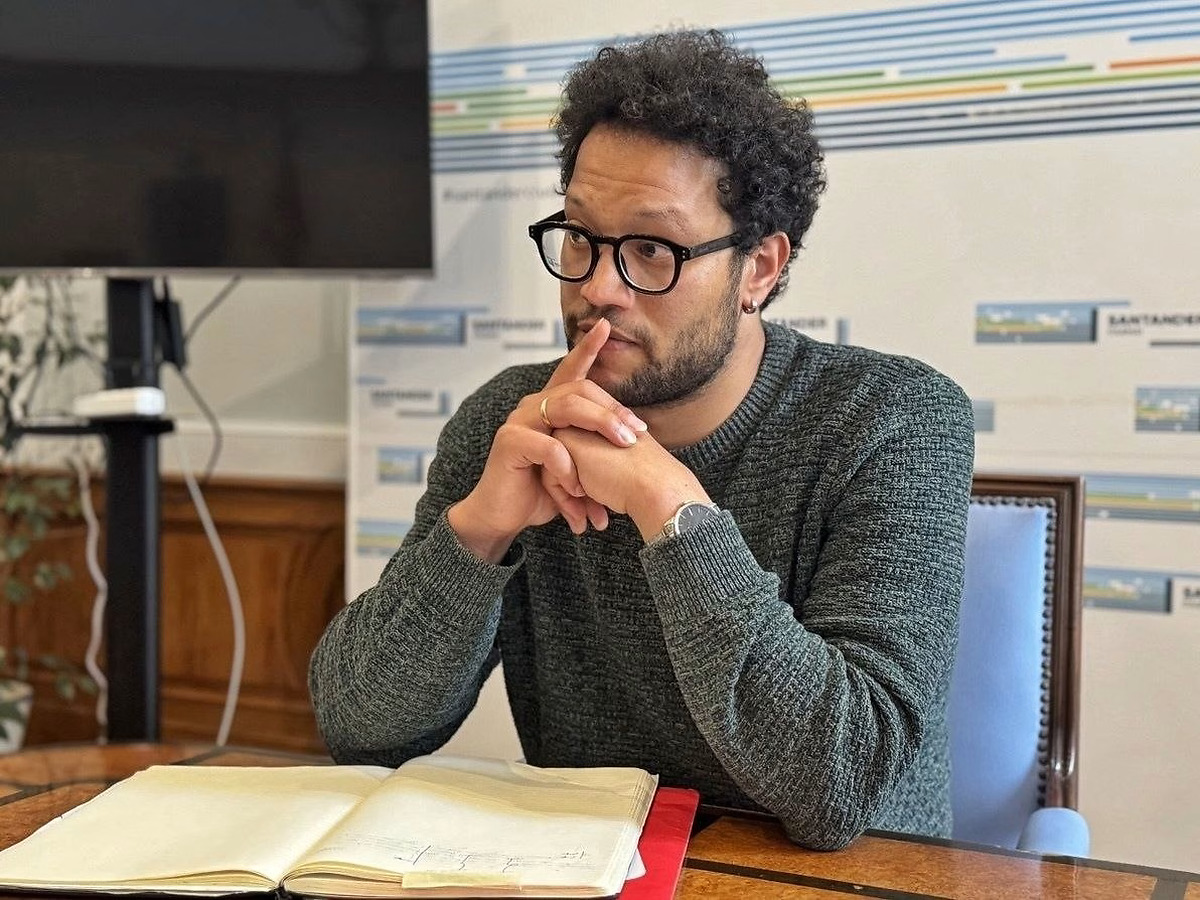
Councillor Keruin Martínez of Izquierda Unida (IU) has proposed that the municipal council review the declaration of Santander as a Zone of High Tourist Affluence (ZGAT), with a particular focus on potentially reducing its territorial scope. Santander was designated as a ZGAT in 2014, which initially allowed for extended commercial hours—including Sundays and holidays—for retail establishments in these areas from 15 July to 15 September. However, two years later, at the request of the city council, the Government of Cantabria shortened this period to 31 August while maintaining the ZGAT status for the entire city.
The 2016 resolution indicated that a more limited territorial delimitation had been considered during the process. Nevertheless, the council opted to retain the ZGAT designation for the whole municipality. “Ten years later, it seems unreasonable to assume that decision still reflects the current commercial and tourist reality without re-examining its foundations,” Martínez explained. He added, “While it may be reasonable to allow flexibility during peak season, a review of the territorial delimitation could be acceptable. It does not make sense for Paseo Pereda to be treated the same as Alisal.”
The Cantabria Law 1/2002 on Commerce and national legislation permit a ZGAT to encompass either the entire municipality or just a part of it, as well as to establish specific application periods. The delimitation must be justified according to legal requirements and the interests of commerce, tourism, and consumers. Although the decision ultimately lies with the Government of Cantabria, the initiative and supporting documentation must originate from the city council.
In light of this, Martínez has urged the municipal council to reassess the territorial scope of the ZGAT in Santander and consider its reduction. “Not all areas of Santander receive the same level of visitor traffic or have the same commercial opening needs. Extending an exceptional regime to very different neighbourhoods requires justification that must be verifiable with current data,” the councillor stated.
To facilitate this review, it is essential to understand where tourist activity is concentrated, how it varies throughout the summer, and which establishments effectively utilise the freedom of opening hours. IU believes that the period from 15 July to 31 August could serve as a basis for this reassessment, given its impact on small businesses, employment, and working conditions. The extended opening days and hours leave local shops, which are vital for the daily life of Santander, vulnerable to competition from larger retail chains.
Furthermore, he has proposed commissioning new technical reports on the ongoing validity of the circumstances that justified the declaration and exploring possible alternatives, while gathering input from affected commercial, trade union, and consumer organisations. “We are not suggesting replacing reports with an improvised delimitation. On the contrary, we propose that the council updates the data, listens to the affected sectors, and explains why certain areas require this regime while others do not. If the reality has changed, the declaration should also be able to change,” he said.
The approach taken by Mayor Gema Igual and her government team towards unrestrained tourism has not only led to well-documented issues of coexistence but has also directly harmed workers and self-employed individuals in the sector through precarious jobs, long working hours, and low wages. “Local proximity commerce feels almost compelled to open on numerous holidays and at impossible hours to compete with larger retail chains,” Martínez noted.
For this reason, IU is calling on the city council to present its findings to the relevant municipal commission within a maximum of four months and, if necessary, to request the Government of Cantabria to modify the declaration with the required justification and reports. Izquierda Unida has repeatedly stated that the tourism model promoted in Santander by the government and the city council is unviable and unsustainable in the long term. The touristification has created strained areas in the city, resulting in increased prices for housing and a rise in Tourist Use Housing (VUT).
This year, the IU councillor has scrutinised and demanded explanations regarding the capacity and impact study initiated by the municipal government and has consistently advocated for the implementation of a tourist tax in Santander, warning that “the city should not rely solely on the tourism model.” Additionally, the influx of seasonal residents places pressure on public services: the arrival of visitors and the heat increases water consumption along the coast and in ZGAT areas, significantly raising demand during peak times. Public transport and healthcare services also suffer from these effects, experiencing blockages and resource saturation.