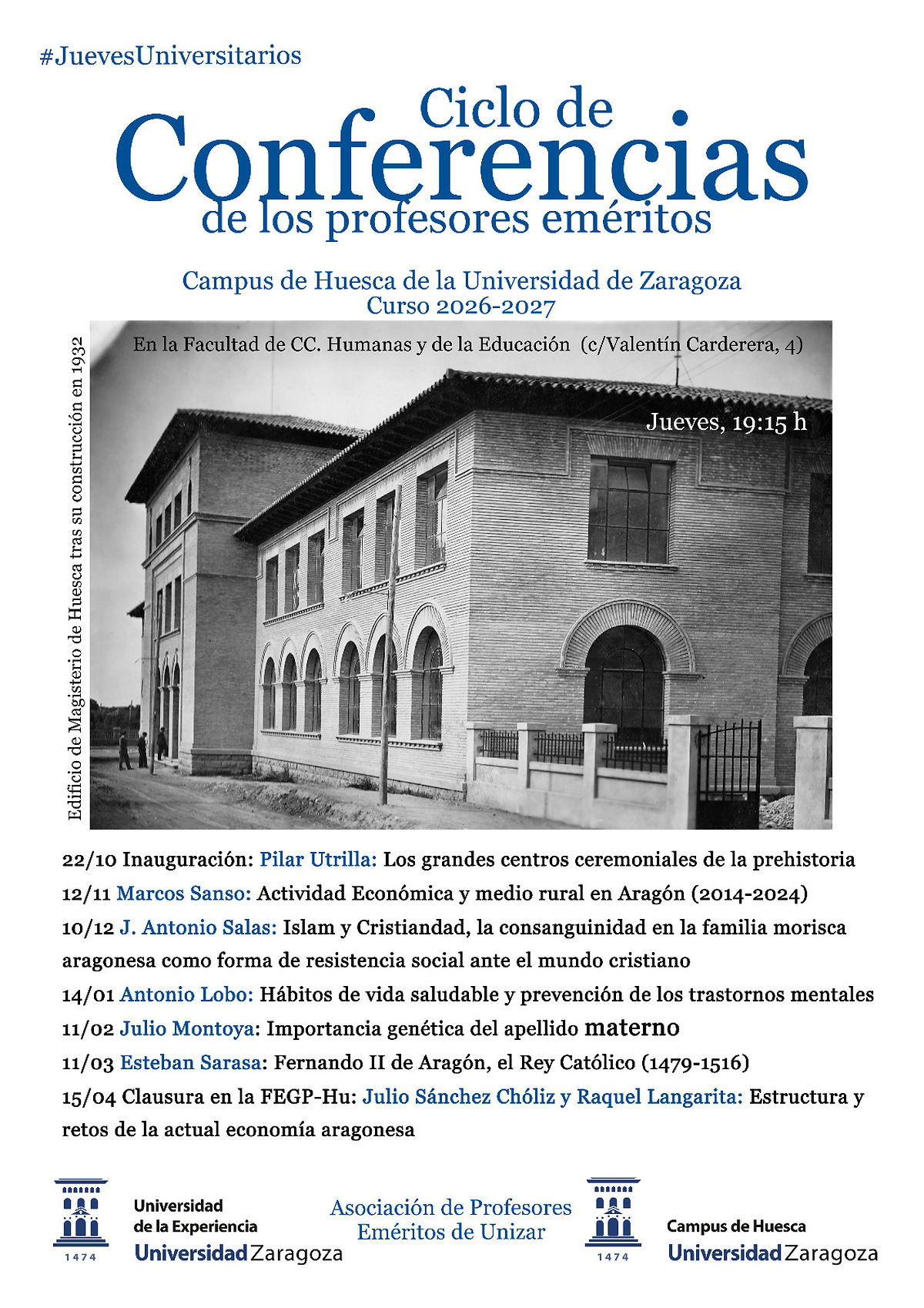
Marcos Sanso Frago, a professor of Economic Analysis at the University of Zaragoza, will present a lecture titled ‘Economic activity and rural areas in Aragón: Economic evolution (2014-2024)’ on 12 November at the Huesca Campus. The event, which begins at 19:15, will take place in the Faculty of Humanities and Education.
This lecture will explore the findings and recommendations from a recent study on rural Aragón, led by Sanso Frago. José Julián Escario, a professor at the Faculty of Business and Public Management in Huesca, will introduce the session, which is open to the public.
The study, recently presented to the Economic and Social Council of Aragón, highlights a turning point in the depopulation trend of rural areas. “Since 2020, the rural population has been increasing across Aragón, in each of the three provinces and in three-quarters of the rural districts, with notable success stories particularly in the rural areas of Huesca,” Sanso Frago stated.
The research delves into various aspects of rural life, including demographics, economy, labour market, profitability, productivity, and GDP, while categorising municipalities based on population and urban structure. It employs a multidisciplinary analysis of development factors, incorporating a SWOT analysis for each district in Aragón and providing specific recommendations for local policies.
The report was developed by a team of researchers from the University of Zaragoza, including Fernando Sanz Gracia, Luis Lanaspa Santolaria, Marcos Sanso Navarro, Rafael González Val, and María Vera Cabello, under the direction of Sanso Frago.
This lecture is part of the Emeritus Professors Cycle at the Huesca Campus, which features monthly talks by distinguished university specialists. The cycle began in October with a presentation by Pilar Utrilla on prehistoric ceremonial centres and will continue in December with a lecture by José Antonio Salas on the connections between Islam and Christianity in the context of the Aragonese Moorish family.
Future sessions will cover topics such as healthy living habits, the genetic significance of maternal surnames, and a review of the historical figure of Ferdinand II of Aragón, concluding in April with a discussion on the structure and challenges of the current Aragonese economy. This cycle has been running for ten years, organised by the Association of Emeritus Professors and the Huesca Vice-Rectorate of the University of Zaragoza, alongside the University of Experience.