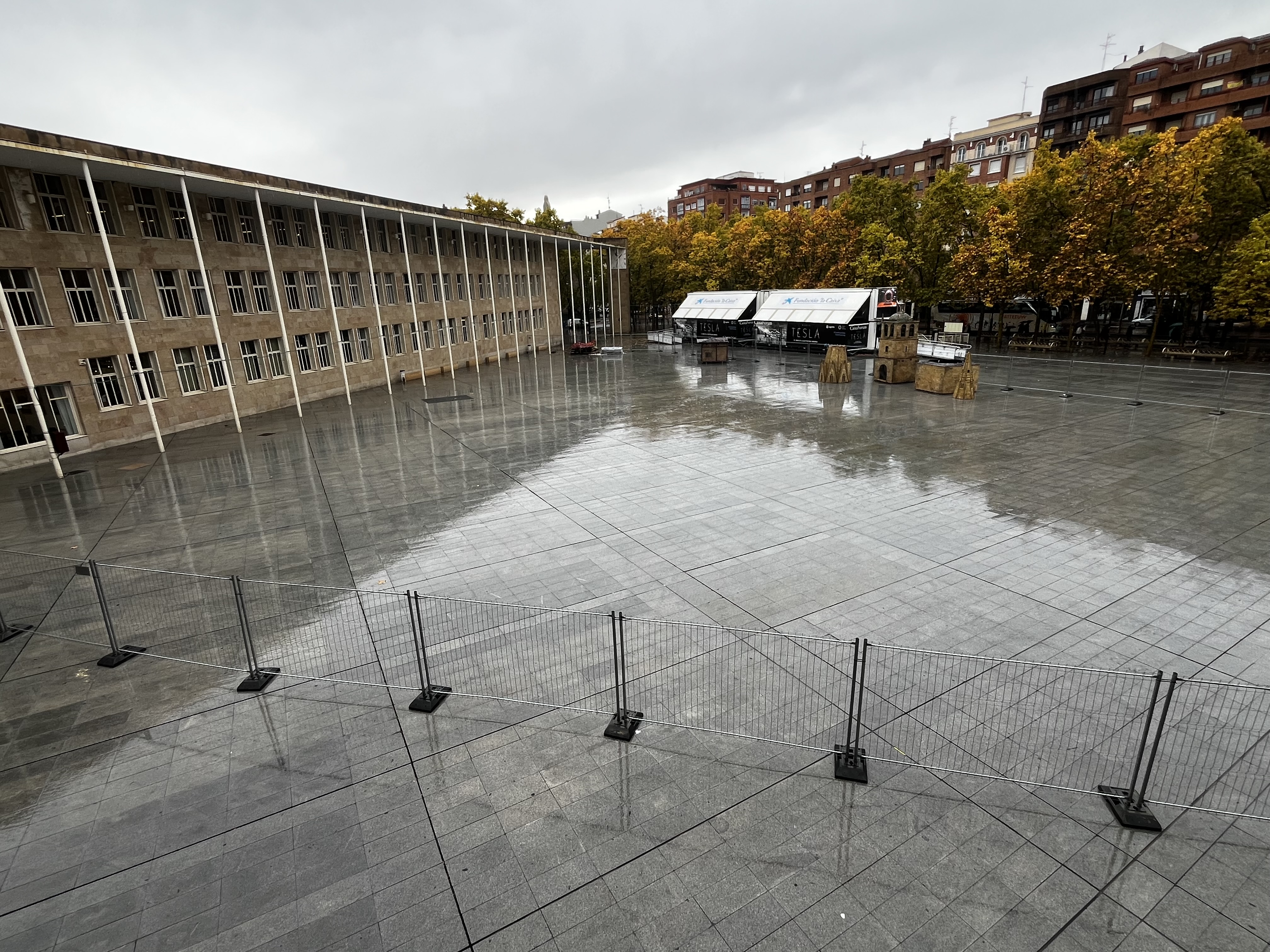
The assembly of the monumental nativity scene in Logroño's Plaza del Ayuntamiento has begun, with the attraction scheduled to open on 4 December. Last year, the nativity scene drew over 120,000 visitors and will be available for viewing until 6 January, with visiting hours from 11:00 to 14:00 and 17:00 to 21:00.
Spanning approximately 2,500 square metres, this year's nativity scene will feature 18 structures, including both heritage buildings and traditional constructions, alongside 60 figures. Notably, there will be no live animals on display. A highlight of the scene will be the 'wishing well', where visitors can toss coins to support a charitable cause. Last year, this initiative raised €3,042.96 for the Red Cross.
The nativity scene will be enhanced by festive lighting on the town hall building, which will showcase a cascading LED light structure designed to resemble a starry sky, providing a stunning backdrop for the display.
What to expect at the nativity scene
Visitors can look forward to various constructions, including a well, a waterwheel, a forge, and several houses. The nativity scene will also feature representations of significant heritage elements from La Rioja, including:
- Muralla del Revellín (Logroño): A 12th-century wall, symbolising the Siege of Logroño in 1521.
- Castillo de Clavijo (Clavijo): Associated with the legendary Battle of Clavijo in 844, where St. James is said to have appeared to aid the Christians.
- Fuente del Peregrino (Logroño): A resting place for pilgrims, located near the Church of Santiago.
- Iglesia de San Bartolomé (Logroño): A Gothic-style church from the 13th century, serving as the nativity scene's entrance.
- El Picuezo and La Picueza (Autol): Twin rock formations steeped in legend, measuring 42 and 28 metres in height, respectively.
- Casona (Briones): The oldest house in the region, dating back to the 16th century.
- Guardaviñas: Traditional circular structures used as shelters for farmers and their livestock.
- Iglesia de Santa María de Palacio (Logroño): Featuring a distinctive octagonal pyramid-shaped tower from the 13th century.
- Ermita de San Esteban (Viguera): A small 10th-century preromanesque chapel carved into rocky cliffs.
This annual event not only celebrates the festive season but also highlights the rich cultural heritage of Logroño and the surrounding region.