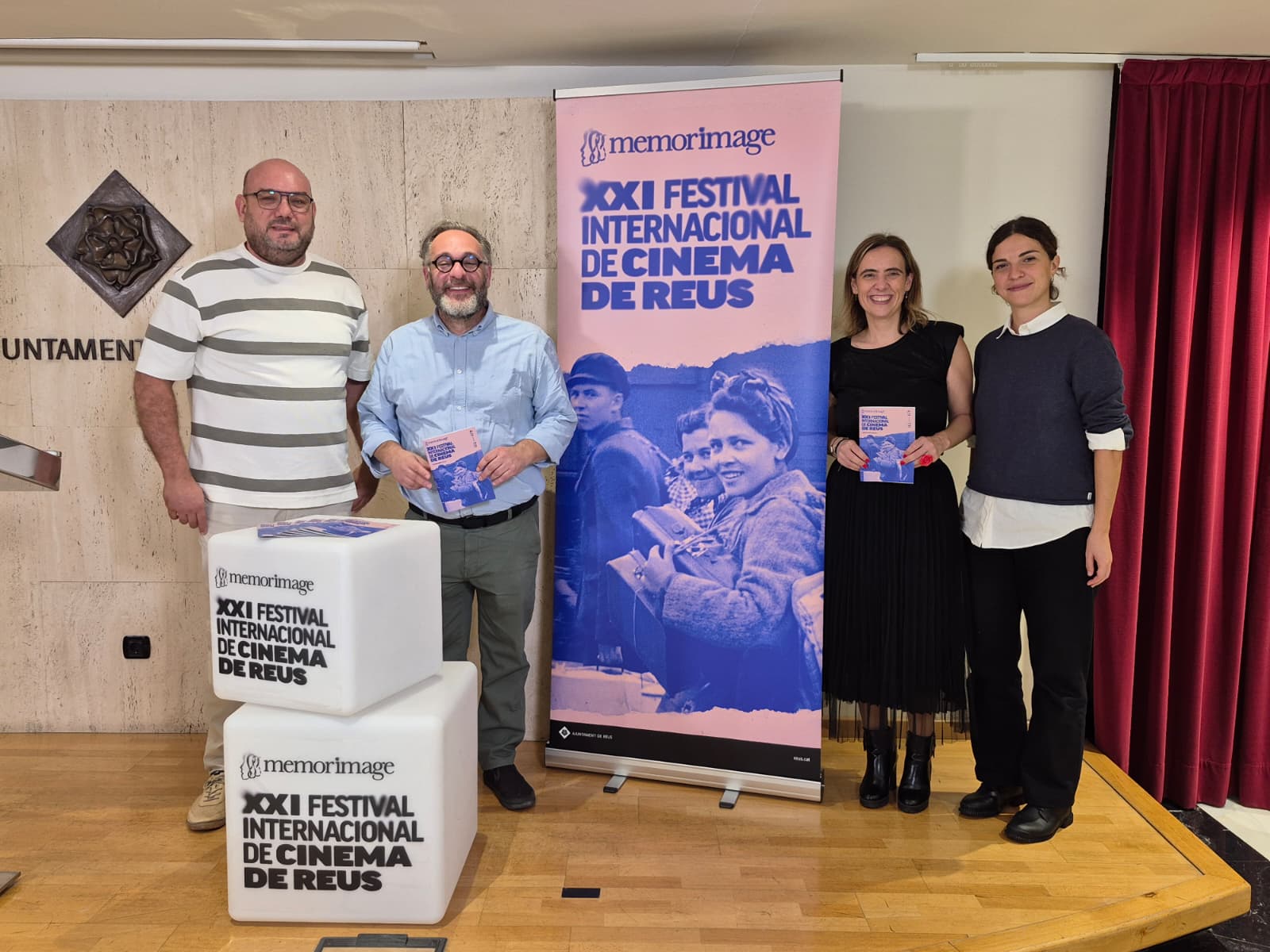
The Memorimage – International Cinema Festival is set to return to reus from 4 to 7 November, showcasing a selection of the best archival cinema from the past year. The 21st edition of the festival will be held at the Teatre Bartrina and will feature 22 films, nine of which are Catalan premieres, with all screenings offered free of charge.
On Tuesday, the festival announced its programming for the 21st edition during a press conference attended by reus mayor Sandra Guaita, the councillor for Culture and Linguistic Policy, Daniel Recasens, and the festival's artistic director, Maria Colomer.
This year, the festival revisits the past with films exploring the life of writer Carmen Laforet, anti-colonial struggles, and the Spanish war in Morocco, challenging the dominant narratives that have shaped collective memory. The opening film will be Operación Iperita. La trama civil de la guerra química, directed by Toni Orensanz and Joana Zapata. This documentary investigates Spain's use of chemical weapons during the Rif War in the 1920s, focusing on the first systematic bombings of civilian populations with such armaments.
Using archival documentation and footage, the film delves into a lesser-known aspect of this historical episode: the involvement of the Catalan civil industry in the research and production of chemical warfare products, stemming from secret negotiations.
The inauguration will take place on 4 November at 21:00 at the Teatre Bartrina, featuring a discussion with the directors. As usual, attendance will be free and open, with prior registration required.
The festival will conclude with an evening dedicated to amateur cinema from reus, highlighting the value of a unique audiovisual heritage born from a close and engaged perspective. The closing event will feature the world premiere of 1966. Del desastre a la reconstrucción, by Josep Batista and Josep Romeu, two key figures in reus's amateur film scene. This film captures the contrast of a fair edition marked by initial enthusiasm and subsequent disaster, viewed through the eyes of those who experienced the events.
The gala will also pay tribute to the memory of amateur filmmaker Jordi Vall Ciré (1929-2026) with a screening of Prim, a documentary chronicling the transfer of General Joan Prim's remains to the reus cemetery in 1971. In addition to the screenings, the evening will include the presentation of awards and the announcement of the Honorary Award.
The gala will take place on Saturday, 7 November at 21:00 at the Teatre Bartrina, free and open to the public, with prior registration required.
A Special Official Section aimed at questioning past narratives will bring together four films from national and international scenes that propose new perspectives on history, challenging the inherited versions that persist today. Among these are Por qué no escribo nada by Isabel Fernández, which recovers the voice of Carmen Laforet; Amílcar by Miguel Eek, which highlights the figure of Amílcar Cabral; Khartoum, a collective creation following five Sudanese characters; and the award-winning Trains by Maciej J. Drygas.
The MemoriReus section will focus on the territory, people, and memory of the Camp de Tarragona, featuring films that explore collective memory and recover Catalan audiovisual culture. The MemoriJove section will offer morning sessions for students aimed at fostering a space for debate and reflection.
This year, the festival reaffirms its international projection by partnering with the UnArchive Found Footage Festival in Rome and the MUTA International Festival of Audiovisual Appropriation in Peru. Additionally, the festival will feature a new artistic direction under Maria Colomer Canyelles.