The second excavation campaign at the ancient castle of Bragafolls has yielded six ceramic pieces, providing potential insights into the history of this enigmatic structure. The artefacts, dated between the 12th and 13th centuries, raise new hypotheses regarding the castle's origins and occupation, although their exact function and chronology remain uncertain.
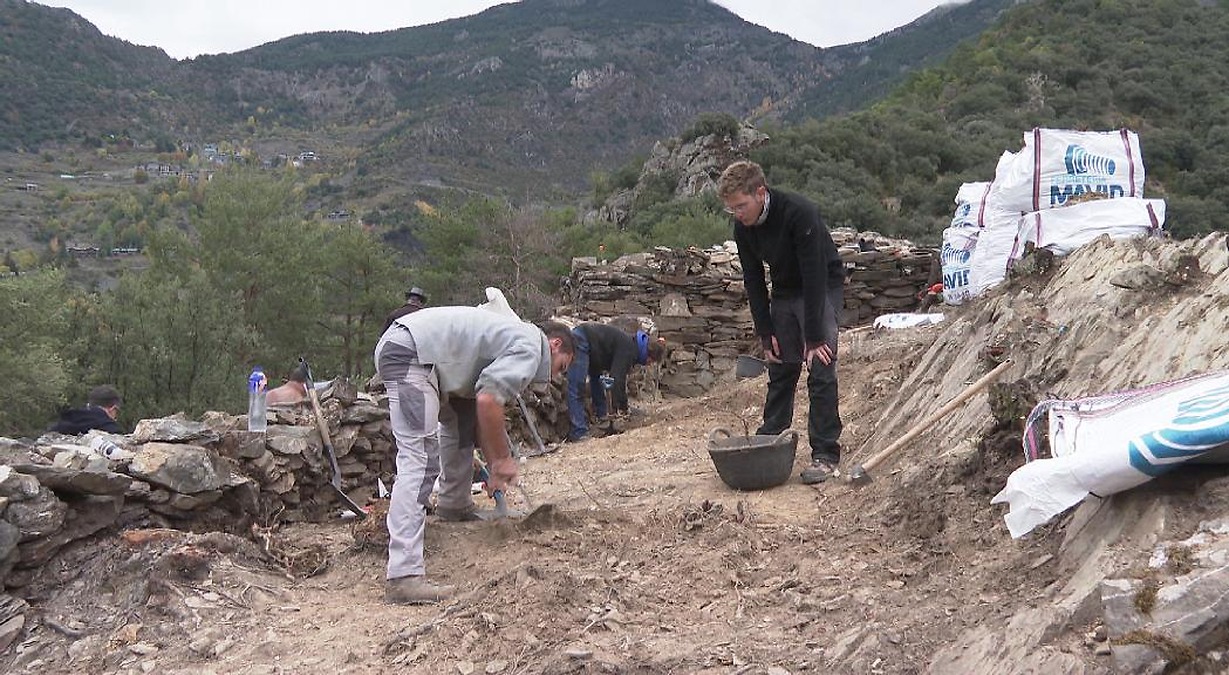
As the excavation approaches its conclusion, with just three days left in a 23-day operation, efforts have focused on an outer area interpreted by experts as a possible parade ground. This space may have served purposes related to stabling or work activities.
According to Jordi Vallverdú, co-director of the excavation, the ceramic remains from the 12th century are the only archaeological artefacts recovered to date. These findings compel experts to reconsider some of their initial hypotheses.
Abel Fortó, a cultural heritage technician, notes that the recovered material suggests a relatively short period of occupation between the 12th and 13th centuries. He also raises the possibility that the castle may have been reoccupied at some point, a scenario not documented in the preserved medieval records of the country. Another hypothesis posits that the structure may not actually correspond to the castle of Bragafolls, but rather to another construction for which no documentary evidence exists in the region or timeframe.
The date for the third excavation campaign has yet to be confirmed, but it is expected to last a similar duration to the previous two, aiming to further advance the investigation into one of the country's archaeological enigmas.