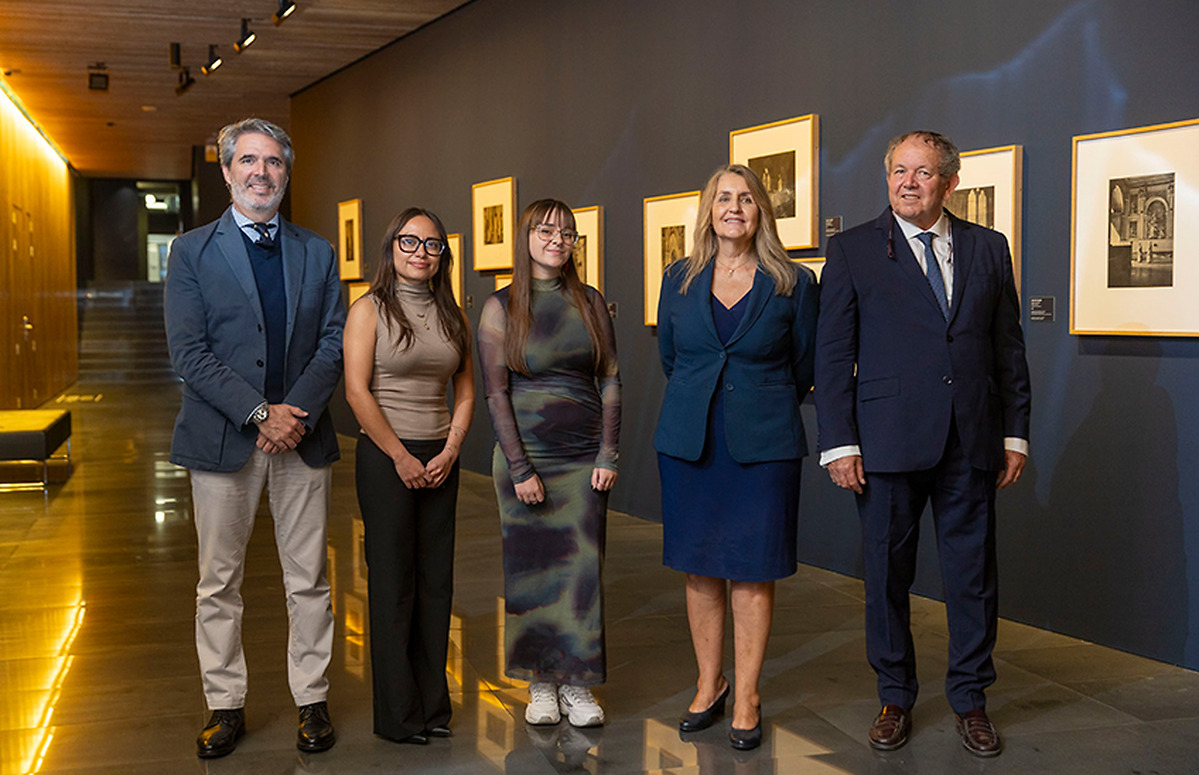
the Museo Universidad de Navarra has inaugurated a new exhibition titled ‘Habitus et praxis: cuerpo, vestimenta y tradición’, which offers a contemporary reflection on how clothing and the repetition of gestures and rituals shape our way of inhabiting the world. This project is curated by Montaña González and Andrea Mirón, both graduates of the Master's in Curatorial Studies at the museum.
Running from 16 October 2026 to 18 April 2027, the exhibition showcases a selection of works related to religious practices and popular traditions, primarily featuring photographs from Ortiz Echagüe's series España mística (1943). This series is part of the artist's legacy, which was donated to the University of Navarra in 1981.
the exhibition explores how clothing serves as a visible manifestation of beliefs and identities that are incorporated through daily practice and collective rituals. Located on the -1 floor of the museum, the exhibition is housed in the Ortiz Echagüe space, which opened in 2025, with support from ATValor, a company linked to the artist's family.
conceptual framework
the core concept of the exhibition revolves around the various meanings of the word hábito: from the physical garment to the customs acquired through repetition. This dual dimension engages with the sociological concept of habitus, as formulated by Pierre Bourdieu, to analyse how ways of thinking, acting, and relating are internalised through shared bodily experiences.
the photographs invite viewers to observe how beliefs and traditions manifest in the body, gestures, and shared practices.
thematic sections
the exhibition is organised into three thematic sections that guide visitors from the technical process to communal experience:
- Carbón directo sobre papel Fresson: construir la imagen – This section introduces the technical process through which Ortiz Echagüe created his works, highlighting the use of direct carbon on Fresson paper to achieve a range of tones and control light, shadow, texture, and contrast.
- Monacato: vestir una forma de vida – This part explores the intimacy of communities such as Carthusians, Cistercians, and Franciscans. Here, religious clothing is not just a garment that identifies community membership, but also an expression of a way of life that organises daily routines and silence.
- Espiritualidad popular: cuando la práctica se vuelve colectiva – This section shifts the focus to streets and public spaces where processions, pilgrimages, and other rituals occur. Unlike monastic habits, the clothing in these rituals is adopted temporarily and highlights how tradition is transmitted through observation, imitation, and shared experiences.
legacy of josé ortiz echagüe
the selection of photographs from España mística reflects the curators' interest in exploring the relationship between habit, praxis, and habitus. Montaña González explains that the choice of this series aims to articulate a reflection on clothing not as an isolated aesthetic element, but as an active and concrete way of inhabiting the world.
the curators emphasise that the focus shifts from portraiture to actions and daily practices that give meaning to experience. The presence of scenes from monastic life alongside images of processions allows for an exploration of how traditions are transmitted through both everyday repetition and participation in collective rituals.
for the curators, Ortiz Echagüe's photographs make visible this transmission process across generations, where observation, imitation, and bodily experience play a fundamental role.
master's in curatorial studies
the exhibition is the result of the research and curatorial development undertaken by Montaña González and Andrea Mirón during their Master's in Curatorial Studies at the museum. This training has provided them with a deeper understanding of the various disciplines involved in conceptualising a curatorial project. Andrea Mirón highlights the opportunity to conduct research alongside professionals from different fields, while Montaña adds that this process has allowed them to better comprehend the potential of historical photography as a tool for reflecting on current issues, beyond its historical value.