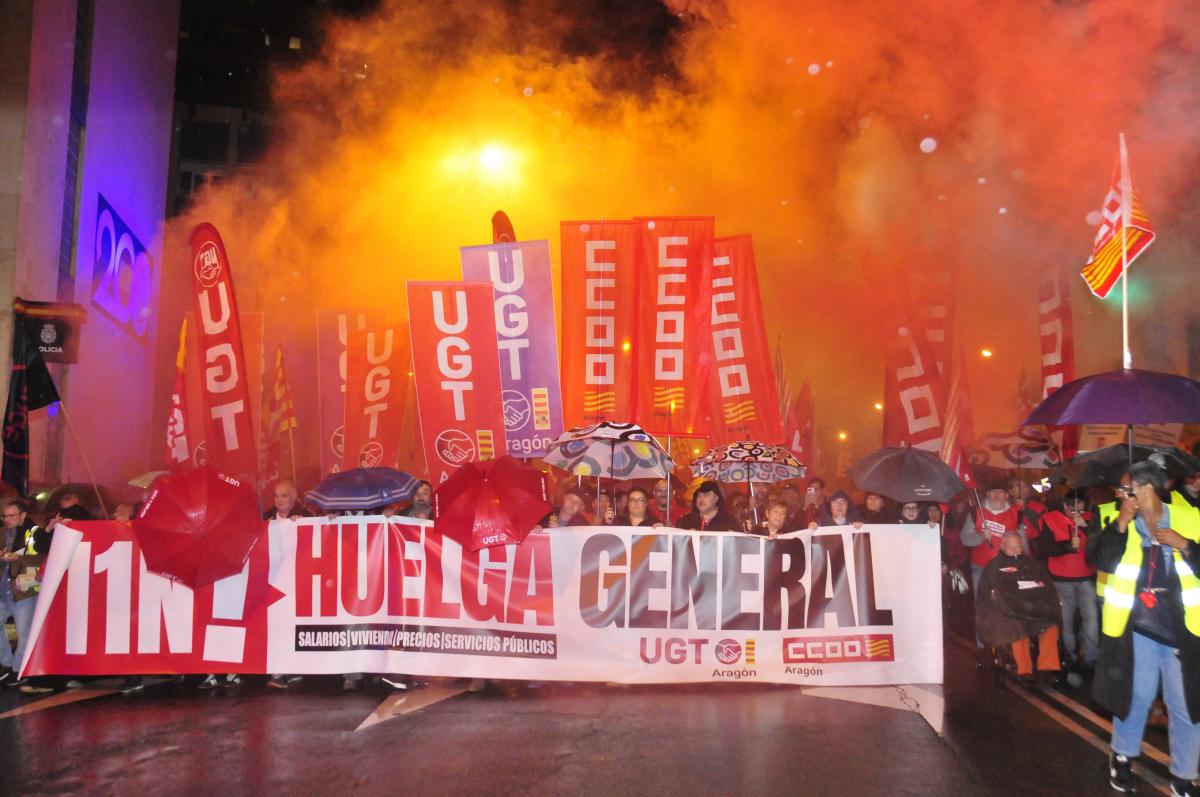
CCOO Aragón has raised concerns regarding the year-on-year inflation rate, which has reached 4.5%. The union attributes this increase mainly to soaring transport and housing costs, which are significantly affecting the purchasing power of families in the region.
When comparing the inflation rate to October of the previous year, transport leads the price increases in Aragón with a rise of 9.7%. Housing follows closely with a 9.6% increase, while information and communications have seen a 4.2% rise. Other notable increases include recreational activities, sports and culture (3.4%), restaurants and accommodation (3.3%), and financial services (3.1%).
The cumulative evolution since January confirms this trend, with transport prices up by 9.5% and housing by 9.2%. Information and communications have increased by 4.6%, while restaurants and accommodation have risen by 4.2%, financial services by 3.1%, and healthcare by 3%. In contrast, clothing and footwear are the only categories showing a negative cumulative variation, with a decrease of 2.8%.
In the monthly evolution, clothing and footwear experienced the largest increase, rising by 8% in line with the seasonal change. This is followed by food and non-alcoholic beverages and education services, both up by 1.4%. Housing also recorded a significant rise of 1.3%, while information and communications increased by 1%. Conversely, three categories saw price reductions compared to September: alcoholic beverages and tobacco (-0.5%), recreational activities, sports and culture (-0.5%), and transport (-0.2%).
Despite Aragón maintaining an inflation rate lower than the national average, the sustained increase in housing and transport costs continues to pressure family economies and diminish their purchasing power. The inflation rate of 4.5% in Aragón significantly surpasses the average wage increases agreed upon in local contracts, which stand at 2.9% according to the latest available data. This disparity indicates a further loss of purchasing power for workers.
Following the success of the general strike on 11 November, CCOO is urging business organisations to resume negotiations to achieve a sixth Agreement for Employment and Collective Bargaining (AENC) aimed at improving wages and restoring the purchasing power of workers. “Business margins remain at historically high levels, while wages have yet to recover all the ground lost during the previous inflationary crisis. Therefore, the growth of business profits should also be reflected in working conditions and wages,” CCOO Aragón stated.
CCOO is also calling on public administrations to take more decisive action to control price developments, particularly for energy products, food, and housing, which are compromising the economies of thousands of families. Regarding housing, the union demands the development of a comprehensive public stock of affordable rental properties to ensure access to homes and prevent costs from consuming an excessive portion of incomes.
Finally, CCOO believes it is essential to change the criteria for calculating the Consumer Price Index (CPI) to fully reflect housing costs, incorporating both purchase prices and associated financing expenses, and to more accurately represent rental price trends. The indicator should provide a more truthful picture of the real cost of living and the loss of purchasing power experienced by households.