The CCOO union in Extremadura has pointed to the rising cost of living and the erosion of purchasing power as key reasons behind the planned general strike on 11 November.
As of September 2023, the average salary increase agreed upon in collective agreements in Extremadura stood at 3.05%, further diminishing the purchasing power of wages. Housing prices have surged by over 12% since 2025, with a notable increase of 12.8% recorded in the second quarter of 2026, exceeding the national average by six-tenths of a percentage point.
The union is calling on the government to raise the minimum interprofessional wage (SMI) by 7% for the coming year, aiming to surpass €1,300 across 14 payments. CCOO argues that uncontrolled price increases are severely impacting household economies, making it increasingly difficult for families to access basic necessities such as housing, food, and healthcare.
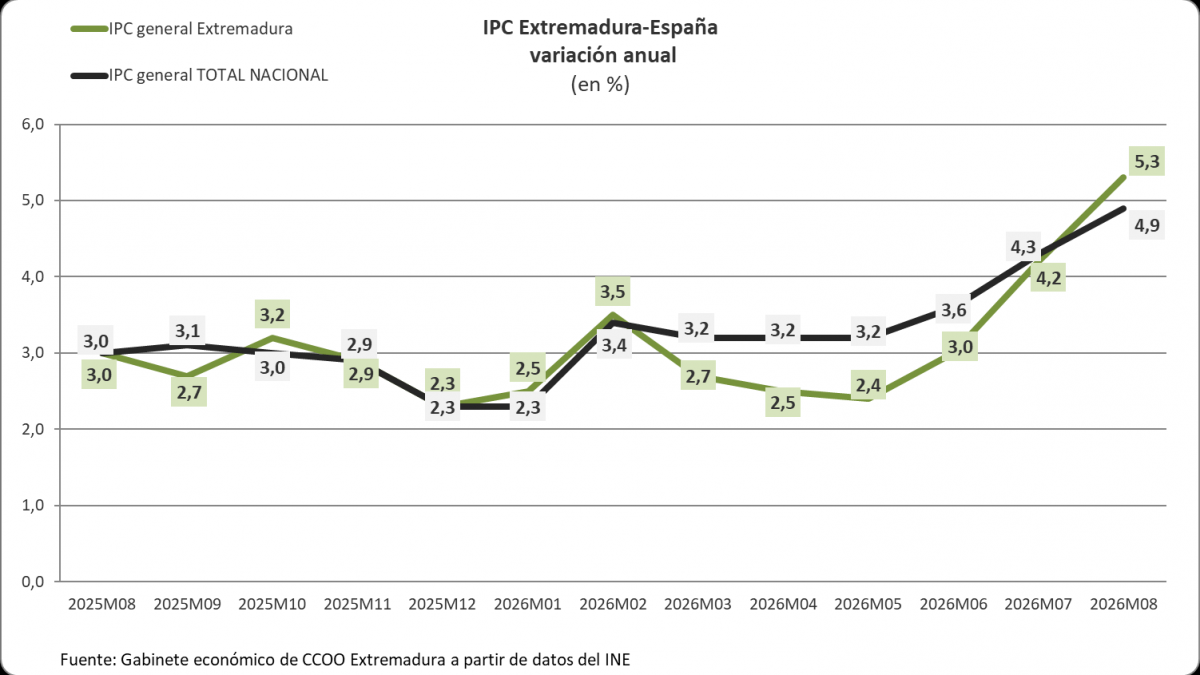
In September, the year-on-year Consumer Price Index (CPI) in Extremadura reached 5.3%, higher than the national average of 4.9%. The sectors contributing most significantly to this rise included Transport, which saw an 11.6% increase, and Recreational Activities, Sports, and Culture, which rose by 2.5%. The underlying inflation rate in Extremadura was recorded at 3.2%.
On a monthly basis, the general CPI increased by three-tenths nationally, while in Extremadura, it rose by seven-tenths, driven by notable price hikes in Clothing and Footwear (10.9%) and Housing (1.2%).