CCOO Navarra has expressed its concerns regarding the proposed General Budgets of Navarra for 2027, which amount to €7.284 billion, representing an 8.1% increase from 2026. The union argues that the primary aim of the budget should be to translate economic growth into shared welfare, highlighting the need to prioritise wages and prices in the ongoing discussions.
As Navarra approaches 2027, the region's economy is growing, yet the purchasing power of workers remains under significant pressure. In September, the Consumer Price Index (CPI) in Navarra stood at 5.3%, four-tenths above the national average, while average salaries increased by only 2.2%. In contrast, corporate profit margins have reached record highs. The most significant price increases have been observed in essential expenses, with housing and energy costs rising by 11% and transportation by 10.3%.
“Wage increases agreed upon in collective bargaining cannot be assessed in isolation. If essential expenses rise faster than salaries, there is no improvement in purchasing power. This gap is the starting point for any budgetary analysis,” stated CCOO Navarra.
The union highlighted the disproportionate impact of rising living costs, noting that lower-income families allocate a larger portion of their budgets to unavoidable expenses. Therefore, CCOO advocates for robust public services, collective bargaining, social protection, and progressive taxation as complementary tools to address these issues, rather than alternatives.
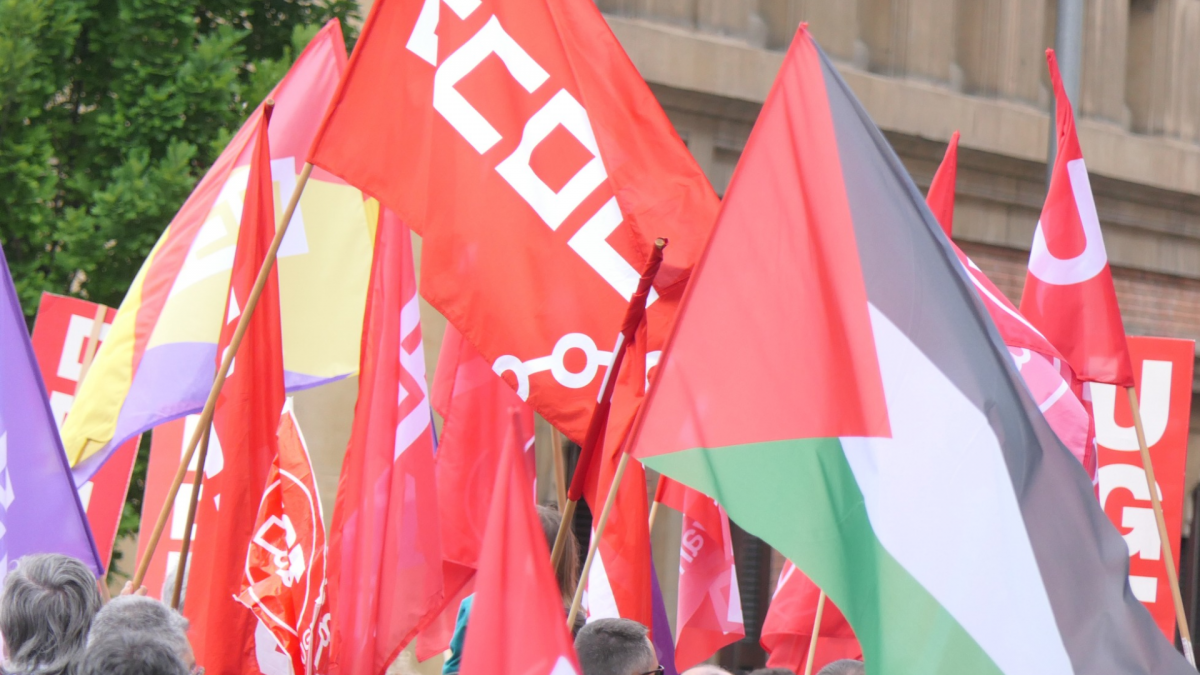
As the general strike scheduled for 11 November approaches, CCOO has criticised the Confederation of Employers of Navarra (CEN) for urging unions to cancel the strike. While the union remains committed to negotiations with employers, it emphasises that its true power lies in mobilising workers on the streets. “What legitimises us in society is our ability to unite workers for their rights: wages, housing, and prices are three central demands that CCOO will not abandon, either in public demonstrations or at the negotiating table,” the union affirmed.
Housing and healthcare as key areas for improvement
CCOO identifies housing as the primary social emergency for the working class, with property prices increasing by 10.2% and over 24,600 individuals registered for protected housing. The union calls for a permanent expansion of the public rental stock.
In healthcare, with 67,414 patients awaiting their first consultation with a specialist, primary care has grown by 4.2%, which is just over half the growth rate of the entire department at 7.4%. Conversely, contracts with private healthcare providers have surged by 14.2%. “There will be no lasting solution to waiting lists without a strong primary care system and stable staffing,” CCOO emphasised.
Positive steps and ongoing challenges
CCOO has welcomed several measures it has long advocated for, including €20.9 million allocated for the professional development of non-healthcare staff, which addresses historical discrimination, an increase in the Minimum Vital Income from €66 million to €100 million, and growth in the budget for dependency care. The union also supports the first agreement for residences and day centres, signed by CCOO for over 5,000 workers.
However, the union points to progressive taxation as the main shortfall in the budget proposal. The personal income tax (IRPF), primarily paid by wage earners, has increased by 17.7% up to August, while corporate tax has risen by only 3.3%, lagging behind inflation. “Lowering taxes indiscriminately means less funding for healthcare, education, and public housing, which disproportionately affects those who cannot afford what should be guaranteed as a right,” CCOO Navarra asserted.
CCOO urges parliamentary groups to initiate broad agreements that transcend political polarisation, using the parliamentary process to strengthen housing, public healthcare, and quality employment. “Budgets are one of the most significant tools for solidarity we have. In a year of high inflation, that redistributive solidarity is more necessary than ever,” the union concluded.