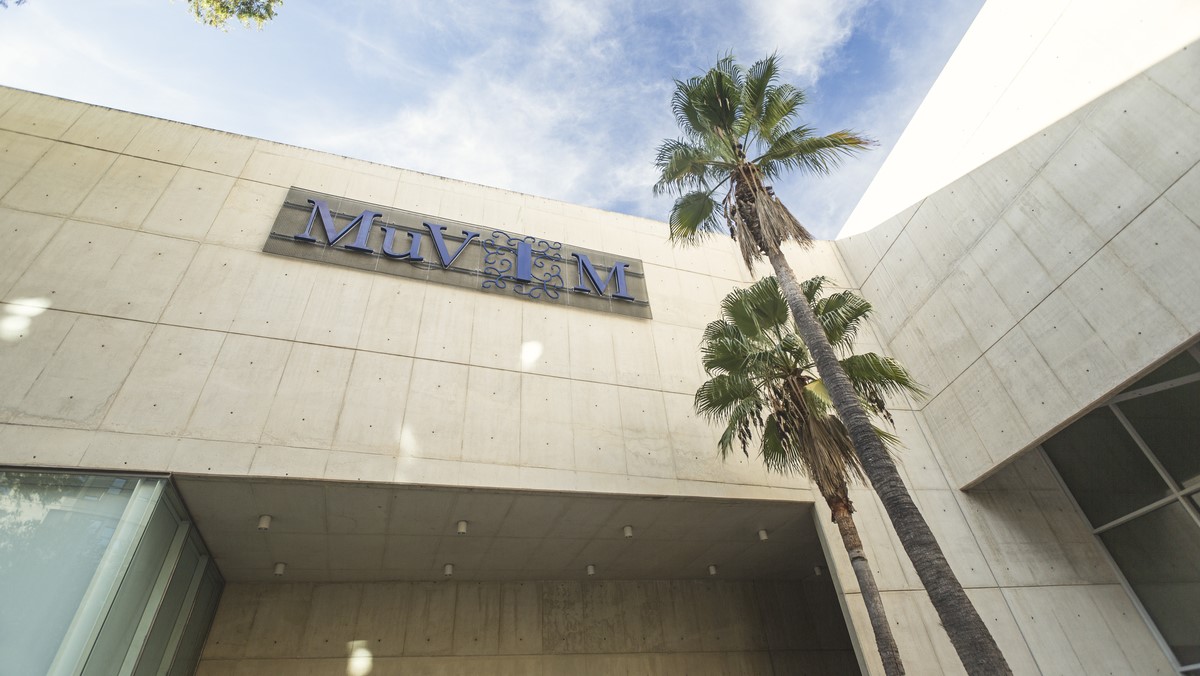
The MuVIM (Museo Valenciano de la Ilustración y la Modernidad) has launched a new temporary exhibition titled ‘Jaume I, regnar el futur’, inviting visitors to explore the significance of the monarch and his enduring legacy. This exhibition, organised by the City Council of València and the Diputació de València, is part of the celebrations marking the 750th anniversary of King Jaume I's death.
Located in the Sala Baja of the Diputació de València museum, the exhibition showcases a total of 112 works from 18 institutions and private collections. It aims to highlight the various dimensions of a pivotal figure in understanding Valencian identity. Through paintings, historical documents, codices, sculptures, archaeological objects, and other significant heritage pieces, the exhibition deepens the understanding of the monarch and the collective memory surrounding his figure.
The exhibition's central theme revolves around the renewed relevance of Jaume I's legacy and its ability to resonate with contemporary society. The City Council of València is the primary lender, contributing around two-thirds of the pieces from various municipal institutions, including the Museum of the City, the Municipal Archaeological Research Service (SIAM), the Historical Archive of València, the Museu d’Història de València, and the Municipal Historical Museum.
Other contributors include the Diputació de València (art collection and Museu de Prehistòria de València), the Archdiocese of Valencia (metropolitan cathedral), the Museum of the Royal Basilica of Our Lady of the Forsaken, the Museu Municipal d’Alzira (MUMA), the Archive of the Kingdom of Valencia, the Royal College-Seminary of Corpus Christi in Valencia, the municipalities of Nules and Burriana, the Historical Library of the University of Valencia, the Schools of Artisans of Valencia, the Museu de Belles Arts de València, the Monastery of the Incarnation, and the private collection of Joan J. Gavara Prior.
Among the historically significant documents on display is the ‘Pleito saguntino sobre aguas’, a 1222 ruling written in Arabic by the cadí and alfaquí of Morvedre, resolving a dispute over irrigation water distribution between the villages of Torox (now Torres Torres) and Quars (now a district of Càrcer). This document is part of the Archive of the Kingdom of Valencia.
The exhibition also features two important codices from the Cathedral of València: the 'Flos sanctorum' and the codex of Flavius Josephus. Additional highlights include the Virgin of Puig panel and the Romanesque Virgin from the convent of the Incarnation, the latter being the oldest in the Valencian Community. Furthermore, the exhibition includes numerous historical paintings representing King Jaume I, such as ‘The act of handing over the sword by King D. Jaime to his son Don Pedro’ by Ignacio Pinazo, ‘The wounding of Don Jaime in the conquest of Valencia’ (1868) by Salvador Martínez Cubells, and ‘King Jaume I swears not to abandon Valencia until its conquest’ by Ramón Garrido Méndez.
Visitors will also gain insights into the Muslim population of the 13th century through everyday objects, including an Almohad jug. The selection features several panels by Joan de Joanes, a coin minted in Valencia in 1271, a lead seal of King Jaume I, and the Còdex dels Furs of 1329 by Bonanat Peris. Notably, a sword attributed to Jaume I and a 13th-century Romanesque crucifix are also on display.