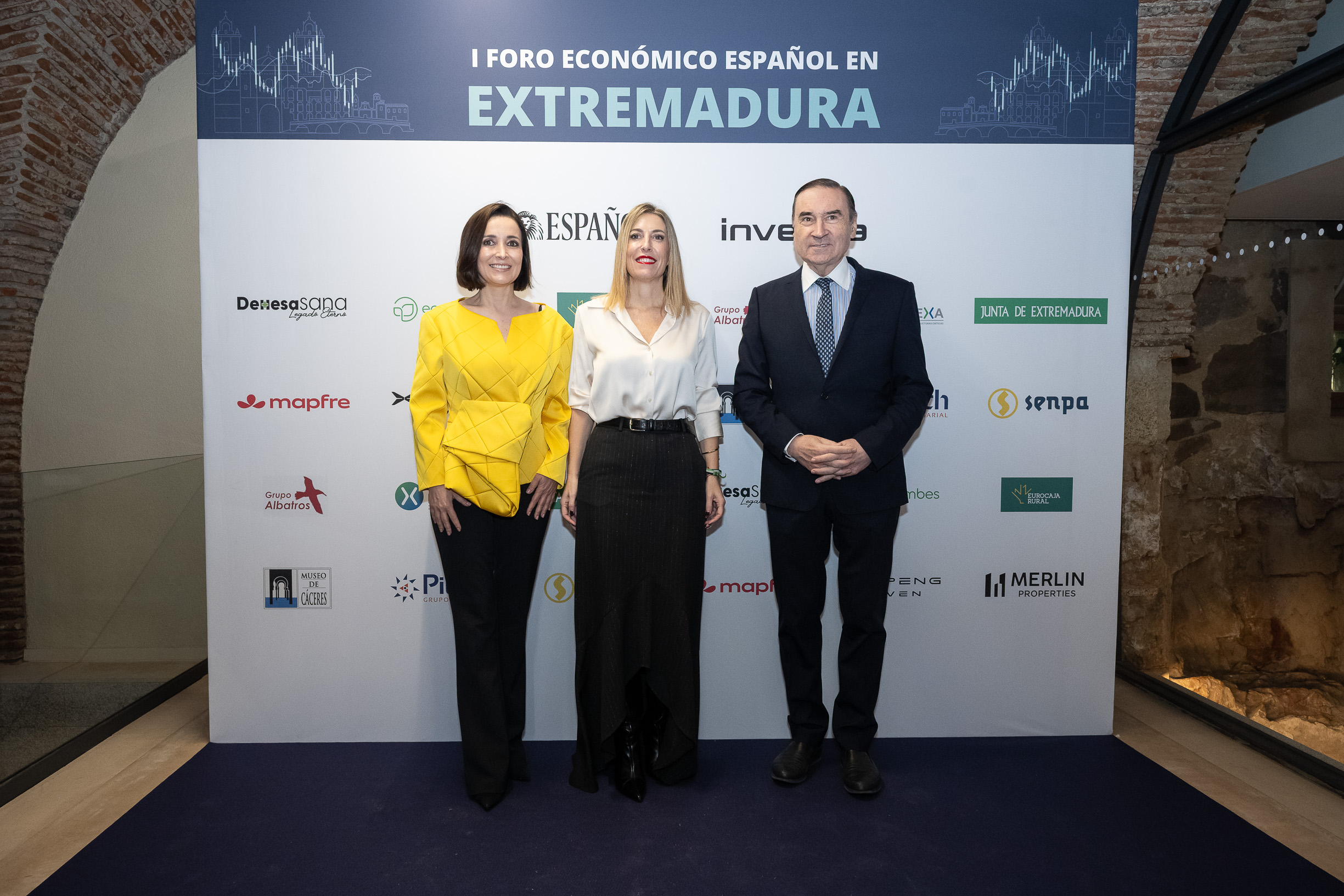
The president of the Junta de Extremadura, María Guardiola, has underscored the cultural and industrial momentum of the region as key elements in its economic and social transformation. Her remarks were made at the inaugural Economic and Cultural Forum hosted by the newspaper El Español in Extremadura, held at the Casa de los Caballos in the Museum of Cáceres.
Guardiola stated that culture is "a way of looking at the world" and a transformative force that helps people understand their identity and future direction. She expressed her support for Cáceres' bid to become the European Capital of Culture in 2031, a project that encompasses over 30 initiatives centred around three themes: land, journey, and encounter. "The city has driven this initiative, but all of Extremadura feels a sense of ownership over it," she remarked.
The president also highlighted the Extremestiza strategy, aimed at strengthening historical, cultural, human, and economic ties with communities in the Americas. Among its initiatives are the establishment of the first Institute of Mestizaje, the Extremestiza Classroom, the first Mestizo Recipe Book, and collaborative agreements with countries such as Mexico, Peru, and Chile.
Guardiola pointed out that these cultural connections also create economic opportunities, while emphasising the ongoing industrial transformation in Extremadura and the arrival of significant business projects that challenge stereotypes about the region. She cited examples such as the CC Green data centre in Cáceres, Data Riocaya in Badajoz, and Merlin Edged in Navalmoral de la Mata. Additionally, she mentioned Hunan Yuneng in Mérida and the first phase of the AESC-Envision gigafactory in Navalmoral.
"It is our responsibility to facilitate these processes. That is why we govern. Anyone can create obstacles; our role is to support the journey, to simplify processes, and to ensure rigor and utility," she asserted. The president stressed the importance of providing stability, legal security, and an administration that supports investors and job creators.
Guardiola also focused on fiscal policy and administrative modernisation, expressing confidence in Cáceres' candidacy for the European Capital of Culture 2031, with the decision to be announced on 3 December. She thanked all individuals and institutions involved in making this collective project possible. In conclusion, the head of the Extremadura government defended culture, creativity, and heritage as essential elements for building the future of Extremadura, through dialogue, encounter, and collective ambition.