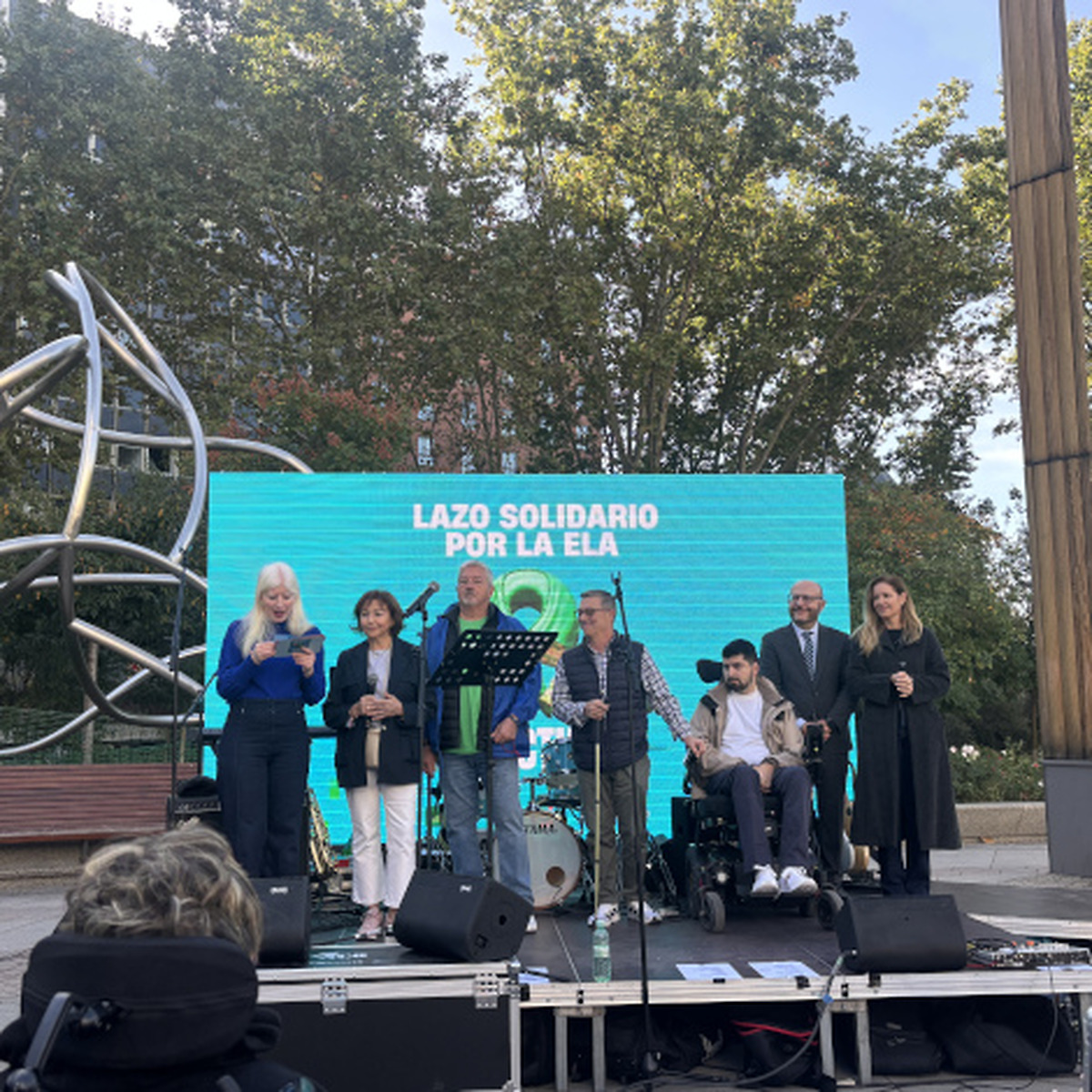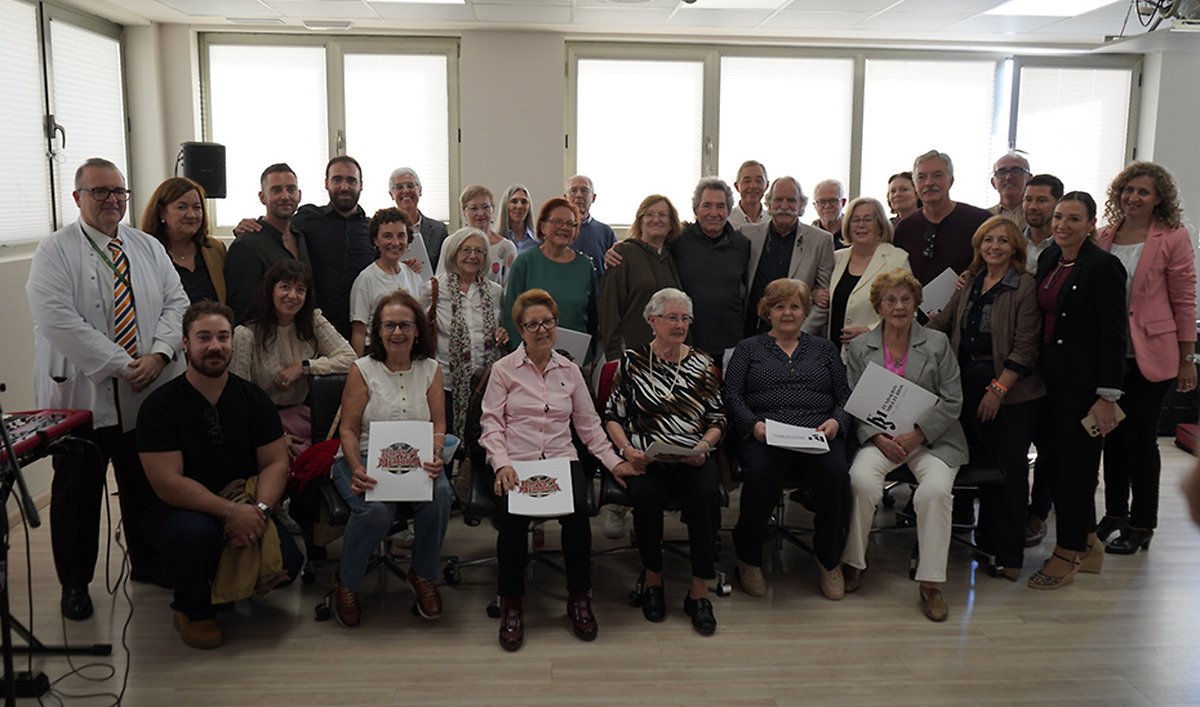
The Virgen de las Nieves University Hospital, part of the Andalusian Health Service (SAS), has signed an agreement with the Miguel Ríos Foundation for Rock and Solidarity to promote cultural and social activities that link music with health. At the launch event, the 'Coro de Rock y Memoria' performed for the first time, featuring Alzheimer’s patients and their caregivers, who delivered a heartfelt rendition of the 'Himno de la Alegría' in front of singer Miguel Ríos, who was present at the gathering.
Health delegate Teresa Illesca attended the presentation alongside Ríos, who is also the foundation’s president, and Antonio Castro, its secretary. Other attendees included María del Señor López, the hospital’s managing director, and Amparo Arrabal, the councillor for Social Policy, Family, Disability, and Seniors in the Granada City Council.
The participants reviewed ongoing activities, including the musical group, which is an innovative social initiative using music and choral singing as tools for well-being, memory stimulation, and social inclusion for older adults with Alzheimer’s and other dementias, as well as their caregivers. Upcoming initiatives include 'listening clubs', where groups guided by an expert will gather to listen to, contextualise, and discuss a musical album.
The choir consists of over ten members, coordinated by music therapist Gabriel Kulisevsky. It is open to older adults with any form of dementia, their family members, and healthcare professionals working in the field of neurosciences. No prior singing experience is required, and registration can be completed for free on the Miguel Ríos Foundation website or in person at the senior citizens’ care office located at 18 Palencia Street.
The aim is to create a stable therapeutic and cultural space where older adults with mild to moderate cognitive decline can participate in adapted choral singing sessions and reminiscence workshops, helping them reconnect with their identity, memory, and surroundings.
Adolfo Mínguez, head of the Neurology department, stated, "This initiative represents a powerful therapeutic tool, stimulating cognitive and emotional aspects affected by the disease." He added that "the songs that are part of our collective memory enhance the ability to remember and serve as autobiographical anchors, reinforcing a sense of identity and belonging." Mínguez emphasised that "music evokes emotions, reduces stress, and improves mood, while participating in a choir also strengthens family and social bonds, as well as the sense of achievement and competence that diminishes with the progression of the disease."
The Neurology service at the Virgen de las Nieves University Hospital has operated a specialised cognitive neurology unit for Alzheimer’s disease for over 25 years, employing a multidisciplinary approach involving neurology, neuropsychology, and specialised nursing, in collaboration with social work, neuroradiology, nuclear medicine, and clinical analysis, among others. This model allows patients to be seen by a neurologist and other necessary specialists in a single appointment.
Additionally, the unit offers a specific nursing consultation that provides telephone support for patients and families. The hospital employs advanced techniques for the early diagnosis of Alzheimer’s disease, such as amyloid PET scans conducted in nuclear medicine, which visualise the accumulation of amyloid protein in the brain, a marker of the disease. It also conducts diagnostic studies on biomarkers in cerebrospinal fluid (CSF), obtained through lumbar puncture. The unit is increasingly involved in research activities in collaboration with other groups, currently investigating the potential role of plasma biomarkers (P-Tau 217) for early diagnosis.