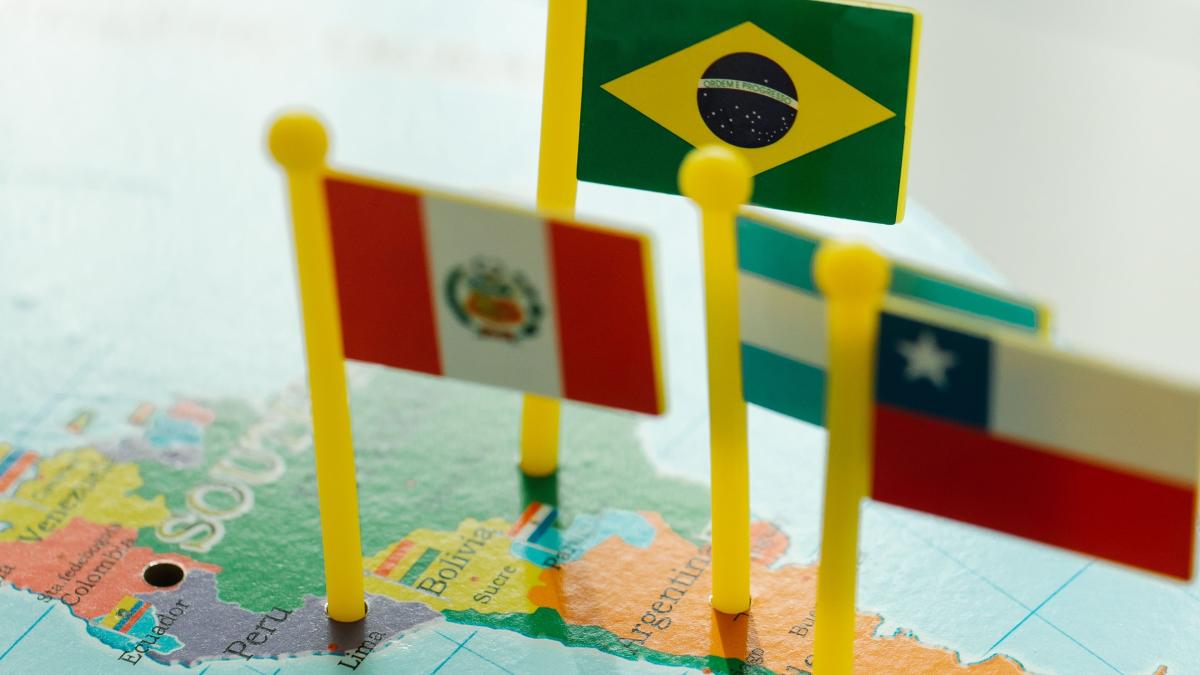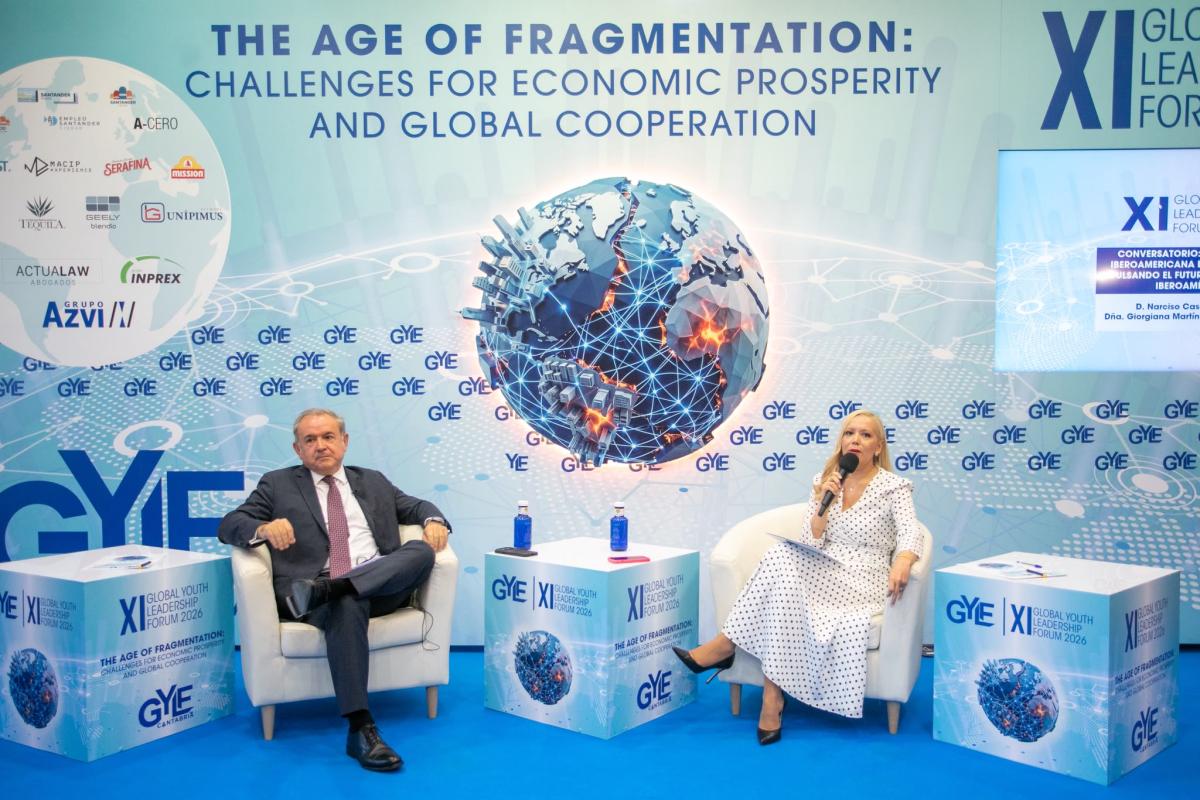
Narciso Casado, the permanent secretary of the Ibero-American Business Council (CEIB), emphasised the vast potential of Ibero-America at the recent discussions leading up to the XVI Ibero-American Business Meeting, scheduled for 3 and 4 November in Madrid's Las Ventas. With over 600 million people, essential resources for energy transition, and a significant increase in foreign direct investment from 8% in 2015 to 12.8% in 2025, Casado asserted that Ibero-America possesses everything the world seeks today.
The meeting is part of the official programme for the XXX Ibero-American Summit and aims to transform this potential into investment, industry, and formal employment. Casado participated in a conversation titled “XXX Ibero-American Summit of Madrid 2026: Driving the Economic Future of Ibero-America,” moderated by Giorgiana Martínezgarnelo y Calvo, the director general of the Global Youth Leadership Forum (GYLF), which is currently gathering authorities, experts, and business leaders in Santander until 23 October.
A pivotal event for the private sector
The XVI Ibero-American Business Meeting will focus on four main themes: structural transformations of the global economy and their implications for Ibero-America; strategic assets and public-private cooperation; innovation, knowledge economy, and entrepreneurial ecosystems; and inclusion, equality, and conditions that enable productive development. The conclusions will be compiled into a document of recommendations and commitments to be presented to heads of state and government during the conversation.
Casado believes this meeting provides a crucial opportunity to incorporate the perspectives of investors and employers, particularly at a time when the alignment between the Summit system and Business Meetings has never been stronger. He noted, “We must rise to the occasion.” This sentiment is echoed by Rebeca Grynspan, the Secretary-General of UNCTAD, who has frequently stated that “the integration of Ibero-America will be driven by the private sector.”
Challenges of trust and fragmentation
Despite the potential, growth in the region remains moderate and uneven. Casado pointed out that the primary obstacle is not a lack of resources or talent, but rather the difficulty in transforming advantages into productive investment, innovation, and stable employment. He identified two interrelated issues: trust and fragmentation. Without legal security, clear rules, and solid institutions, investment cannot flourish. Furthermore, Ibero-America often presents itself as a collection of separate markets rather than a cohesive region.
Geopolitical uncertainty poses significant risks but also presents opportunities for strengthening ties. “Now more than ever, it is Ibero-America's moment,” Casado stated.
Integration, Spain, and artificial intelligence
Integration is both a reality and an aspiration for the region, which boasts 419 integration instruments. However, small and medium-sized enterprises (SMEs) continue to face three major obstacles: regulatory divergence, administrative friction, and legal insecurity. Casado reiterated the need for better regulation rather than less, as advocated by Antonio Garamendi, president of CEOE.
Spain, as the largest European investor in the region and second only to the United States, has the potential to be more than just a gateway to Europe. It can serve as a platform to leverage agreements like the EU-Mercosur deal, which is expected to save over €4 billion in tariffs and connect ecosystems of partners, capital, and innovation. Casado urged Spanish companies to shift from a country-focused approach to a regional perspective, noting that 70% of investments in Latin America are concentrated in a single country.
Artificial intelligence (AI) also presents both opportunities for productivity and risks of increasing inequality among businesses and countries. Casado suggested that technology should address existing problems rather than create new ones, and that larger companies should support smaller ones in this transition.
Youth talent and quality employment
Casado highlighted the importance of not having to choose between productivity and quality employment, stating that the most productive companies are those that can train their workforce, offer better salaries, and sustain employment. He advocates for increased infrastructure, human capital, research and development, and dual education systems. The role of youth in the region is becoming increasingly prominent, with the Federation of Ibero-American Young Entrepreneurs (FIJE) actively participating in various initiatives since 2019.
Recognition for leadership
At the conclusion of the conversation, the GYLF awarded Narciso Casado the International Professional Career Award for his contributions to fostering cooperation and dialogue between the business sector and institutions in Ibero-America. This recognition comes during a significant year for CEIB, marking ten years since the incorporation of Business Meetings into the Ibero-American Summit process, just weeks before Madrid hosts the XVI Ibero-American Business Meeting.