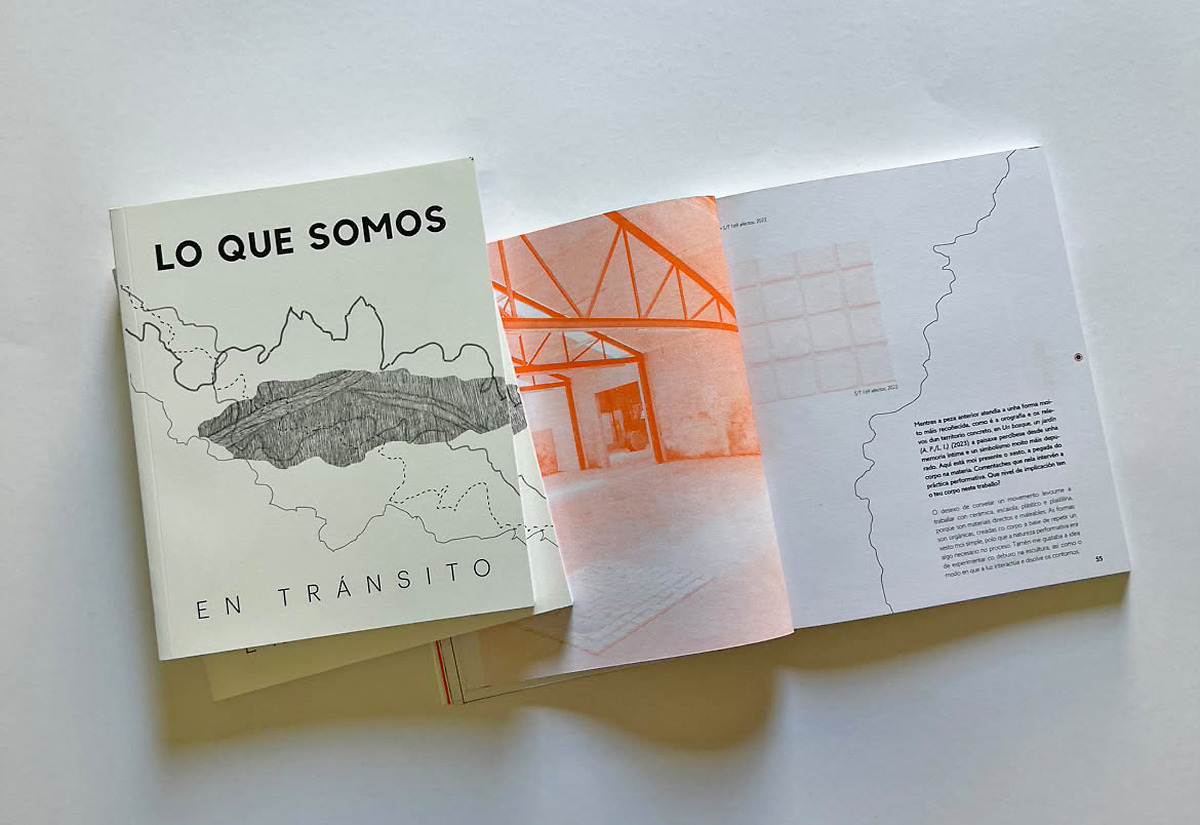
A new publication titled 'What we are' delves into the artistic journeys of seven graduates from the Faculty of Fine Arts at the University of Vigo. This book is part of the In transit series, launched in 2021 to connect students with the projects and experiences of alumni.
The latest edition features interviews with artists Vicente Blanco, Lara and Noa Castro, Andrea Davila, Manuel Mata, Ventura A. Pérez, and Carla Souto. These discussions, conducted by cultural manager and alumna Sara Donoso, centre around their interests, research processes, and the impact of their time at the faculty.
Exploring the concept of territory
The theme of territory serves as a common thread throughout the volume. Donoso notes, “The creators propose a revision of the idea of territory, breaking established patterns to create an independent discourse that is often ironic and bold.”
She adds that the interviews reveal how elements such as environment, memory, landscapes, rural life, and the Galician context influence the artists' practices from various perspectives.
Artistic reflections and influences
The publication, available in both Galician and Spanish, emphasises the relationships between art, territory, body, memory, education, and society. It also highlights the processes behind the artworks.
Chelo Matesanz, an artist and professor who contributed to the selection of featured artists, states in the preface that these creators from different generations “advocate for artistic practice as a fundamental tool for knowledge and research.” She also points out the use of humour as a shared characteristic among the group.
Matesanz further notes that many artists incorporate aspects of the Galician imagination into their works or analyse it from a distance, stressing the artist's role in understanding and conveying the experiences of the communities they engage with.
The role of the faculty
All interviews address the Faculty of Fine Arts as a “space for learning, experimentation, and exchange,” allowing for a glimpse into the diverse paths that can follow an artistic career after university.
For instance, Vicente Blanco, a graduate from the early cohorts, has held solo exhibitions at prestigious venues such as the Museo Nacional Centro de Arte Reina Sofía and the Centro Gallego de Arte Contemporáneo (CGAC). He balances his artistic career with teaching at the University of Santiago de Compostela.
The book also showcases the collaborative work of sisters Lara and Noa Castro, who focus on “the space of dreams and poetry” and have received recognition through grants from institutions like the María José Jove Foundation and La Caixa Foundation.
Andrea Davila, a graduate and doctor in Fine Arts from the University of Vigo, shares her award-winning journey and her research on the body as a sensitive instance in the materialisation of sculpture, which led her to the Department of Philosophy at Boston College under a Fulbright scholarship.
Similarly, Manuel Mata, also a doctor in Fine Arts, discusses his literary and photographic project developed in New York, alongside his career as a poet. Ventura A. Pérez, another featured artist, reflects on his interest in the relationships between miniature and architecture, exploring various formats such as sculpture, painting, and drawing.
Finally, Carla Souto, who expanded her studies in Portugal and Brazil after graduation, investigates themes related to the body, geopolitical issues, materiality, and creative processes through her diverse artistic practice.