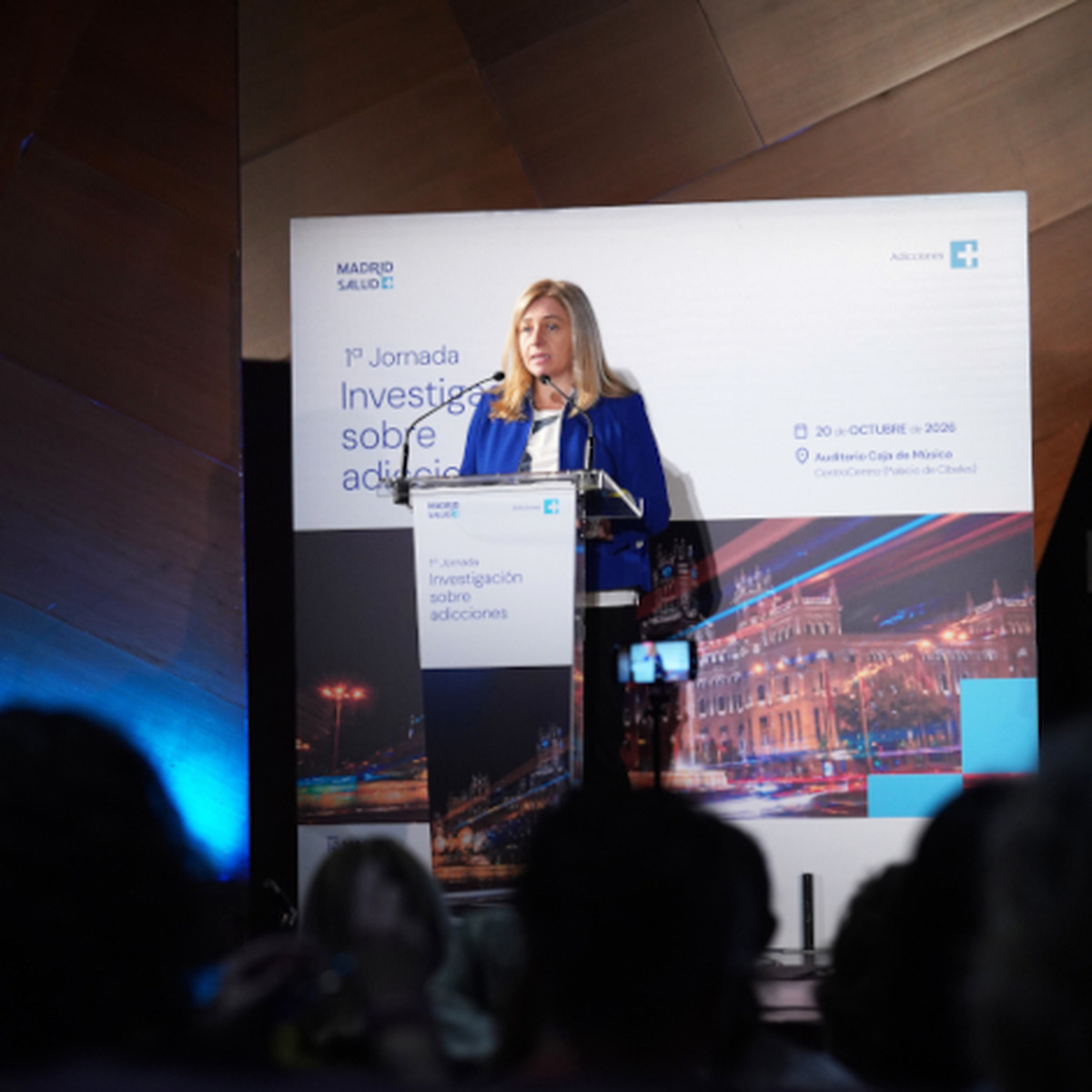
Inma Sanz, the deputy mayor of Madrid and delegate for Security and Emergencies, inaugurated the first Research Conference on Addictions today, organised by Madrid Salud. The event aims to facilitate the exchange of experiences and scientific debate among prominent professionals from both national and international backgrounds, all of whom have extensive experience in clinical assistance, university teaching, and scientific research.
During her address at the Caja de Música auditorium in the Palacio de Cibeles, Sanz expressed her pride in the municipal agency hosting such a forum on a topic that concerns many parents. She stated, “The fight against addictions has many fronts, and one of the least visible but most important is scientific research. Its advances allow us to better understand the factors that make some individuals more vulnerable than others, help us design prevention policies, detect new risks, emerging consumption patterns, or new substances, and promote innovation in methods, technologies, and approaches that assist individuals.”
The conference, which is intended to be a recurring event, reflects the commitment of the Institute of Addictions at Madrid Salud to advance knowledge, innovation, and continuous improvement in actions aimed at the prevention, care, and treatment of addictions, as highlighted by Sanz.
She also underscored the importance of research as a critical priority for generating quality scientific knowledge, anticipating new challenges, evaluating the effectiveness of interventions, and strengthening the formulation of evidence-based public policies. This, she noted, contributes to a better social and health response to addictions.
Sanz reminded attendees that work has already begun on the Addiction Plan 2027-2031 for the City of Madrid, which renews the commitments of the City Council to individuals with addictions or those at risk of developing them. This process involves collaboration with addiction experts, social entities, individuals in treatment, and their families, and began following a public consultation on the Decide Madrid platform.
The conference features participation from professors and specialists in psychiatry, psychobiology, pharmacology, clinical research, and addictions, reflecting the complex and multidimensional nature of these issues, which require complementary and integrated approaches. It also highlights the importance of promoting interdisciplinary work and collaboration between research, clinical practice, public health, and biopsychosocial intervention.
Throughout the event, discussions will address some of the challenges faced by Madrid Salud and the wider community, such as enhancing early prevention and care for adolescents and young people, fostering intervention and detection systems in response to the rising consumption of stimulants and new psychoactive substances, and promoting specific care for women and users of chemsex with addictions.
In the first half of the year, municipal addiction care centres (CAD) attended to 8,879 individuals, comprising 76% men and 24% women, with 1,721 (19.3%) being young people aged 24 and under.