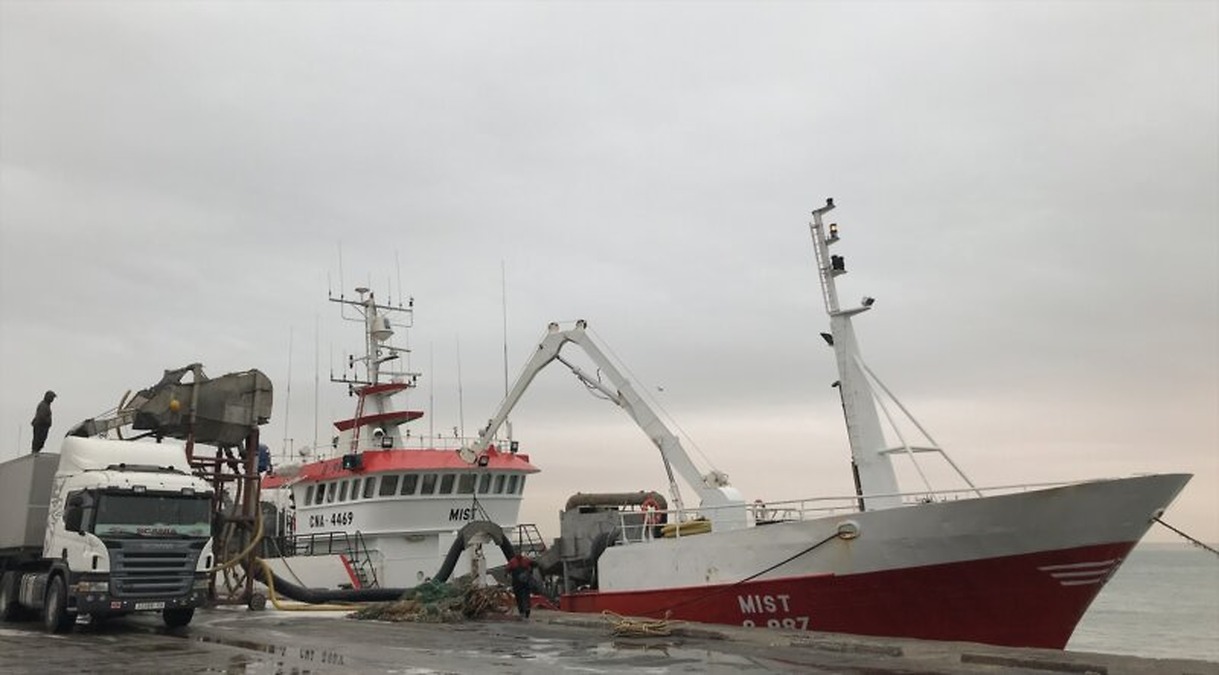
The Spanish fishing fleet is set to vacate Mauritania's waters this Saturday after the fishing agreement between the country and the European Union (EU) has expired. The lack of a renewed protocol, with negotiations still ongoing, has created significant uncertainty among shipowners, who fear substantial economic losses and are unsure when they will be able to return to one of the most important fishing grounds for the sector.
This agreement, regarded as the most significant fishing accord of the EU, has allowed nearly a hundred vessels from ten member countries to operate in Mauritanian waters in recent years. Spain has held over 50 licenses, utilised by boats from regions including Andalusia, Galicia, the Canary Islands, and the Basque Country. The activity of these vessels is particularly vital for certain Spanish ports and fish markets, such as Cádiz, which heavily relies on catches from this fishing ground.
In exchange for permitting fishing activities, the EU has paid Mauritania an annual compensation of €60.8 million. However, new economic demands from Nouakchott have emerged as a major hurdle in reaching a new agreement. The departure of these vessels will also have repercussions for local workers, as ships that remain in the area until the last moment will need to disembark their Mauritanian crew members, leaving nearly a thousand local fishermen without jobs.
The European Commission has proposed a new offer to Mauritania, enhancing the financial compensation and the fees that shipowners must pay to fish in its waters. Meanwhile, Spain's Ministry of Agriculture, Fisheries and Food is pushing to expedite negotiations and secure a renewal before the agreement lapses. Isabel Artime, the Secretary General of Fisheries, has indicated that the government is urging the European Commission to intensify discussions to reach a deal before 23:59 on 14 November.
The Ministry of Foreign Affairs is also involved in diplomatic efforts to resolve the situation. Javier Garat, Secretary General of the shipowners' association Cepesca, has highlighted the strategic importance of the agreement, which extends beyond fishing activities. Mauritania also receives significant EU funds for cooperation programmes, which have ranged between €800 million and €1 billion since 2021.
The absence of an agreement will have an immediate economic impact on fishing companies. According to the National Association of Shellfish Gatherers (Anamar), the 15 vessels operating in Mauritania could lose over €5 million monthly if they cannot continue fishing, potentially totalling losses of €30 million over six months. The effects will also be felt in Spanish fish markets, with Cádiz port having commercialised catches worth €13.2 million in 2025 and €8.64 million in the first nine months of 2026, linked to the fishing agreement.
Concerns are particularly acute for shipowners who lack alternative fishing grounds for their vessels. María José de Pazo, owner of the Galician ship ‘Fuente de Macenlle’, has warned of the impact that halting operations will have and noted that Cádiz will hold its last auction of Mauritanian fish on Monday. A protest is also planned outside the Subdelegation of the Government to express the sector's discontent. De Pazo described the situation as “brutal” and cautioned that the lack of catches could affect fish supply during the Christmas season, a peak commercial period.
Isabel Artime from the Ministry of Fisheries has assured that there are other fishing grounds where the fleet could operate, whether a new agreement is reached or negotiations fail. However, shipowners do not fully share this assessment, believing that alternatives are limited. For example, the merluza (hake) vessels, like ‘Fuente de Macenlle’, lack clear options for relocating their activities. In contrast, Andalusian shellfish gatherers may consider Guinea-Bissau as an alternative, although there are concerns about the risk of overexploitation of its fishing resources. Tuna vessels, on the other hand, have more opportunities to operate in other fishing grounds due to existing agreements.
The uncertainty surrounding the negotiations has prompted criticism of the management by European institutions. María José de Pazo has denounced the lack of planning and transparency, warning that the situation may drive European shipowners to change flags to maintain their operations. She also expressed concern for workers in the sector, who are uncertain about their job security and financial obligations while the future of the agreement remains unresolved.
For now, the Spanish fleet must leave Mauritania's waters this Saturday as negotiations continue in an attempt to regain access to this crucial fishing ground for the Spanish fishing industry.