Universidad de la Laguna has inaugurated three photographic exhibitions at Casa Anchieta, coinciding with the fifth edition of Campus América, which features chile as the guest country. The exhibitions, titled ‘Chile: voces de Patagonia. Secretos del Fondo Marino’, ‘Chile: Voces de la Patagonia: Martín Gusinde’ and ‘Dos hemisferios, un mismo cielo: Canarias y Chile’, offer a journey through the natural, cultural, and scientific heritage of both regions. They will be open to the public until 30 October, the final day of Campus América, during morning and afternoon hours.
The inauguration, organised by the Vice-Rectorate for Internationalisation and Cooperation, took place at Casa Anchieta in La Laguna. In attendance were Vice-Rector Inmaculada González and Adolfo Cordobés, the councillor for Heritage at La Laguna City Council, who praised the collaboration with the academic institution and the relevance of hosting the exhibitions at Casa Anchieta, the childhood home of the priest who dedicated his life to educating Latin American communities.
Martín Gusinde and the memory of indigenous peoples
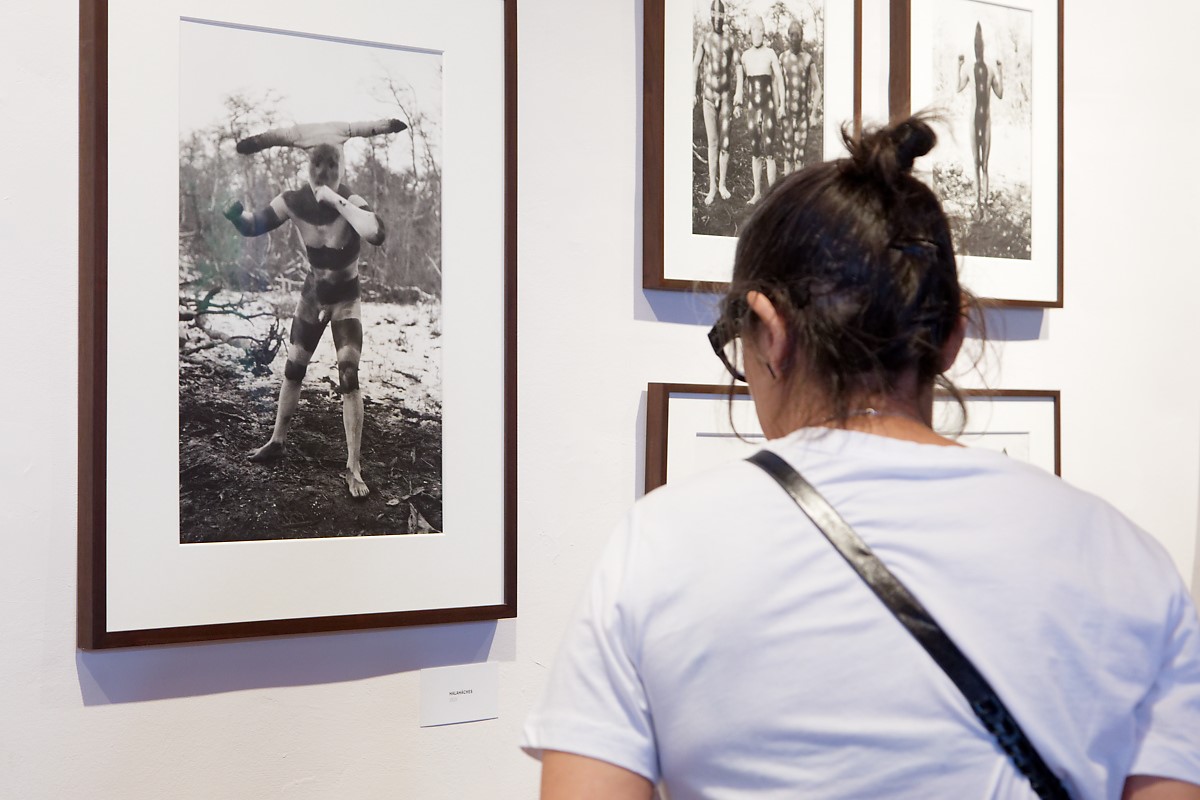
The exhibition ‘Chile: Voces de la Patagonia: Martín Gusinde’ showcases the photographic legacy of the German priest and ethnologist who undertook four expeditions to the southernmost part of Chile between 1918 and 1924 to document the lifestyles and traditions of the region's indigenous peoples. This exhibition features photographs selected from an archive of approximately a thousand images, providing a valuable historical and anthropological record of the selk’nam, yagán, and kawésqar communities.
Among the images are those related to initiation ceremonies and rituals of the selk’nam people, which conveyed ancestral knowledge. The exhibition also highlights the unique characteristics of the yagán and kawésqar peoples, who are closely linked to navigation through the southern channels, showcasing their homes, boats, and symbolic expressions through body painting. Gusinde's photographs represent significant heritage for descendant communities that maintain ties to the languages, territories, and knowledge documented over a century ago. They also reflect how the German priest successfully integrated into these communities, which had never before been photographed.
This recovery of heritage has been made possible through the digitisation and restoration of the original negatives, led by French editor Xavier Barral for his publishing house Atelier EXB. Additionally, the non-profit organisation Filantropía Cortés Solari has acquired a collection edition to contribute to the conservation and dissemination of Chile's legacy.
The underwater biodiversity of Patagonia
The exhibition ‘Chile: voces de Patagonia. Secretos del Fondo Marino’ features the work of Chilean underwater photographer Eduardo Sorensen, renowned for his documentation of marine ecosystems in his country and participation in over thirty scientific missions. The images were taken during successive expeditions from 2018 to 2022 in the Melimoyu area of the Aysén Region, as part of a project developed by Fundación MERI and Filantropía Cortés Solari.
Through his photographs, Sorensen reveals the uniqueness of the underwater landscapes of northern Chilean Patagonia and its inhabitants, where species such as sea feathers, jewel anemones, hydrocorals, snails, and brittle stars display a variety of forms and colours rarely seen outside the underwater realm. The exhibition invites reflection on the importance of understanding and conserving marine heritage in the context of increasing concerns about threats to the oceans, especially in those inaccessible corners.
A shared sky across two hemispheres
The third exhibition, ‘Dos hemisferios, un mismo cielo: Canarias y Chile’, has been specifically conceived for this edition of Campus América and establishes a connection between both regions through astronomy. It features photographs taken by astrophotographers from Chile and Canarias, showcasing the uniqueness of their astronomical observatories and the beauty of the skies from which they conduct their scientific activities.
Curated by Sara González from ULL, with support from the Instituto Astrofísico de Canarias (IAC), the exhibition highlights the exceptional conditions that make both regions international reference points for observing the universe. Their altitude, atmospheric stability, and low light pollution favour research and allow for high-quality images of the night sky. The exhibition also underscores the geographical and scientific connection between the observatories in Canarias and Chile, as their locations in opposite hemispheres enable the observation of different regions of the sky and complementary research.