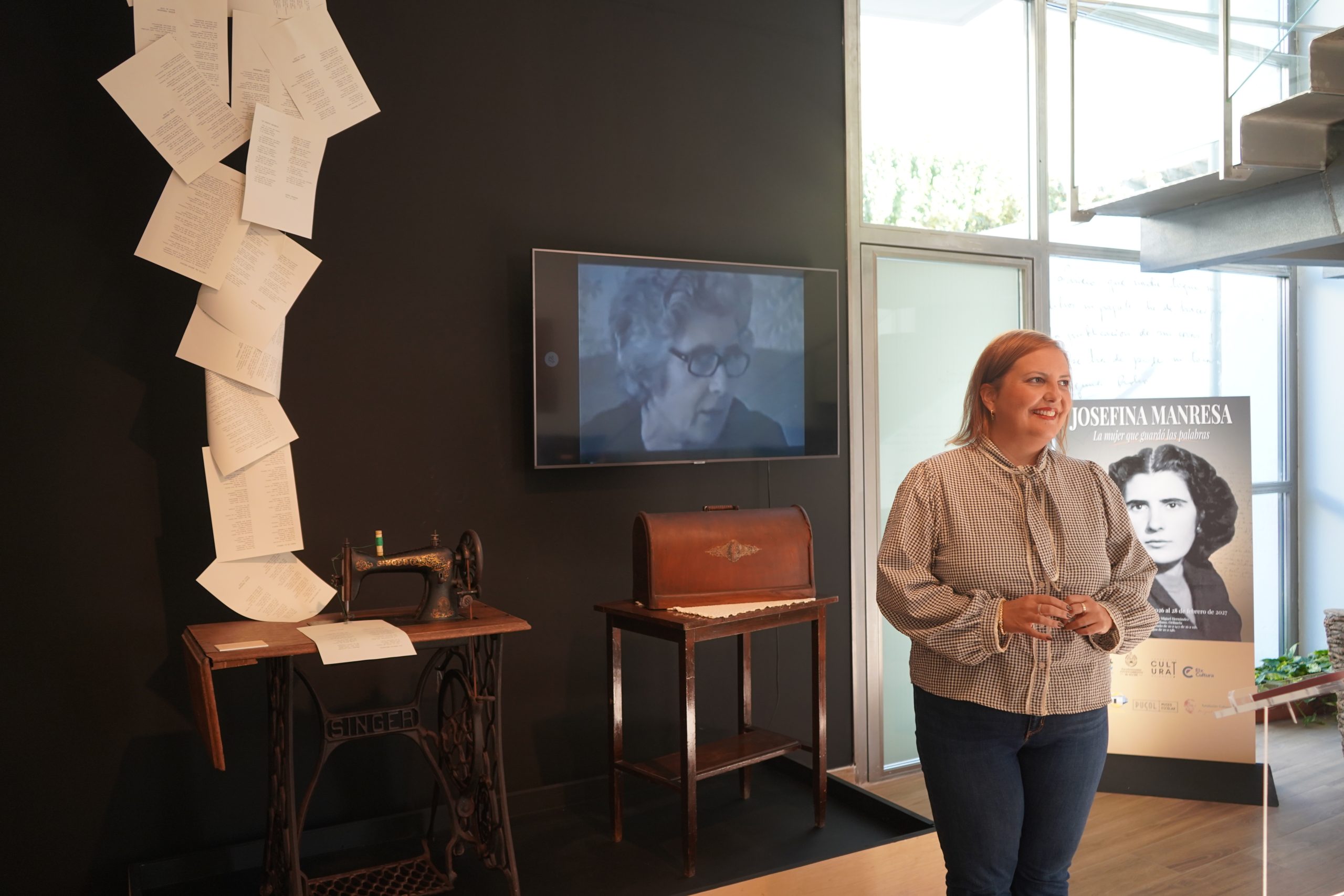
The cultural department of Orihuela has unveiled a new exhibition titled 'Josefina Manresa: the woman who kept the words', dedicated to the life of Josefina Manresa, the partner of the renowned poet Miguel Hernández. This temporary exhibition will be open to the public from 13 November 2026 until 28 February 2027 at the Miguel Hernández Exhibition Hall, part of the Miguel Hernández Cultural Foundation.
During the presentation, the cultural councillor, Anabel García, highlighted the significance of recognising Manresa's role, stating, "Josefina, in addition to being Miguel Hernández's life partner, was also the guardian of his memory, preserving his poems, letters, photographs, and many memories that allow us to approach his story from a more human and intimate perspective." This exhibition aims to explore the personal life of Hernández through the lens of Manresa's experiences and her commitment to preserving his legacy.
A journey through josefina manresa's life
The exhibition chronicles the life of Josefina Manresa, who not only inspired some of Hernández's literary work but also dedicated much of her life to safeguarding and promoting his oeuvre. It begins with a chronological timeline that spans from her birth on 2 January 1916 in Jaén to her death on 18 February 1987 in Elche. Accompanying this timeline is a family tree detailing the ancestors and descendants of both Miguel Hernández and Josefina Manresa, developed through research by curators Joan Pàmies and Fran Belmonte.
The exhibition also features a section on Manresa's youth in Orihuela, where she arrived in April 1927. Here, she worked as a seamstress and fell in love with Hernández. This period is illustrated with various documents, including a copy of La buena Juanita, a book she studied, and a dedicated edition of El rayo que no cesa from Hernández to Josefina, marking some of the happiest years of their lives, culminating in their marriage on 9 March 1937 at the Casa Museo.
Reflections on hardship and legacy
The latter part of the exhibition addresses the years of imprisonment and the eventual death of Miguel Hernández. A symbolic dialogue is established between an Underwood typewriter and a Singer sewing machine, the latter used by Josefina, which has been loaned by the Puçol Museum in Elche for this occasion. The exhibition concludes with a tribute to Josefina's efforts in preserving and promoting Hernández's work, featuring original photographs that she kept in metal biscuit tins, showcasing intimate moments with her grandchildren and her participation in commemorative activities for Hernández in the San Isidro neighbourhood of Orihuela.
Capturing the essence of a remarkable woman
J. Tomás Serna, a curator and technician at the Casa Museo, discussed the challenges of conveying the life and emotions of a woman like Josefina, whose journey was closely tied to the literary and human legacy of Miguel Hernández. He noted, "It is very difficult to reflect the life and feelings of a woman like Josefina, who lived alongside such a great poet." The exhibition incorporates subtle details, such as sewing pattern drawings on panels, connecting to Josefina's profession.
Among the most poignant elements of the display is a cradle positioned at the centre of the room, accompanied by Hernández's poem Nanas de la cebolla. This gesture symbolically links Josefina's family history to one of Hernández's most famous poems, allowing visitors to take a piece of the poem home as a memento of their visit.
New insights into family connections
Fran Belmonte, also a curator of the exhibition, shared that one of their significant contributions was the research and creation of Josefina Manresa's family tree. He stated, "Creating a family tree is ultimately a tribute to both the individual and their ancestors," highlighting that the study has uncovered previously unknown aspects of Josefina's family. This research is complemented by a comparison with Miguel Hernández's family tree, providing a broader view of their familial ties.
Joan Pàmies expressed gratitude to the cultural department and Anabel García for their support in realising this long-awaited initiative. "I want to thank Anabel García because we have achieved a dream that has been years in the making: to have an exhibition dedicated to Josefina," he remarked. Through this initiative, the cultural department aims to highlight the essential role of Josefina Manresa in preserving Miguel Hernández's memory and to share the story of a woman whose strength, commitment, and generosity have ensured that his literary and human legacy endures to this day. Anabel García concluded, "If we can continue to read, study, and enjoy much of Miguel Hernández's work today, it is also thanks to Josefina's tenacity and commitment."