The City of Madrid has awarded two municipal plots in the districts of Hortaleza and Ciudad Lineal for the development of collaborative housing projects for seniors, known as ‘cohousing senior’. These initiatives will provide a total of 95 residential units and promote a living model that combines residents' autonomy and privacy with communal spaces and mutual support.
This initiative has been jointly developed by the Urban Planning, Environment and Mobility departments and the Social Policies, Family and Equality departments. It seeks to make use of municipal land that is currently unused and allocate it to new residential models that encourage healthy ageing. The project addresses two significant challenges faced by the city: active longevity and unwanted loneliness, particularly relevant in a region where Madrid boasts the highest life expectancy in Europe. Currently, over 700,000 residents aged 65 and older live in the city, with approximately 180,000 living alone.
Details of the projects in Hortaleza and Ciudad Lineal
In the Hortaleza district, a plot located on Calle de Isabel Clara Eugenia, at the intersection with Avenida del Ingeniero Emilio Herrera in the Sanchinarro neighbourhood, has been awarded to Cooperativa La Colina. This project will feature 55 residential units on a 4,300 m² plot. Meanwhile, in Ciudad Lineal, a plot on Calle de Llanos de Escudero, at the intersection with Calle de Emilio Ferrari, Santurce, and Gutiérrez de Cetina, has been awarded to Meridiano Uno Sociedad Cooperativa Madrileña, which plans to develop 40 residential units on a 4,387 m² area. Both projects will be formalised through land concessions for a period of 75 years.
Promoting autonomy and community living
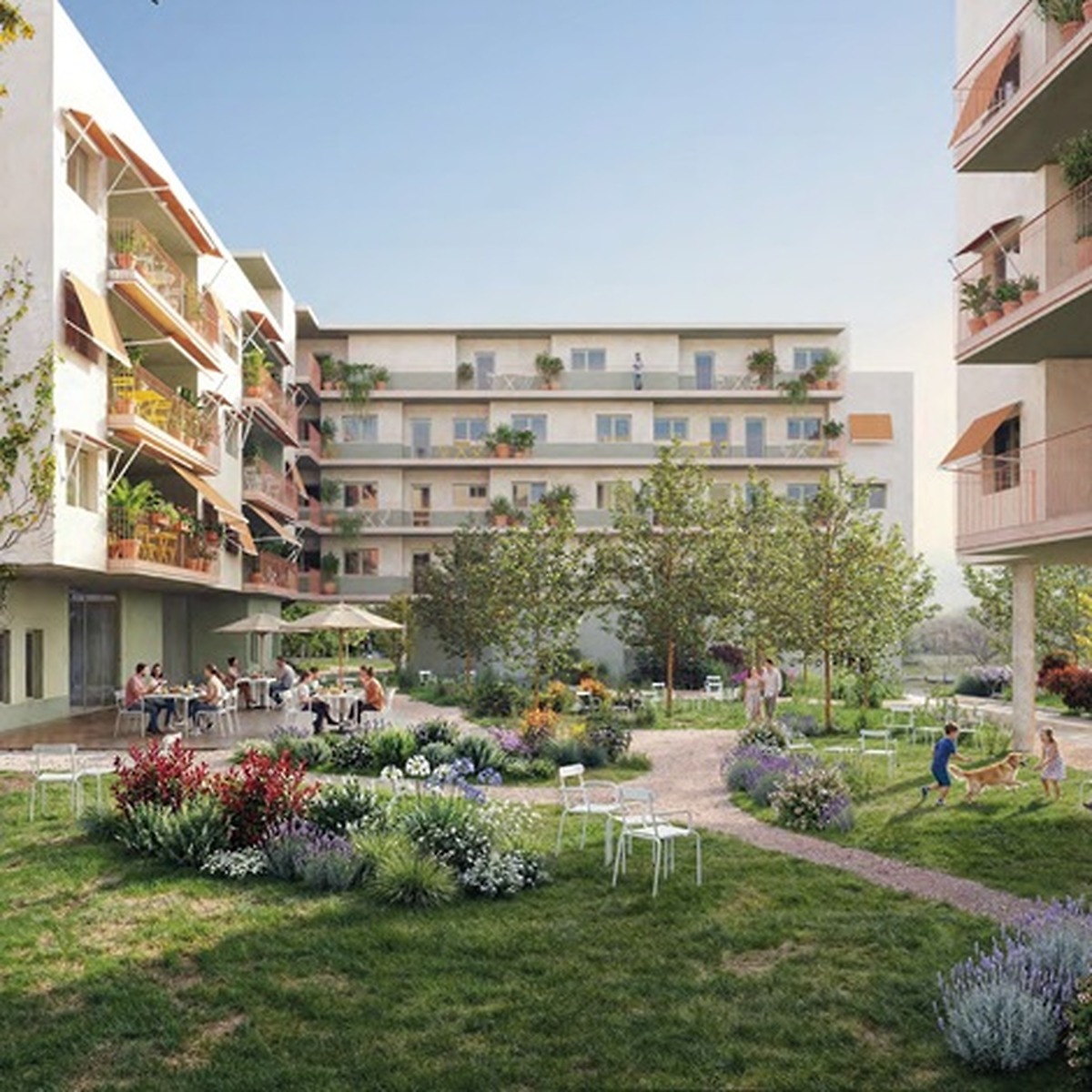
The ‘cohousing senior’ model is designed for older adults who wish to maintain their independence while living in a community environment. The housing units will allow for personal privacy and autonomy, while communal areas will facilitate social interactions and mutual support among residents. This model provides an alternative to traditional residential options and contributes to creating environments that promote active ageing, community life, and the prevention of unwanted loneliness.
The collaborative housing concept for seniors was defined in the Resolution 940/2022 by the Community of Madrid. Following this regulatory framework, Madrid became the first city to incorporate this living model into its Urban Planning Regulations, which were approved in July 2023. The project stipulates that only non-profit entities can apply for the land allocation. The tender requirements also specify that the housing must be private and dignified, featuring independent living spaces with kitchens and adapted bathrooms, as well as private outdoor areas to ensure residents' privacy.
Additionally, the collaborative housing will include common areas for socialising, such as dining rooms, lounges, and multipurpose spaces for shared activities, alongside green areas and gardens designed for residents' well-being. The buildings will be accessible, with at least 50% of the units adapted for individuals with reduced mobility. Common spaces will also be designed to be accessible.
Regarding mutual support and dependency care, the entities must ensure assistance for residents requiring additional help, promoting their ability to remain in the community for as long as possible. The initiative will encourage active living and social participation through activities that enhance autonomy, health, community reinforcement, and intergenerational relationships. Furthermore, residents will be involved in decision-making and the management of common services. The entity must have statutes, community rules, and an intervention plan outlining how services, activities, and care will be organised. They will also provide personal and social care services, ensuring attention to health and personal care, social integration, and connections with family and friends.
From a sustainability and energy efficiency perspective, the buildings constructed on these sites in Ciudad Lineal and Hortaleza will be low-consumption, with an energy rating of A, utilising renewable energy sources and featuring landscaped outdoor spaces.