The Madrid city council is making strides alongside nightlife business owners to implement measures that reduce the impact of nightlife activities on local neighbourhoods. A new plan has been launched to promote sustainability and safety within the nightlife sector in the Centro district.
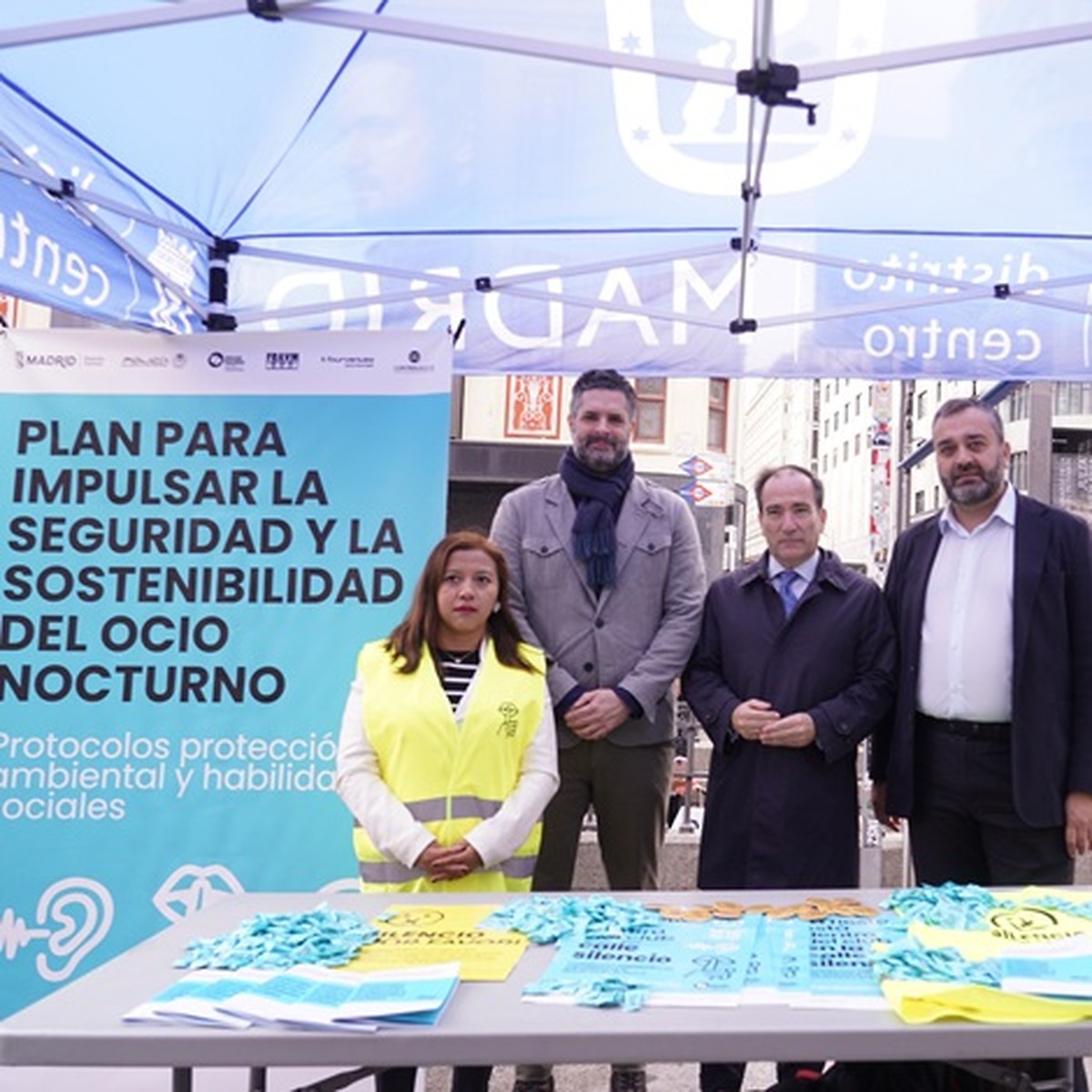
This morning, the city’s Urban Planning, Environment and Mobility delegate, Borja Carabante, and the Centro councillor, Carlos Segura, visited the information point for the awareness campaign #enlacallesilencio in Callao to review the initial results of this initiative. The campaign aims to improve community relations, mitigate the environmental consequences of nightlife, and foster safer, more responsible leisure spaces. Alejandro Zamarro, president of the Madrid Nightlife and Entertainment Business Association, Noche Madrid, also participated in the visit.
The plan builds on actions initiated in 2025 and expands its scope to address not only measures that venues can implement internally but also those that enhance public behaviour and coexistence in public spaces. This includes training sessions, individualised advice for venues, the establishment of environmental protection protocols, and community awareness initiatives.
A total of 12 venues in the Centro district participated in the initiative, with nearly 30 professionals attending training sessions. One of the key outcomes of the project is the assessment of measures aimed at reducing the environmental impact of nightlife establishments. Organised evacuation protocols have emerged as the most effective measures, allowing for the orderly exit of customers, minimising crowding at venue entrances, and reducing noise disturbances as patrons leave.
This measure has seen significant improvement compared to evaluations conducted in 2025, when it was not among the most recognised. Advance ticket sales and ticketing systems remain highly rated, as they facilitate access organisation and reduce waiting times on the street. The cleanliness of the surrounding area, including the collection of bottles and waste, as well as the cleaning of streets, sidewalks, and nearby entrances, has also gained prominence this year as a tool for improving community relations and public space maintenance.
Other measures that have improved in evaluation include restricting access to individuals who do not meet admission criteria and managing re-entry stamp hours, which help prevent antisocial behaviour and crowding outside venues. In terms of ease of implementation, informative signage and cleaning initiatives are among the simplest measures to apply, alongside online sales and evacuation protocols.
Training for professionals in the nightlife sector has been a fundamental aspect of the plan. Sessions have covered topics such as conflict prevention, queue and access management, environmental protection, sustainability, team coordination, innovation, and safety. Evaluation results indicate a positive reception of the content and its usefulness in promoting civic and responsible leisure spaces. This training has equipped professionals to better prevent and manage antisocial and irresponsible behaviour in their establishments.
The #enlacallesilencio campaign has brought these initiatives closer to the public through information, mediation, and awareness actions carried out in the main nightlife areas of the Centro district. The results of a survey conducted as part of the campaign provide insight into how citizens perceive nighttime noise and measures to improve coexistence. Respondents identified noise from street gatherings, loud conversations, laughter, and shouting as the primary sources of disturbance. Traffic noise and the operation of essential public services were also noted as contributing factors. Additionally, street drinking, house parties, nightlife activities, and 24-hour shops were cited as sources of acoustic pollution.
Most survey participants believe that the city council is taking steps to reduce nighttime noise and that establishments in the Centro district are concerned about protecting and caring for their environment. These findings underscore the importance of collaboration between the municipal administration, industry stakeholders, workers, neighbourhood associations, and the public to move towards a nightlife model that is compatible with rest and coexistence.
The initiative has involved the participation of the Municipal Board of the Centro District, Noche Madrid, the Municipal Police, the Regional Federation of Neighbourhood Associations of Madrid (FRAVM), Fourvenues, and the NGO Controla Club.