Pepe Dámaso, approaching his 93rd birthday, continues to find inspiration in art. His extensive career, deeply intertwined with Canary Island culture, now sees a new collaboration with the renowned poet Federico García Lorca, a figure who has influenced much of his artistic life. This collaboration will be showcased on Saturday, 31 October, at 20:00 in the Teatro Pérez Galdós, with the world premiere of Lorca por Dámaso. The project, directed artistically and musically by Isabel Costes, translates the poet's imagery into the languages of music and performing arts.
“Creation is a mystery,” Dámaso reflects on a vocation that has remained steadfast over the years. When discussing his new contribution to Lorca por Dámaso, he speaks with the curiosity of someone still discovering what a work can reveal. He acknowledges that the project has developed its own identity as it progressed, driven by the contributions of its participants and the possibilities offered by Lorca's universe. “It has formed itself, with humility, sentiment, and surprising creativity,” he explains about a process guided by the collective sensitivity of those involved.
Admiration for Lorca
Dámaso's artistic imagination has long been shaped by his admiration for Lorca, whose multifaceted personality extended beyond literature. The poet's musicality, artistic sensitivity, and rich thought continue to provide expressive opportunities for Dámaso. This diversity is a fundamental aspect of the new production. “Lorca himself has given us pretexts for what needed to be done,” the painter notes, convinced that the development of the piece is closely linked to the poet's own work. The relationship between their two worlds is built on creative freedom and a contemporary interpretation of symbols that still evoke powerful emotions.
A visual element for Lorca's universe
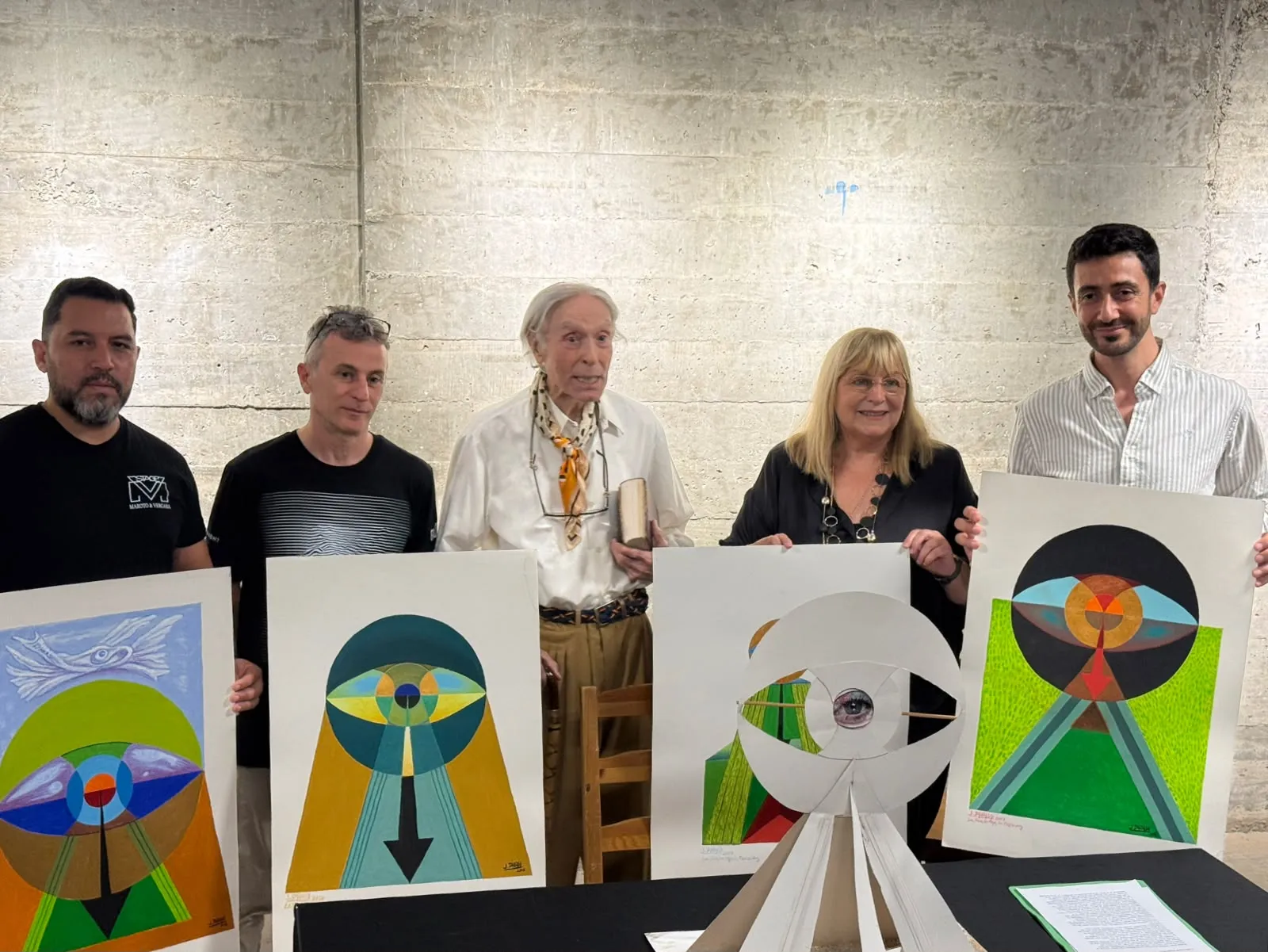
Dámaso's participation is particularly prominent in the scenic design. For this production, he has created a large sculptural structure inspired by Lorca's drawings, which transforms through lighting and audiovisual projections. This corporeal element, constructed by Maroto and Vergara, will establish various relationships between image, music, and movement. Dámaso describes it as a conceptual creation, “almost habitable,” designed for the performance to engage in dialogue with its forms. The structure incorporates references to the poet's graphic imagination and gains new dimensions as different artistic languages intervene.
Dancer and choreographer Vanesa Aibar will help establish this dialogue through movement, while actor José Luis de Madariaga will contribute spoken word. The Orquesta Sinfónica del Atlántico (ODA), under the baton of Isabel Costes, will guide the musical journey. The proposal also includes lighting design by Cristina Alba and videomapping by Simone Marín, techniques that will alter the perception of the space conceived by Dámaso and enhance its expressive dimension.
Music as a pathway to Lorca
The musical construction of Lorca por Dámaso draws from various moments in Lorca's life and creation. The repertoire connects the popular roots of his work, his New York experience, and his relationships with other cultural territories, including Cuba. A highlight will be the premiere of Entre suelas y asfalto (New York in a poem and three quarters), a composition by Juan Manuel Marrero created specifically for this production and inspired by the universe of Poet in New York. This piece joins the Lorca Suite by Ernesto Mateo, based on the Spanish folk songs collected and harmonised by the poet. The programme also features music by Claude Debussy, including the third movement of La Mer: De l’aube à midi sur la mer, and compositions by Ernesto Lecuona, expanding the cultural references of the performance.
Dámaso holds Poet in New York in high regard, considering it one of Lorca's greatest expressions of talent and emphasising reading as a fundamental way to explore his thoughts. He seeks in its pages a world of creative possibilities, describing the poem collection as “the unsurpassable book.” His admiration extends to other facets of Lorca's career, from cante jondo (a traditional form of singing) to his relationship with composer Manuel de Falla, testaments to an artistic personality that continues to captivate him. Thus, engaging with Lorca's texts, drawings, and musical connections becomes a starting point for the scenic creation, allowing for new encounters between poetry and the arts.
A continuing creation
The premiere arrives as Dámaso reflects on his extensive career while maintaining a keen interest in creative possibilities. He acknowledges the importance of collaborative work and highlights the artistic commitment found among those involved in this production. This trust in the creative process is also evident in how he invites the audience to engage with the performance. Dámaso believes that each spectator will uncover their own meanings from the elements presented on stage, without needing a fixed interpretation of the work. Music, movement, and the transformation of space will construct an interpretation of Lorca open to individual sensitivity.
The experience returns to the stage of Teatro Pérez Galdós the perspective of an artist who continues to explore new possibilities for his visual language. With Lorca por Dámaso, the Gran Canaria painter revisits an essential figure in his journey and participates in a new collective creation that finds its primary source of inspiration in the poet's work. Nearly nine decades separate his early artistic discoveries from this premiere, yet one conviction remains unchanged, expressed by Dámaso in just five words: “Creation is a mystery.”