On 9 November 2026, the Socialist Parliamentary Group submitted a total amendment to the Project Law of the General Budgets of the Autonomous Community for 2027 in the Parliament of the Canary Islands. They formally requested the Coalition Canaria (CC) and the Popular Party (PP) government to return a budget they deem 'antisocial, deceptive, regressive, and incapable of addressing the real problems of the islands.'
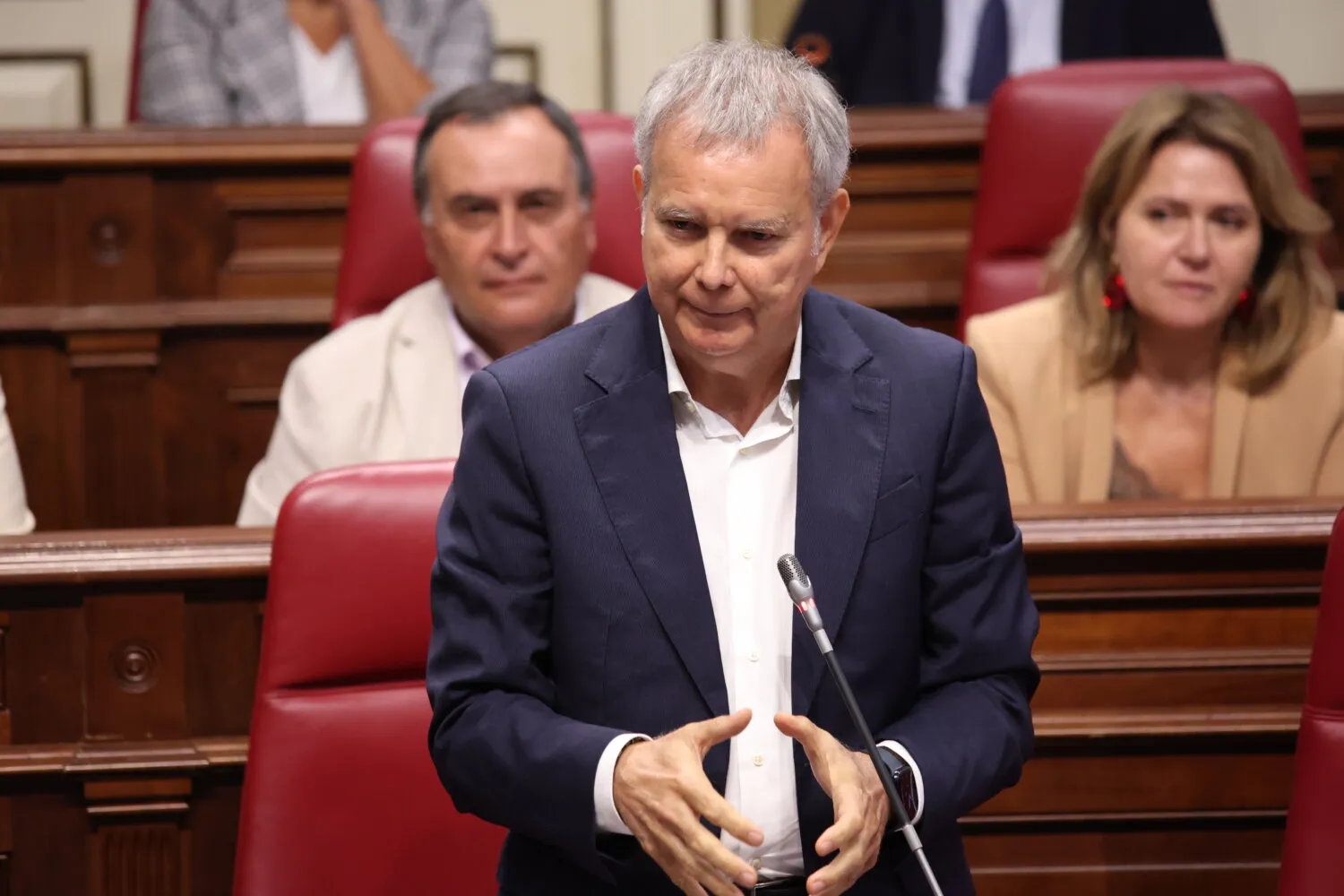
PSOE spokesperson Sebastián Franquis stated that the 2027 budget represents 'the certification of a lost legislature' and 'the confirmation of an exhausted government, lacking a project and the capacity to tackle the major issues facing the Canary Islands.' He accused CC and PP of turning four years of abundant public resources into a 'historical opportunity wasted.'
Franquis argued that the proposed budget does not aim to improve people's lives but instead turns its back on the Canary Islands, describing it as deceptive and unresponsive to the region's actual needs. He further criticised the budget for consolidating a government model that prioritises maintaining its political apparatus over preparing for the future of the Canary Islands.
Manuel Hernández, the PSOE spokesperson for Finance and Budgets, warned that the budget anticipates €13.209 billion in non-financial expenditure, yet increases current spending by 11.27% while slashing the planned investment by €452.2 million, a decrease of 21.45%. The investment forecast for 2027 will be €111 million lower than that of 2023.
Hernández denounced the lack of fiscal credibility in a budget prepared after the government failed to comply with the spending rule in 2024 and 2025. 'There is no rigor, no planning, and no economic project. Just a headlong rush that will ultimately be paid for by the citizens,' he asserted.
The Socialist Group proposed a 'serious, funded, and socially useful' alternative capable of mobilising an additional €535 million through three avenues: savings from more efficient management, improved fiscal capacity, and additional funding for housing linked to areas with strained residential markets. The amendment suggests a progressive tax reform to redistribute wealth without burdening middle and low-income earners, including the elimination of the 99% discount on Inheritance and Donations for high incomes in the archipelago and the introduction of a tax on tourist stays, exempt for Canary Islands residents.
Furthermore, the Socialist proposal aims to enhance education and higher studies with an additional €70 million allocated for educational infrastructure and support for university and higher vocational training students.