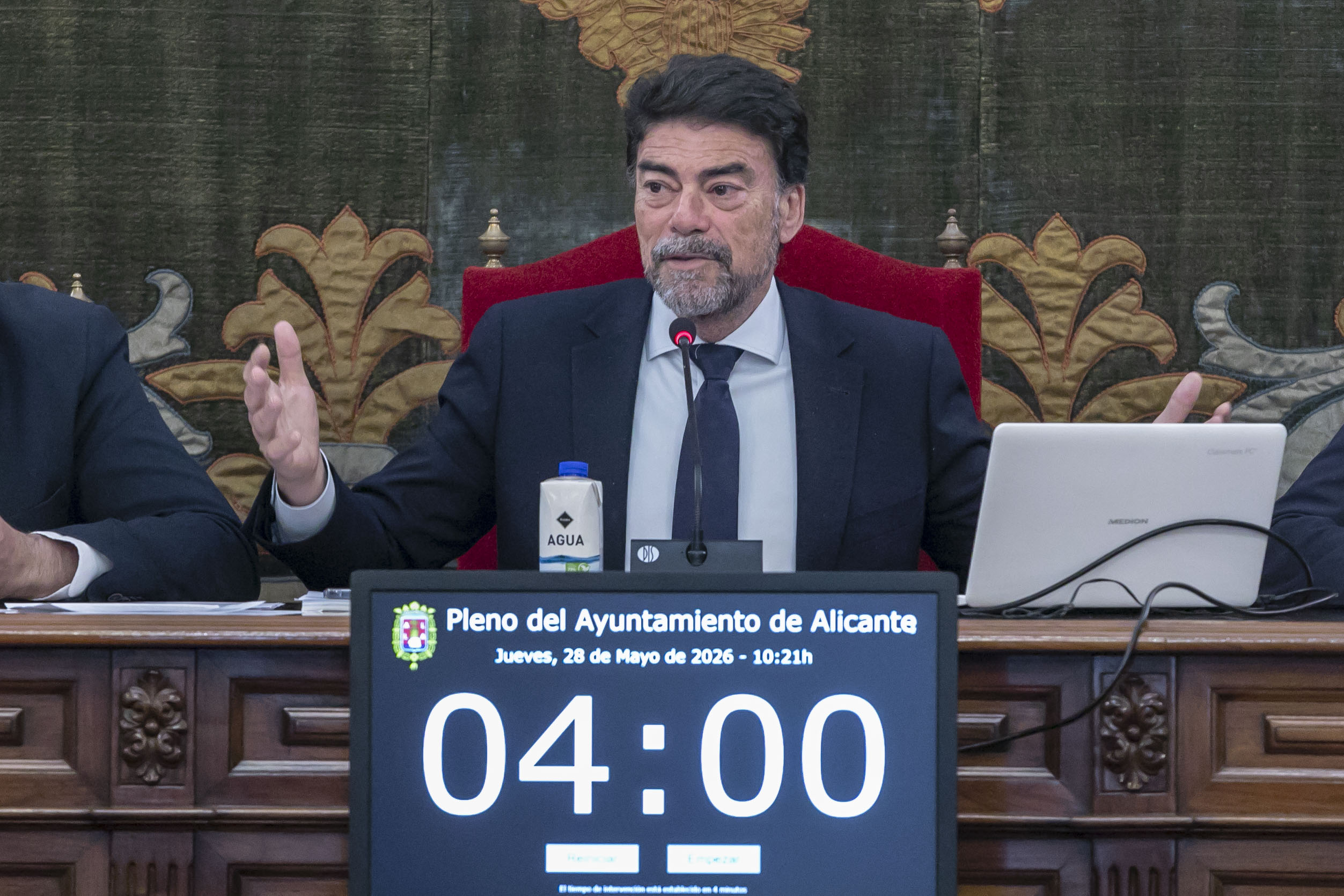
On October 7, 2026, the Mayor of Alicante, Luis Barcala, signed a decree to cancel the extraordinary plenary session on the City State Debate that was scheduled for Thursday at 9:30 AM. This decision aims to uphold the principle of institutional neutrality in light of the upcoming general elections on November 29.
The mayor's decision is based on a report from the municipal secretary, which arose from concerns expressed by municipal group spokespersons regarding the appropriateness of holding the debate following the publication of a Royal Decree on October 6, which dissolved the Congress of Deputies and the Senate and called for legislative elections.
“The conclusion is clear: the City State Debate could be held, but it is subject to very strict conditions regarding the content of interventions, which directly affects the purpose of the debate,” Barcala explained.
He added that the debate is intended for all groups to analyze the current situation of the city, review progress since the last debate in 2025, and propose solutions to local issues. “If we cannot discuss these matters due to potential violations of the Organic Law of the Electoral Regime [LOREG], it completely undermines the purpose of this debate,” he stated.
Barcala emphasized that under the current conditions, even if the debate could technically proceed, the numerous restrictions would distort its nature. Therefore, he has decided to postpone the plenary session to a date after the general elections, allowing all groups to express their views freely.
Institutional Neutrality Rule
To maintain the principle of institutional neutrality since the announcement of the general elections, the municipal secretary's report highlights that “Article 50.2 of the LOREG prohibits any act organized or financed directly or indirectly by public powers that contains references to achievements or accomplishments from the announcement until the elections are held.”
The report notes that the extraordinary session regarding the City State Debate is regulated by Article 72 of the Rules of Procedure (ROP), which requires a minimum of two debates in each corporate mandate. “This is a legal obligation involving all Municipal Political Groups, where each group presents its assessment of municipal actions, not regional or state matters. It is not considered an act organized or financed by public powers,” it clarifies.
“Therefore,” the secretary continues, “the plenary session on the City State Debate can be held alongside the publication of Royal Decree 806/2026, dated October 5, which dissolves the Congress and the Senate and calls for elections.”
However, as previously indicated, the debate must be conducted with appropriate precautions, focusing solely on municipal matters without references to state issues or the general elections, and avoiding any solicitation of votes for various candidates during the session or in subsequent press conferences and releases.
“If the Presidency believes that the various spokespersons will consider their interventions limited or constrained, and given that the requirement of Article 72 of the ROP refers to holding a minimum of two debates in each corporate mandate, nothing would prevent the issuance of a decree canceling this session for the reasons stated and postponing it to another period within the corporate mandate,” the secretary concluded.