Conrado Escobar, the mayor of Logroño and president of the Spanish Network of Data Offices (REOD), participated in the Smart City Expo World Congress held in Barcelona from 3 to 5 November. This event serves as a key international platform for sharing knowledge, experiences, and solutions to drive digital transformation in municipalities and regions.
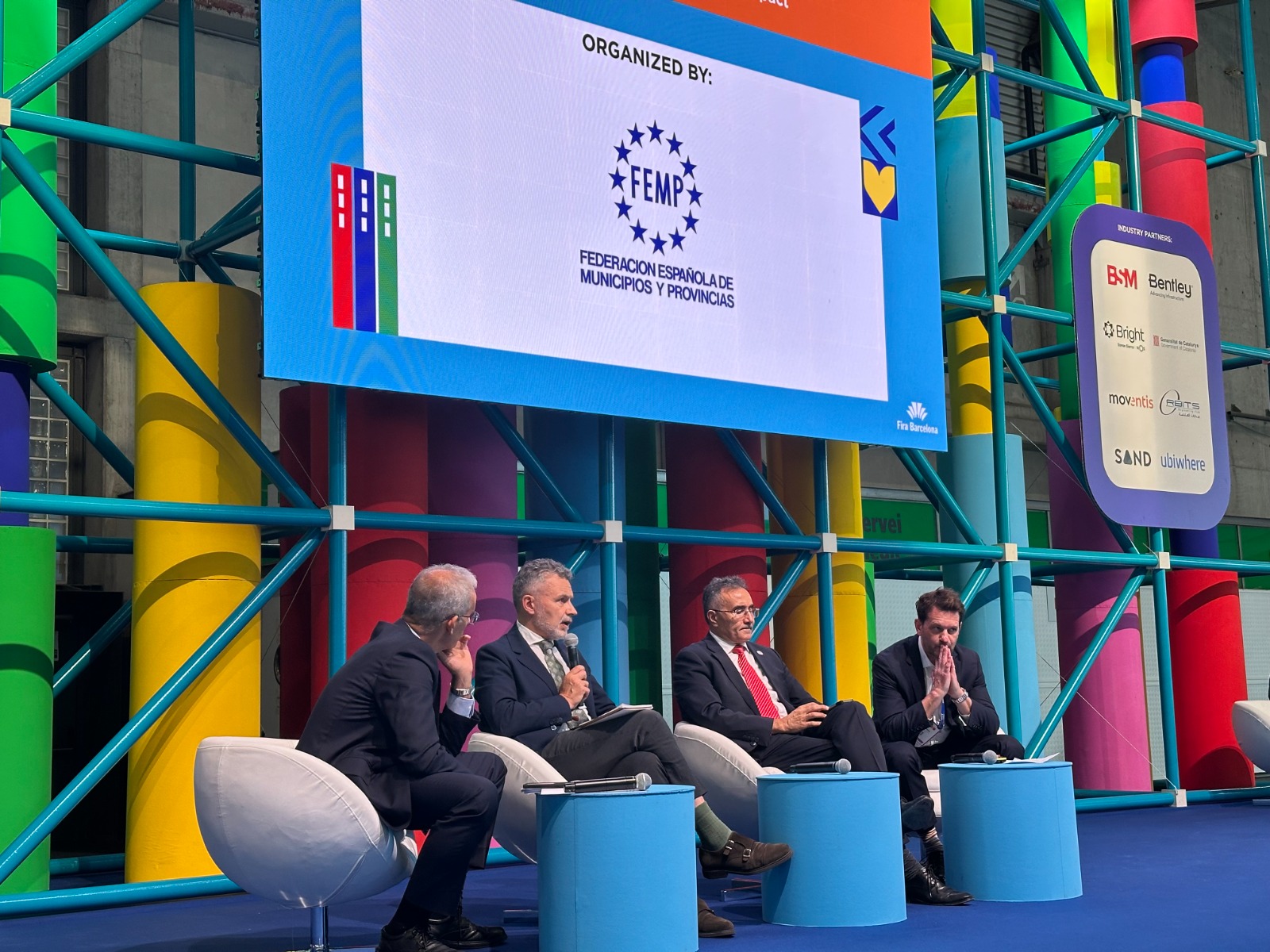
During a panel discussion titled ‘Data Spaces in Intelligent Territories: From Vision to Impact’, Escobar shared the stage with Bilel Jamoussi, deputy director of the International Telecommunication Union's Telecommunication Standardization Bureau, and Helen Köpman, deputy director of AI for social good at the European Commission.
Escobar highlighted that “the adoption of data spaces is not just a technological challenge, but fundamentally a governance and collaboration challenge.” He stressed the importance of public administrations building trust by establishing clear rules regarding data sharing, including the purpose and conditions under which data is shared. “Citizens, businesses, and institutions must be assured that their data is used securely, transparently, and in compliance with current regulations,” he added.
He advocated for ensuring “data sovereignty” within each organisation while still sharing information that can create collective value. Escobar called for “technical, financial, and collaborative support” to enable municipalities to effectively engage in the data economy.
Moreover, he emphasised that “it is essential for the use cases of data spaces to address specific citizen needs: mobility, energy efficiency, water management, local economic development, or improvement of public services.” He stated, “When data connects with real problems, its value is perceived immediately.”
Later, Escobar participated as a speaker in the session ‘EDINT, Data Space for Intelligent Urban Infrastructures: Urban Data Creating Opportunities for the Economy and Society’, alongside Jaime Carnicero, general director of Organisation and Resources at the Spanish Federation of Municipalities and Provinces (FEMP), David Bote, mayor of Mataró, and representatives from companies involved in the EDINT Project.
The EDINT Project (Data Spaces for Intelligent Urban Infrastructures), led by FEMP, has completed its first phase this year. Logroño has actively participated in the development of the EDINT Project, being one of twelve local entities selected for this initiative, which has an estimated funding of €12.96 million from European Next Generation funds.
In its initial phase, EDINT has established a robust ecosystem through the deployment of human and technical infrastructure, the creation of jobs and training, and the establishment of a broad digital community. The project now includes 14 local entities, and under this initiative, the Spanish Network of Data Offices was formed, which “was created with a clear mission: to ensure that no local entity has to navigate the path towards data-based management alone,” Escobar noted.
He concluded, “It is not just about promoting technology, but about generating capabilities, sharing standards, promoting interoperability, and ensuring that municipalities can participate in data spaces with guarantees and a common vision.” On Wednesday, Escobar will preside over the Government Council of the Spanish Network of Data Offices (REOD).