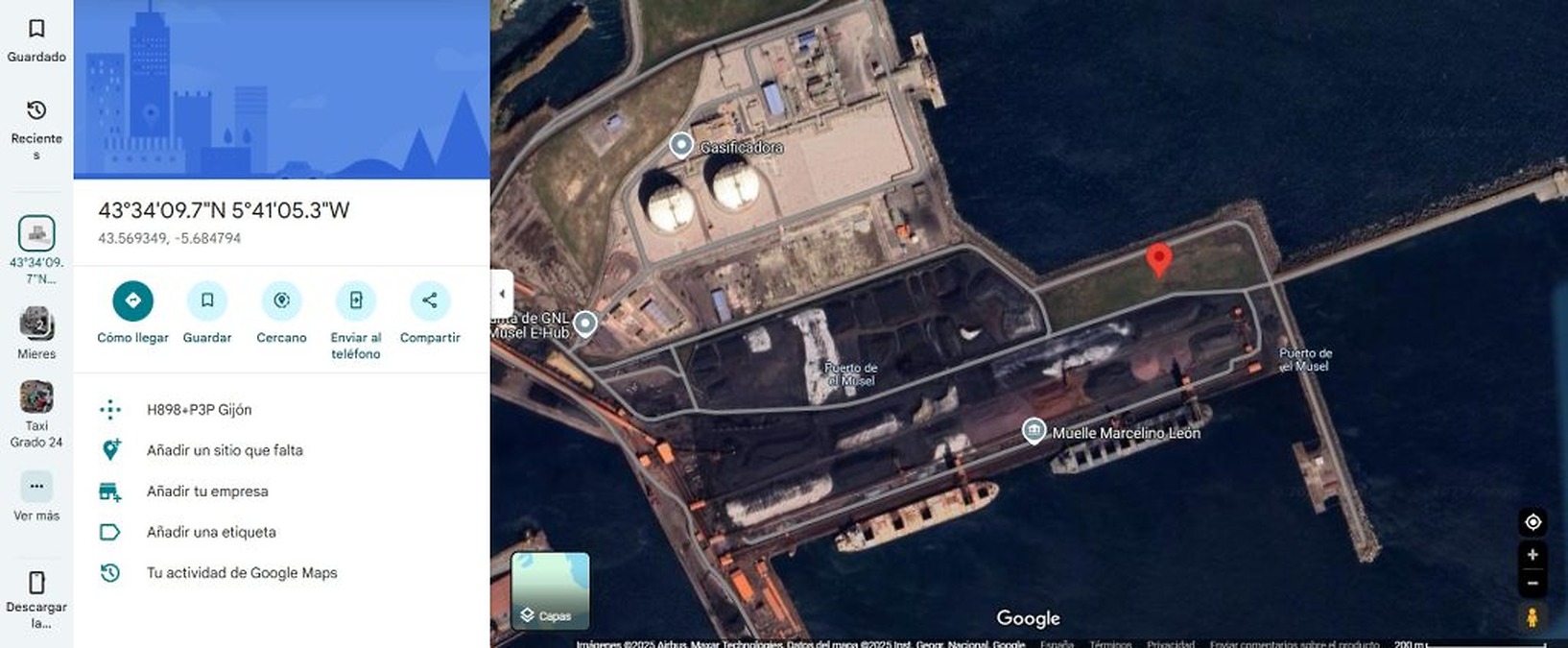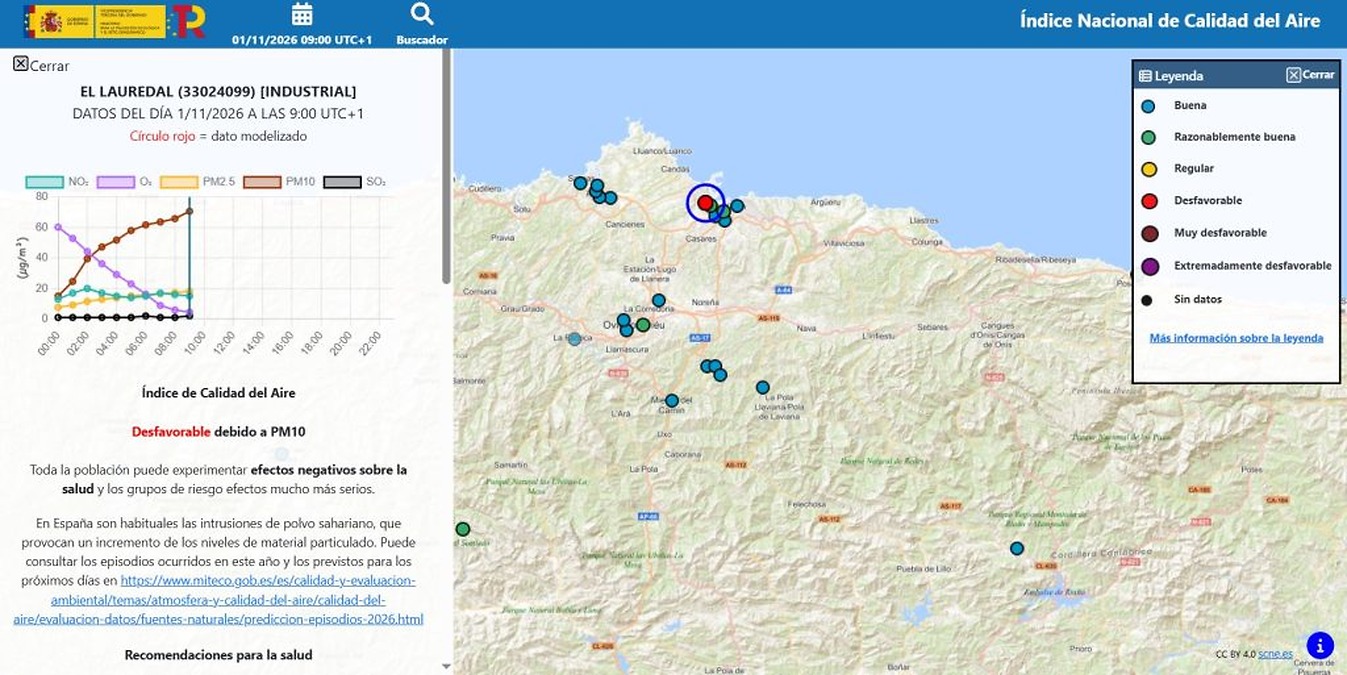
Air quality in gijón, also known as xixón, has reached alarming levels, according to official data released by the Government of Asturias. The city's air quality is classified as unfavourable due to high concentrations of particulate matter (Pm10), with measurements recorded at the Lauredal monitoring station hitting 457 µg/m³.
The World Health Organization recommends that annual average Pm10 levels should not exceed 15 µg/m³, and daily averages should remain below 45 µg/m³. Additionally, the European Directive 2024/2881 sets a limit of 20 µg/m³ for annual averages. Last year, gijón exceeded pollution thresholds on 59 separate days.
Concerns have also been raised regarding elevated benzene levels, which reached 10.5 µg/m³ at the Lauredal air quality monitoring station. The WHO warns that there is no safe level of exposure to benzene, a known carcinogen, as any concentration can pose adverse health risks. The European Directive 2024/2881 establishes a limit of 3.4 µg/m³ for annual averages.
The gijón city council had previously committed to regulating spikes in benzene levels, yet no action has been taken thus far. According to Royal Decree 34/2023, when pollution thresholds are exceeded or expected to be exceeded, relevant authorities are required to take urgent measures and inform the public, a responsibility that both the regional government and the city council have failed to fulfil.
The extensive body of research demonstrating the impact of environmental pollution on health, brain development, and overall quality of life cannot be overlooked by a leadership that has not implemented sufficient measures, thereby endangering public health. In the current climate emergency, it is crucial to identify sources of air pollution and understand the contribution of air contaminants to global morbidity. The failure to address this public health issue is an unjustifiable neglect of responsibility.
Coordinadora Ecoloxista d’Asturies
Spokesperson: 629892624 (Fruti)