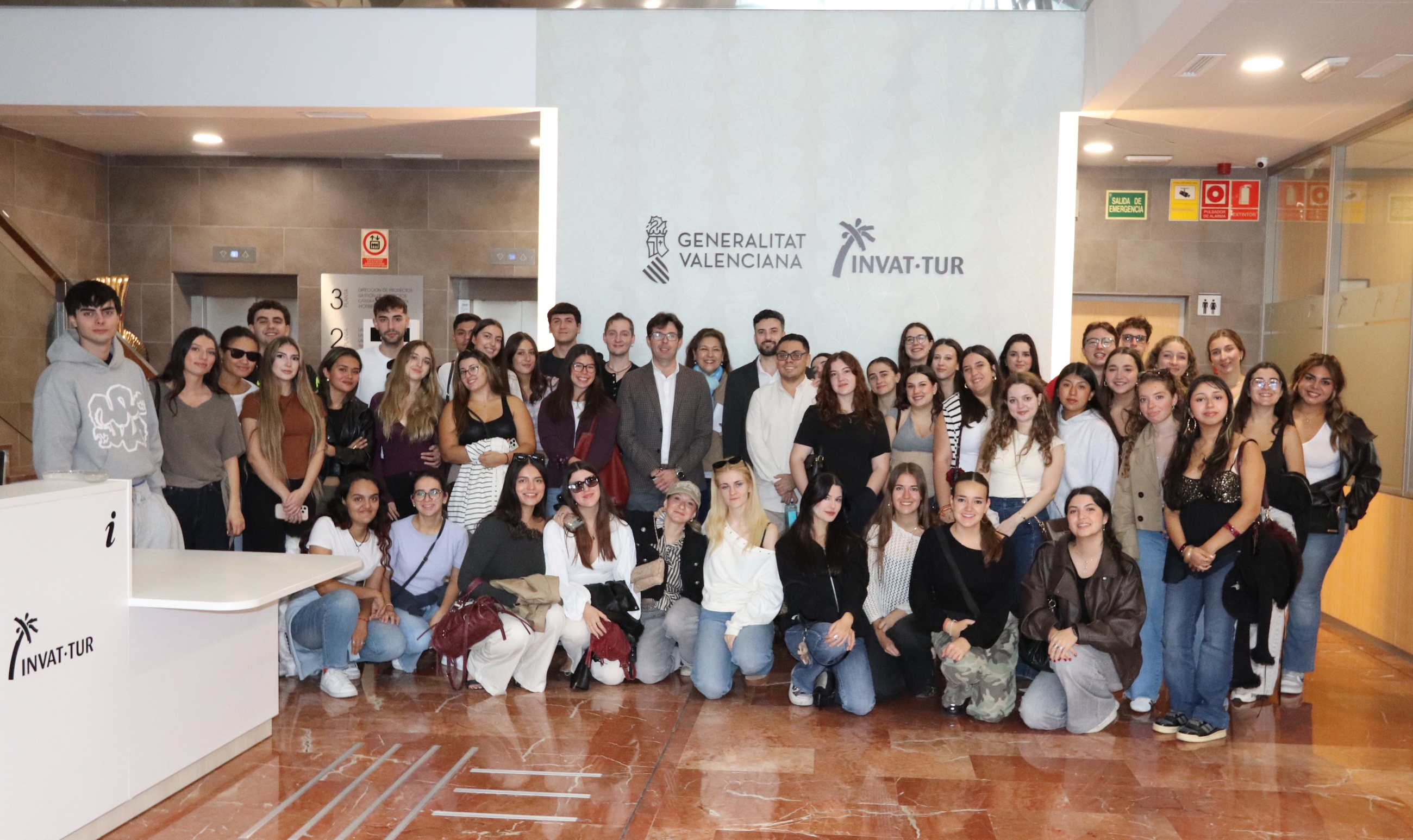
The Valencian Institute of Tourist Technologies (Invat·tur) participated in a meeting on 27 October in Altea as part of the european FOOTPRINTS project, an initiative under the European Urban Initiative aimed at fostering sustainable tourism and advancing the reduction of the carbon footprint of tourist destinations.
The event brought together institutional representatives, experts, and local stakeholders to discuss the challenges and opportunities of sustainable tourism. During his speech, Invat·tur's director, Jordi Bataller, emphasised that sustainability is one of the main challenges facing the transformation of the tourism sector. He highlighted the need to approach it from a comprehensive perspective that combines environmental, social, and economic dimensions.
Bataller also stressed the importance of leveraging knowledge, innovation, and tourism intelligence to move towards more efficient and sustainable management models. He explained that Invat·tur's contribution focuses on generating and transferring useful knowledge for destinations and tourism businesses, providing tools, methodologies, and collaborative spaces that enable data-driven decision-making.
The discussion paid special attention to reducing the carbon footprint of tourism activities. It was noted that strategies need to be developed tailored to the characteristics of each destination, addressing areas such as mobility, energy efficiency, resource management, and collaboration with suppliers, all supported by measurement systems to evaluate results and identify improvement opportunities.
Among the initiatives promoted by Invat·tur to advance these objectives were the Network of Smart Tourist Destinations of the Valencian Community (DTI-CV), the Sustainability Working Group, the MOVESTUR CV Plan, and the Tourism Intelligence System of the Valencian Community. These instruments help strengthen the capacity of destinations to plan, evaluate, and share experiences related to sustainability.
The meeting took place at the Casa de Cultura in Altea as part of the FOOTPRINTS project, where the town participates as a transfer city alongside Dubrovnik and Veszprém, aiming to promote more sustainable tourism models and reduce the climate impact of tourism activities.