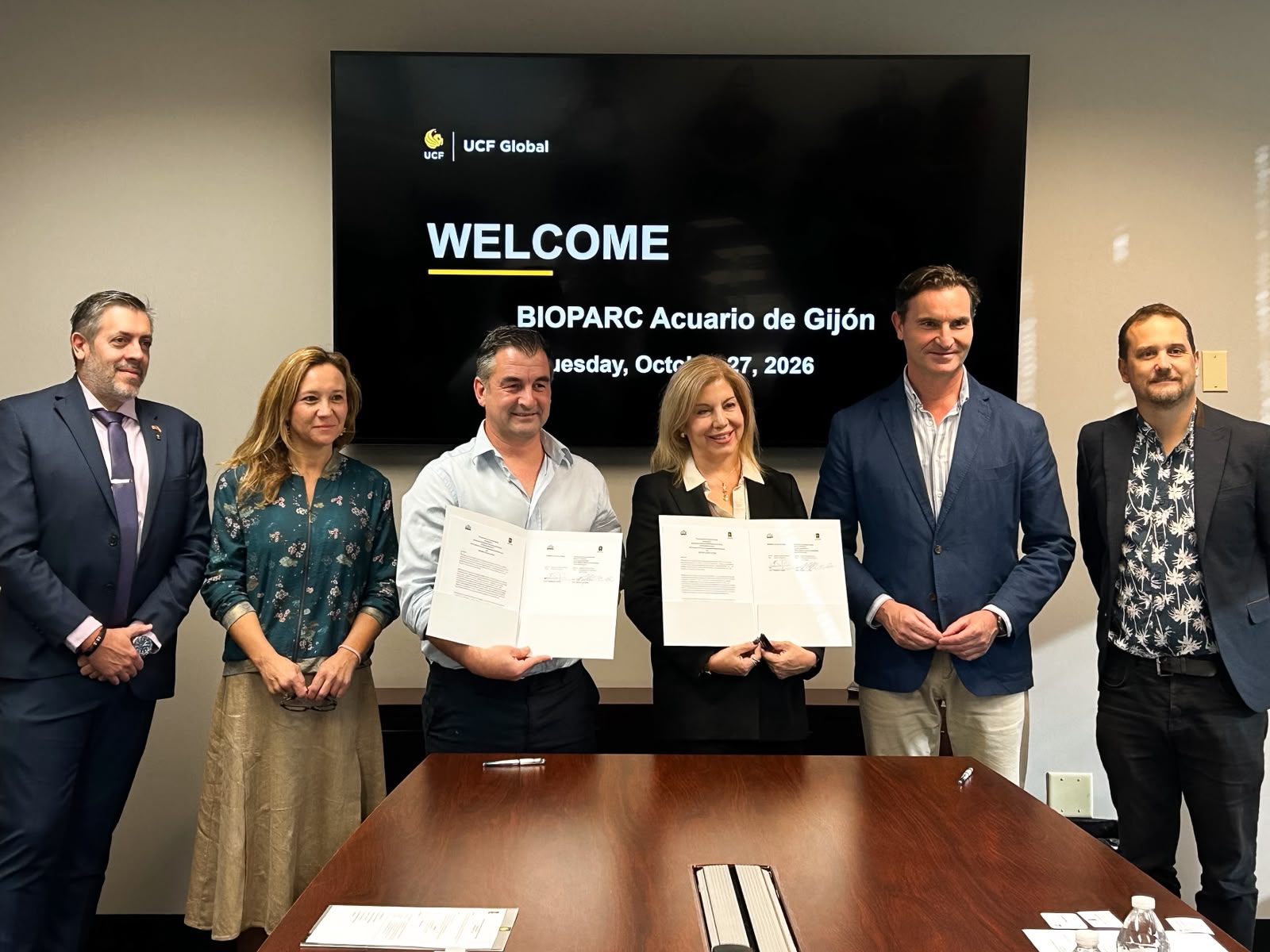
Bioparc Acuario de Gijón has entered into a collaboration agreement with the university of central Florida (UCF) to launch joint projects, with the support of the Gijón City Council. The agreement, signed in Orlando, is part of an international cooperation strategy developed with the involvement of the Department of Institutional Relations and Youth.
This partnership opens new opportunities for scientific collaboration in areas such as biodiversity, conservation genetics, and marine ecosystems. It also strengthens the potential of the Centre for the Recovery of Marine Animals in Asturias (CRAMA), which is currently being expanded with joint efforts from both the aquarium and the city council.
The agreement with UCF establishes a framework for exploring collaborative projects and exchanging knowledge between UCF researchers and professionals at the Gijón aquarium. This collaboration will help identify lines of work that complement the scientific capabilities of the American university and the expertise of Bioparc in the care, study, and conservation of species.
UCF boasts prominent research teams in disciplines directly related to the significant challenges of marine conservation. Among these is the Center for Integrated Coastal Research, which focuses on studying coastal processes, sea-level rise, extreme phenomena, and the resilience of coastal communities to environmental change. Additionally, the Department of Biology conducts research in areas such as conservation genetics, marine ecology, species evolution, and biodiversity analysis using genomic tools and environmental DNA techniques.
These research avenues present exciting opportunities to advance knowledge about species and ecosystems, understand the threats they face, and improve conservation strategies. The collaboration will explore potential synergies between university activities and Bioparc's experience in marine species care, animal welfare, and active conservation efforts.
Bioparc also plays a crucial role in marine wildlife recovery through the CRAMA BIOPARC, which is set to expand its operations. This initiative contributes to enhancing the understanding of the threats affecting species and the protocols for their recovery.
“Gijón, through its aquarium and the excellent professionals working there, is laying the groundwork to become a reference point in marine species conservation,” said Jorge González-Palacios, the councillor for Institutional Relations and Youth, highlighting Naval Azul as the area to consolidate this strategy. “It creates a coherent growth space for both the city and the project, and we will work to make it a reality,” he added.
According to Alejandro Beneit, director of Bioparc Acuario de Gijón, the value of this alliance lies particularly in the collaborative opportunities it creates between academic research and the work carried out at the aquarium. “Aquariums can contribute significantly to scientific research based on the knowledge and experience we gain daily with the species we care for. This agreement allows us to connect that work with university research and explore projects that contribute to a better understanding of marine biodiversity and advance its conservation,” he stated.
The meeting, held at the UCF campus, included researchers such as Ivan Haigh, director of the Center for Integrated Coastal Research; Eric Hoffman, head of the Department of Biology; and specialists Michelle Gaither, Geoff Cook, and Dakota Lewis, whose research covers various aspects of biodiversity, ecology, and marine conservation.
The initial contacts that led to this agreement were initiated during a meeting between Francisco Fernández, the honorary consul of Spain in Orlando, and Jorge González-Palacios during the former's visit to the Gijón City Council in June. This marked the beginning of numerous online working meetings that resulted in the formation of a specific working team.
The signing of this agreement continues the international cooperation strategy that Bioparc Acuario de Gijón is developing with the support of the city council, particularly through its Department of Institutional Relations and Youth. In 2026, this strategy has also resulted in agreements with renowned institutions such as the American Museum of Natural History in New York and the Prince Albert II Foundation of Monaco.