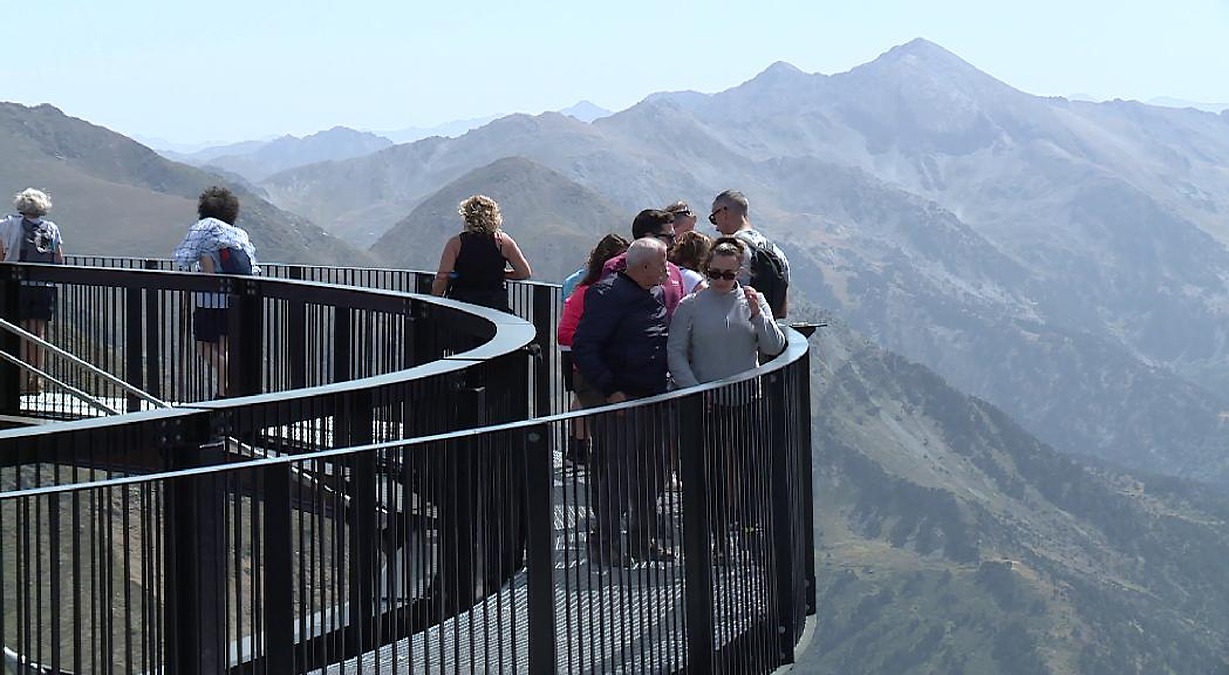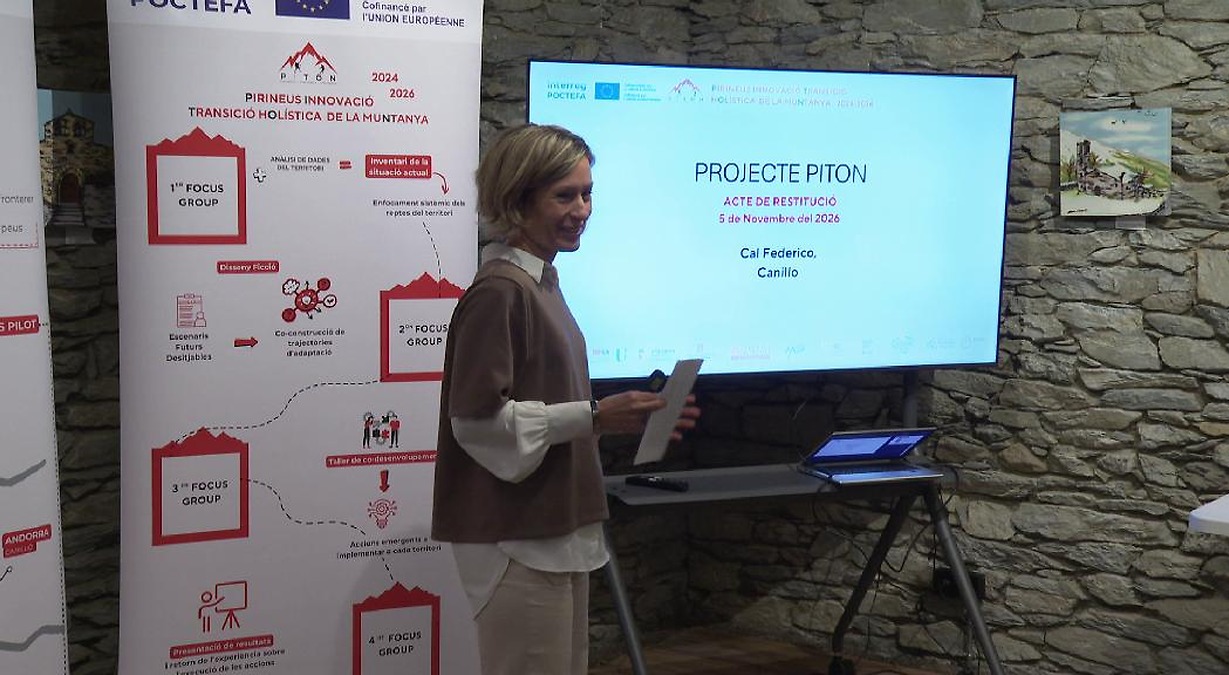
Residents of Canillo, a parish in the Andorran mountains, have participated in a scientific and cross-border cooperation project designed to facilitate the transition of mountain territories in light of future challenges, particularly those related to climate change and the evolution of tourism. The PITON project, part of the European POCTEFA programme, has been underway for two years, with the results of a pilot test presented recently in Canillo.
Over the course of the project, which began in March 2025 and concluded in April 2026, researchers established four working groups to gather the concerns, challenges, and opportunities identified by the local community regarding the future of the parish. Montse Brugulat, coordinator of the AR+I Classroom, stated, "The PITON project aims to experiment with methodology. This has been our focus throughout the project from the start. We began in March 2025 and finished in April 2026, during which we experimented with this citizen participation methodology."
Among the initial conclusions, there is a strong desire from the primary sector to assert its role in the cultural identity of the country, alongside a need to diversify and de-seasonalise the tourism offering. The proposals collected could also serve as a working tool for the Comú, the local government, which has been involved in the project, in defining future policies. Ian Serra, a sustainability researcher at AR+I, commented, "All action proposals could be framed within a climate change adaptation plan for Canillo, for example. This is something we offer to the Comú, which, if it wishes to create such a plan, has a participatory basis and some consensus to start working on it."
The project also suggests the potential establishment of an agricultural school in Canillo. All findings will be compiled into a report with specific proposals, which will be made available to the Comú to serve as a foundation for a possible climate change adaptation plan. PITON aims to extend beyond ski resorts and address the transformation of the entire linked territories, incorporating both citizen participation and technological tools to analyse environmental and socioeconomic impacts. The ultimate goal is for pilot experiences, such as that in Canillo, to guide other mountain territories in the Pyrenees.