The Government of Castilla-La Mancha has unveiled a comprehensive cultural, educational, and participatory programme to commemorate the 50th anniversary of the democratic transition in Spain. This initiative aims to explore key events from this historical period and their impact on the region.
The programme includes a variety of activities such as exhibitions, meetings, urban art projects, tributes, concerts, and events taking place in multiple towns across Ciudad Real province. José Caro, the provincial delegate for Education, Culture, and Sports, emphasised the importance of making the history of the transition accessible to citizens from various perspectives, merging historical knowledge with culture, artistic creation, and social participation.
Musical celebrations
Music will play a central role in the celebrations. The series 'The music that changed a country' will recreate the atmosphere of popular festivals with performances by orchestras in different municipalities. For instance, the fairground in Almagro will host performances by 'Krypton' and 'La Misión' on 16 October, while Valdepeñas will feature orchestras 'Benidorm' and 'Panorama' on 30 October. Additionally, 'Music for a transition' will comprise a circuit of 76 performances by music bands from Castilla-La Mancha, blending symphonic repertoires with narratives, photographs, and audio documents from the era.
Performances are planned for towns including Alcolea de Calatrava, Argamasilla de Calatrava, Carrión de Calatrava, Villanueva de los Infantes, and Alcázar de San Juan, with specific dates to be confirmed later.
Exhibitions and cultural encounters
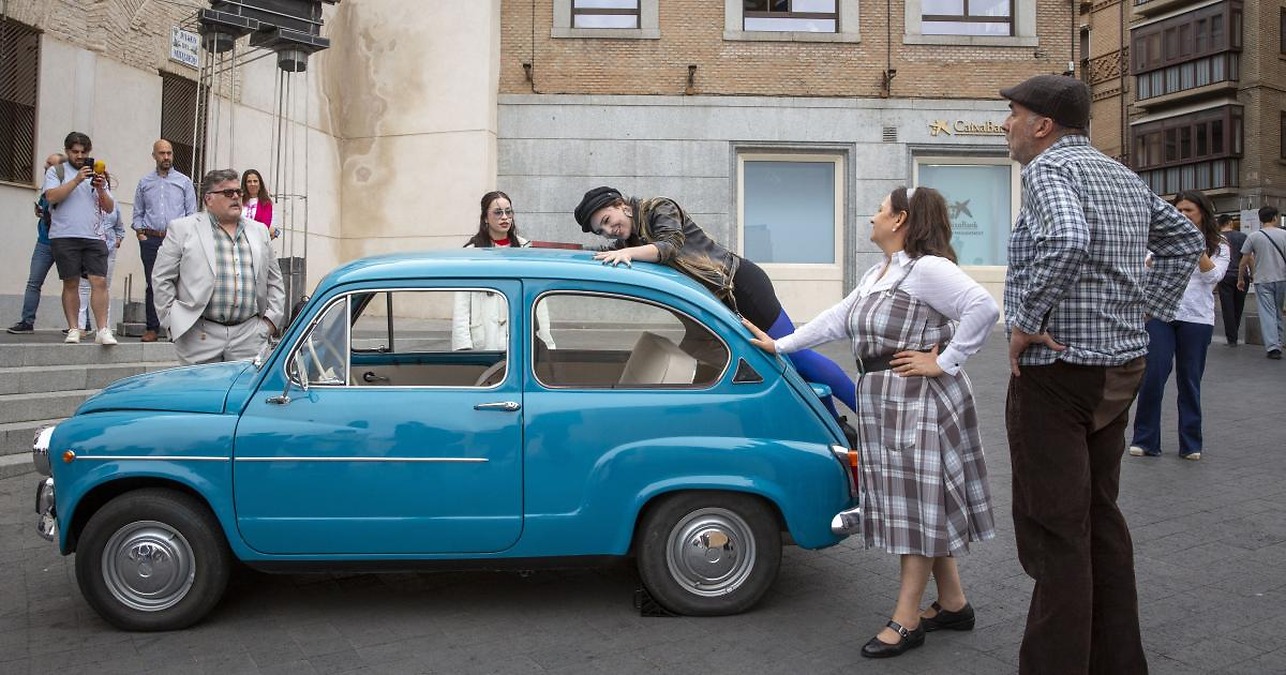
The main exhibition, '50 years together. The Transition in Castilla-La Mancha: building a new reality and identity (1976-1983)', will be held at the Convent of La Merced in Ciudad Real from 1 February to 7 March 2027. This exhibition will highlight significant milestones from the transition from dictatorship to democracy and the birth of regional autonomy through documents, photographs, original objects, and audiovisual resources. It will also feature an interactive space with gamification experiences and theatrical representations.
Other exhibitions will include 'The Transition in images', showcasing visual selections of political and social changes over the past 50 years, and '50 years of shared democracy: Women and the Transition in Castilla-La Mancha', honouring pioneering women who contributed to the region's political and social life. The exhibition '50 years of journalism in Castilla-La Mancha', based on newspaper front pages reflecting key events from the transition, will begin its provincial tour in November, visiting towns such as Alcázar de San Juan, Tomelloso, and Valdepeñas.
Recognising social movements
The programme will also feature cultural meetings to delve into the social and cultural dimensions of the democratic changes during this recent historical period. The project '50 years together. The force that made change possible' will acknowledge the role of community, trade union, business, and women's movements through five provincial events, including round tables and recognitions of notable groups.
Literature will also be represented through the project 'Authors of the Spanish Transition', which will host a series of ten conferences in various locations, including Calzada de Calatrava and Poblete. Manzanares will hold a meeting in February 2027 dedicated to Manuel Piña, a Manchego designer associated with the avant-garde and aesthetic renewal of that era.
Urban art and youth participation
The 'Colouring Change' programme will bring contemporary artistic creation to public spaces through urban art interventions involving young art students from Castilla-La Mancha alongside national artists. Coordinated by Okuda San Miguel in collaboration with the Foundation Coloring The World, this initiative will tour various towns and conclude in Alcázar de San Juan in April 2027.
The educational aspect will be highlighted by the III History Olympiad of Castilla-La Mancha, which will hold a special edition focused on the Transition in mid-April 2027 at the Faculty of Letters in Ciudad Real. Aimed at students in their final year of secondary education and first year of baccalaureate, the competition will combine historical learning with teamwork through interactive tests on the protagonists, events, and institutions of this period.
This extensive programme for the 50th anniversary of the democratic transition aims to provide a comprehensive exploration of the political, social, and cultural history of Castilla-La Mancha, with initiatives designed for diverse audiences and developed in collaboration with municipalities, cultural entities, educational centres, and social groups.