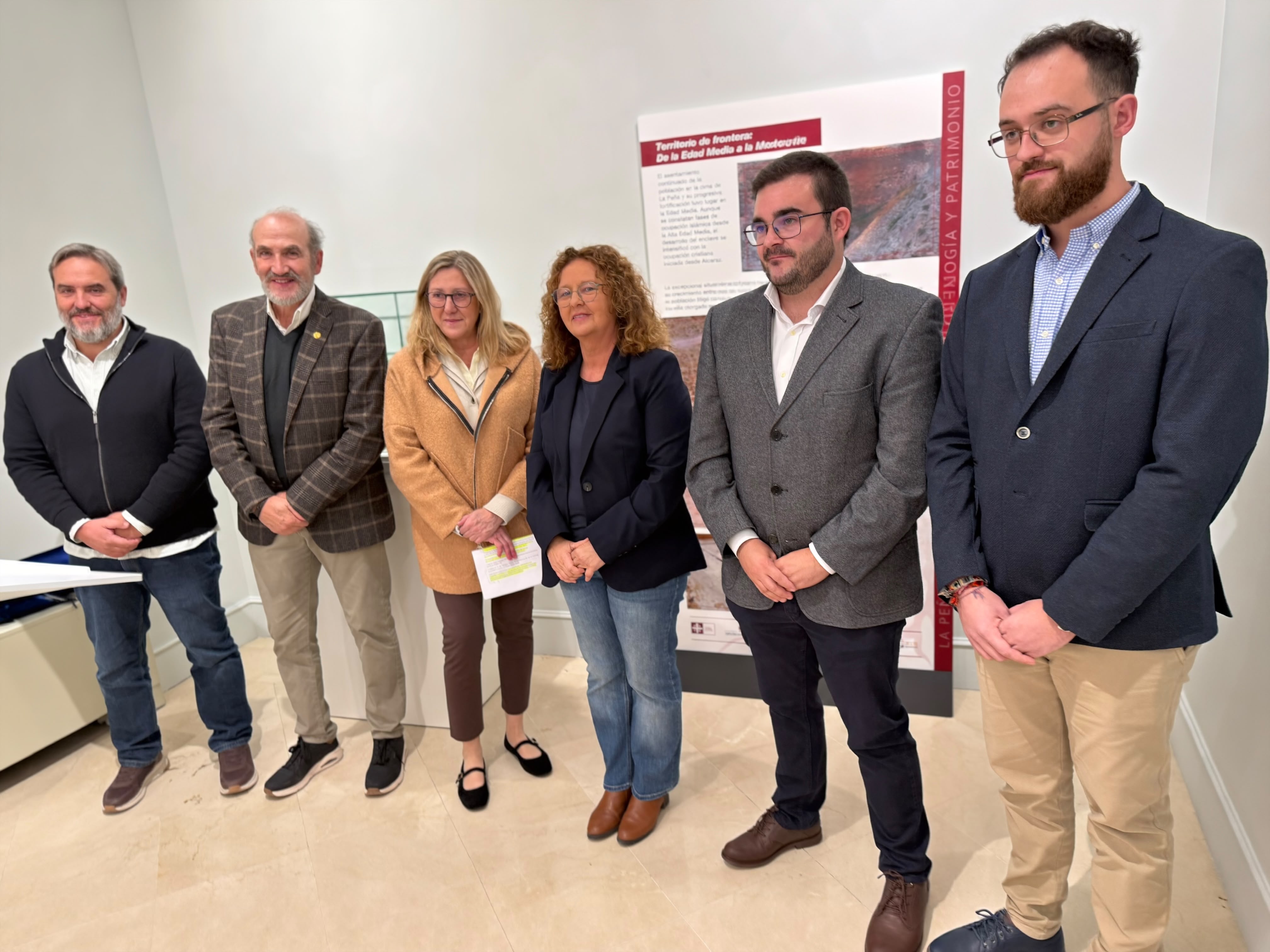
The Chalé Fontecha has opened an exhibition titled ‘La Peña del Castillo. 10 años de arqueología y patrimonio’, celebrating a decade of archaeological work in Peñas de San Pedro. This initiative, organised by the Institute of Albacete Studies ‘Don Juan Manuel’ (IEA), aims to showcase the historical significance of the site.
Llanos Sánchez, the deputy of ATM (Albacete Provincial Council), inaugurated the exhibition alongside Antonio Caulín, the director of the IEA; Javier Castro, the local councillor; and Lucía Soria, the excavation director. During the opening, Sánchez emphasised the importance of commemorating this anniversary through an exhibition that “brings to light the significant work that has been carried out.”
The excavations began in 2016, revealing the rich history hidden within one of the province's most unique natural sites. The exhibition outlines the various stages of occupation at Peña del Castillo, extending up to the 19th century.
Sánchez praised the IEA for facilitating the exhibition, which she described as a means to delve into the rich historical heritage of the locality and province. She noted that the centre acts as a bridge connecting this heritage with the community. Furthermore, she highlighted the collective nature of the project, stating that “when institutions collaborate and uphold their commitment over time, the results transcend academia and become heritage for society as a whole.”
The deputy also remarked that the decade of work has transformed the site into a reference point for historical, scientific, and cultural knowledge. She stated that the exhibition celebrates significant findings from this period while making the acquired knowledge accessible to local residents, thereby strengthening the community's identity and sense of belonging.
Moreover, Sánchez pointed out the formation of the Cultural Association of Friends of the Castle of Peñas de San Pedro (ARCIS) as an example of how heritage recovery can foster community engagement and commitment to preserving their legacy.
She stressed the need to continue advancing research, protection, and dissemination of this site, asserting that “preserving our towns' heritage is not only about caring for what we have inherited; it is also about building a future and ensuring that future generations can know, understand, and feel part of it.” Sánchez also mentioned the socio-economic and tourism opportunities this could present for the locality and the surrounding area.
Antonio Caulín, the IEA director, highlighted the potential of archaeological excavations in the province, stating that “archaeology is becoming a lever to combat depopulation and promote rural development.”
Lucía Soria elaborated on the exhibition's details, describing it as “a small but relevant display that aims to reflect on the past ten years of archaeological excavations, research, and, above all, the reconstruction of the history of Peñas de San Pedro and the province of Albacete.” She noted that the site has become the only exclusively Iberian settlement being excavated in the province, alongside the Archaeological Park of Libisosa in Lezuza.
Javier Castro, the local councillor, recalled the origins of the excavations, highlighting that the area was once private property acquired by the municipality. He underscored the importance of the discoveries made over the past decade, assuring that the council is “very excited and will continue to support and collaborate with the project to deepen our understanding of our history.” Castro expressed that knowing one’s heritage fosters pride in the community.
The exhibition features seven thematic panels and includes original archaeological pieces, allowing the public to connect with the results of the excavations and the people who inhabited the area throughout the centuries.