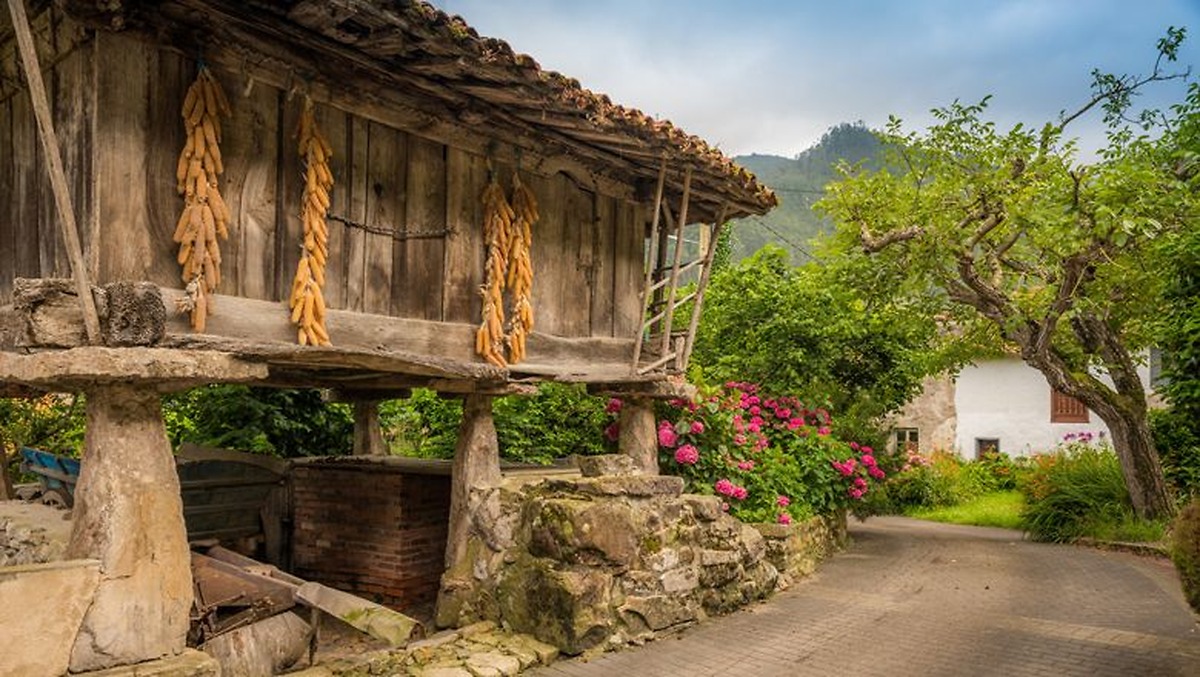
The Ministry of Culture, Linguistic Policy and Sport has announced the allocation of €400,107 in grants aimed at conserving, restoring, and rehabilitating 102 hórreos, paneras, cabazos, and other ethnographic elements in Asturias. These funds, part of this year's grant programme, will support the recovery of traditional constructions across 41 municipalities, contributing to the preservation of essential cultural heritage and rural landscapes.
The resolution includes measures for hórreos and paneras, cabazos from the western region, thatched cabins from Somiedo, and other popular architectural elements such as fountains, barns, and auxiliary structures. The grants are available to individuals and non-profit organisations dedicated to the conservation of these buildings.
With these subsidies, the Asturian government aims to cover the costs of restoration works that often require specialised knowledge and the use of traditional materials and techniques. The intention is to enable property owners to carry out necessary repairs to maintain these constructions in good condition.
The resolution stipulates full payment of the granted subsidies and extends deadlines to facilitate the interventions. Works can be executed until 15 October 2027, and beneficiaries will have an additional month, until 15 November next year, to submit justifications for the funding.
This funding initiative is part of the Horru Plan, a strategy employed by the Asturian government to preserve these traditional structures. The programme combines financial support for restoration with other measures aimed at recovering traditional materials and facilitating new uses that are compatible with heritage protection.
In addition to the financial aid, the Pegoyu project has enabled the recovery of 103 pieces from ruined hórreos for reuse in other restorations. The government is also working on updating the Cultural Heritage Regulation to facilitate new uses compatible with the protection of these constructions. This reform, which was made public in September, includes activities related to rural tourism, culture, crafts, and local products, provided that the heritage values are respected.
Through this new resolution, the Asturian government continues to develop a policy of conserving ethnographic heritage that combines financial support for property owners, the recovery of traditional materials, and the search for new uses for these structures. The objective is to facilitate their maintenance, prevent abandonment, and ensure that hórreos, paneras, and cabazos continue to play a role in village life while preserving the unique heritage values that define them.