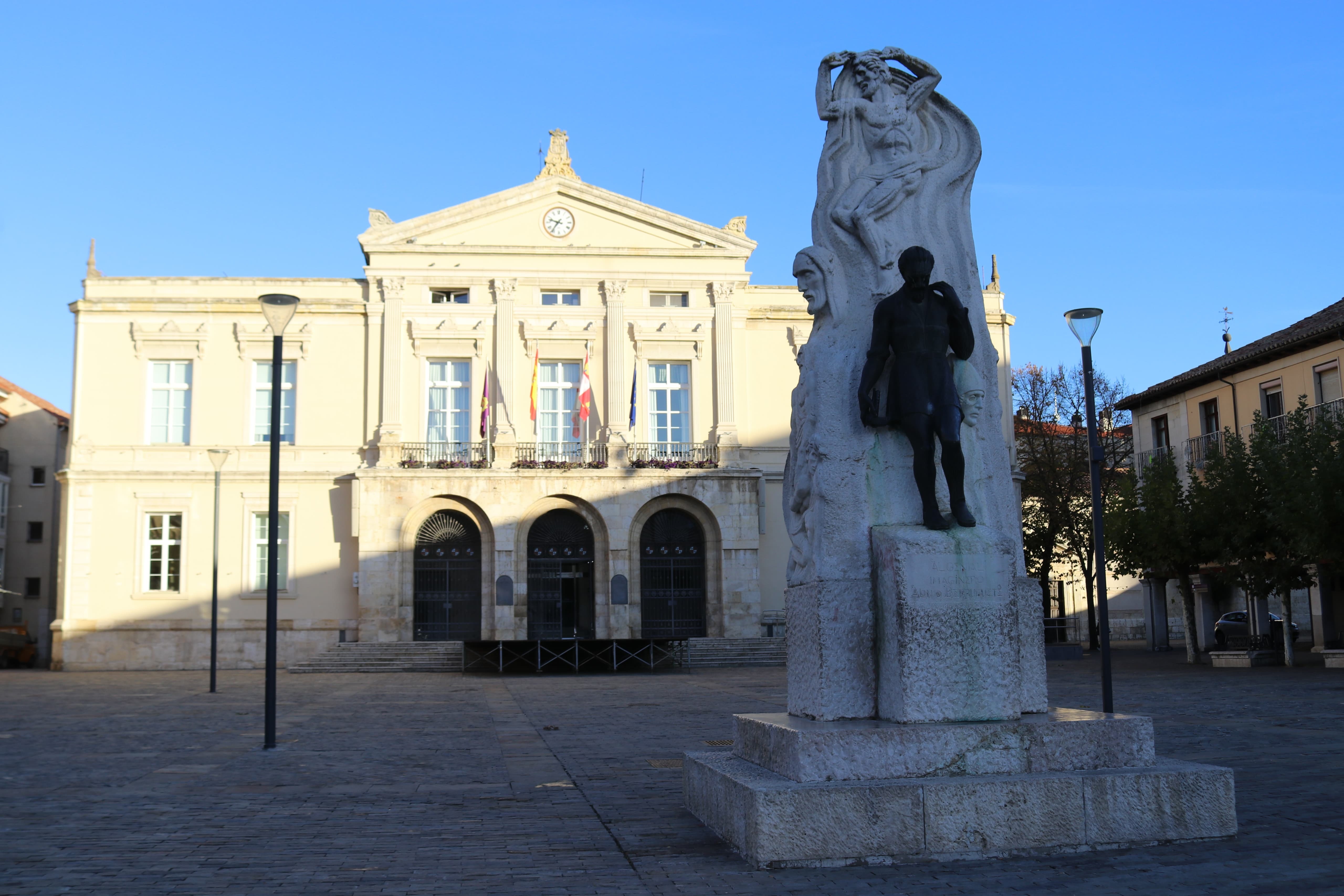
The city council of Palencia has expressed its condemnation of the cancellation of the play ‘Federico. No hay olvido, ni sueño: carne viva’, produced by Proyecto 43-2, which was scheduled for Saturday, 24 October, as part of the VI Comunidad a Escena cycle organised by the Fundación Siglo. The council also denounced the veto on film subsidies in Castilla y León for projects deemed to involve 'ideological indoctrination.'
In response, the local government has announced that it will make the Centro Cultural Lecrac and the Teatro Principal available to companies and artists to host any works and artistic proposals that may face censorship in the region. The council stated, “We want both spaces to be places of freedom, respect, and encounter, where creation can develop and reach the public without ideological constraints. We defend a plural, free culture without ideological tutelage, as it is not for institutions to decide which works deserve to exist based on their ideology or the discomfort they may generate, but to ensure that citizens can know and evaluate them freely.”
The council further asserted that cultural policies should “serve creation and the citizenry, not become instruments of exclusion or ideological filters.” They called for “transparent criteria, guarantees of plurality, and an unequivocal commitment to artistic freedom. The cultural identity of a people is not built by silencing voices but by offering stages; not by restricting perspectives, but by fostering dialogue.”
It is noteworthy that the production by Proyecto 43-2, directed by María San Miguel, developed its creative process through an artistic and technical residency at Lecrac and the Teatro Principal. The council expressed particular concern that a project of this nature could be denied access to a public space.
The cancellation of ‘Federico. No hay olvido, ni sueño: carne viva’ at the Auditorio Miguel Delibes is viewed as a matter of “deep concern,” as it addresses the figure and memory of Federico García Lorca through artistic commitment, research, and contemporary creation. The council emphasised that this work deserves recognition for “its quality, rigor, and the efforts of those who make it possible, rather than being sidelined by decisions that may limit its engagement with the public.”
Additionally, the council raised alarm over the new guidelines for film subsidies in Castilla y León, which include terms such as “ideological indoctrination” and “partisan propaganda.” They warned that “when such criteria are introduced without sufficiently clear and objective guarantees, it opens the door to excluding projects based on their content and skewing the cultural production that receives public support. Subsidies should serve to promote creation, not to establish ideological filters that condition which stories are told, which perspectives are financed, and which voices reach the public. Public funds must protect plurality, not diminish it.”
In conclusion, the city council of Palencia stated, “We will not turn a blind eye to any attempt at censorship. We open our doors, offer our spaces for creation, and defend a culture that includes everyone. Because cultural freedom is not just proclaimed; it is exercised, protected, and defended through actions.”