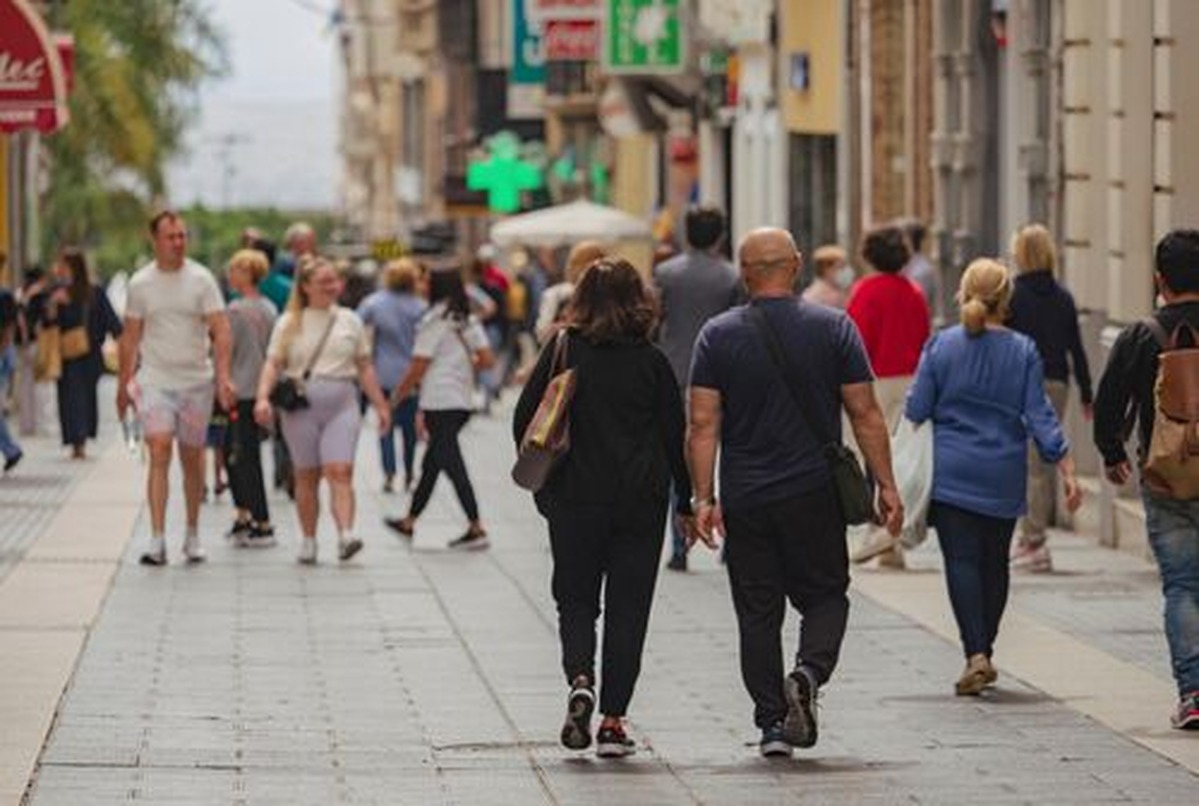
The savings rate of Spanish households is consistently three percentage points below the eurozone average. This gap, which has remained stable since before the health crisis, continues to persist during the current recovery phase. José Alberto Molina, a professor of Economic Analysis at the University of Zaragoza and director of IEDIS, highlighted these findings ahead of World Savings Day on 31 October, a day aimed at raising global awareness about the importance of budgeting and financial planning for families.
World Savings Day was established on 31 October 1924, following the First International Savings Congress held in Milan, Italy, and is now promoted by the World Savings and Retail Banking Institute (WSBI) based in Brussels. Molina explained that the recent trajectory of the savings rate reflects the impact of various disruptions, including the financial crisis, rising inflation, and tightening monetary conditions. He noted, "These events have altered household income, expectations, consumption opportunities, and incentives to accumulate assets."
While the pandemic initially increased savings levels, this extraordinary accumulation did not lead to a structural change in Spain, which returned to below the European average once the most restrictive phase was over. Household savings are a crucial variable for understanding consumption decisions, wealth accumulation, and families' ability to cope with economic shocks. From a macroeconomic perspective, savings partially determine the resources available for financing investments and contribute to balancing present and future consumption.
On a microeconomic level, savings help smooth consumption over a lifetime, address contingencies, and accumulate assets for retirement or other goals. José Alberto Molina Chueca is an expert in Population Economics and Labour Markets and has led multiple research projects on family economic behaviour, intra-household resource allocation, and the impact of economic expectations on family financial decisions.
Recent quarterly data indicate a trend of moderation in national accumulation capacity. In the second quarter of 2026, the savings rate of Spanish households fell to 11.0%, compared to 14.2% in the eurozone. This decline aligns with recent family economic behaviour, as final consumption grew by 7.1%, outpacing the increase in gross disposable income, which was 5.5%. However, Molina emphasised that "a higher savings rate does not necessarily indicate greater well-being." He explained that it may reflect greater economic capacity but could also indicate restrained consumption due to caution, while lower savings may result from income constraints or differing investment needs within households.
At the microeconomic level, the capacity to save in Spain is distributed very unevenly according to income. Recent studies indicate a high vulnerability among families with fewer resources in the face of economic disruptions, as precarious households can experience negative savings rates when expenditures exceed income. In contrast, the highest income decile manages to save nearly 50% of their disposable resources, while the typical Spanish household saves around 19%. In the event of similar income declines, the reduction in savings among lower-income families can be double or triple that of more affluent households.
Regarding sociodemographic differences, savings increased across age groups between 2017 and 2024, with a notable rise of 19.4% among those under 34 years old. However, these generational differences diminish when considering other determining factors such as housing or employment status. An analysis of educational levels during this period revealed that the most significant increase in savings occurred in households with education below the secondary level (17.9%), while foreign families slightly outpaced those born in Spain in their savings rates (16.4% compared to 15.4%).
About the Institute for Research in Economy, Digital Society and Sustainability (IEDIS)
IEDIS is a research centre at the University of Zaragoza focused on Economic, Social, Human, and Legal Sciences. It aims to conduct research on Economy, Digital Society, and Sustainability, providing insights into these global challenges from various perspectives (economic, business, legal, social, educational, and humanistic) to ultimately bridge the gap between academic research, policymakers, and society.